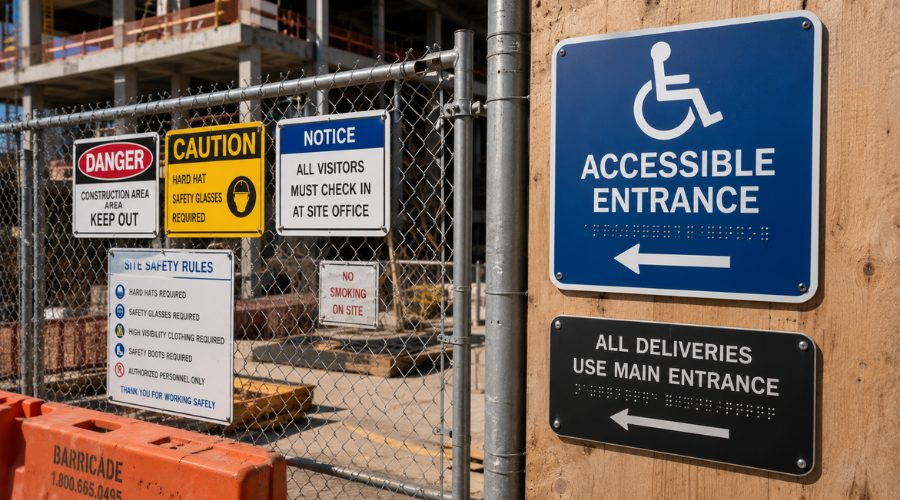
What is ADA-Compliant Jobsite Signage?
ADA-Compliant Jobsite Signage refers to signs that are specifically designed and installed to provide accessible information and wayfinding on construction sites in accordance with the Americans with Disabilities Act (ADA). At Riot, we understand that jobsite environments can be fast-paced and hazardous. That makes clear, accessible signage essential for all workers, visitors, and inspectors, no matter their abilities. ADA-Compliant Jobsite Signage ensures that everyone can safely and independently navigate a construction area, access temporary buildings, and clearly understand safety instructions or warnings posted throughout the environment. Our team focuses on practical implementation of ADA signage that meets or exceeds both federal and local guidelines while fitting within the dynamic jobsite environment.
The Importance of Accessibility on Construction Sites
Accessibility is not just about compliance; it’s about fostering an environment where every individual can participate safely and effectively. On construction sites where daily conditions change and new hazards can emerge, providing accessible, well-designed signage is critical. Proper environmental graphics can reduce the risk of accidents by ensuring all site users, including people with disabilities, can understand directional instructions, warnings, and evacuation routes. We believe that making jobsites accessible benefits everyone, not just those who require accommodations. Integrating ADA-Compliant Jobsite Signage into project plans supports a culture of safety and inclusivity, and can also improve project efficiency by reducing confusion and supporting smooth site operations.
Core Elements of ADA-Compliant Jobsite Signage
Key Features and Design Considerations
When creating effective signage for construction environments, our process starts with the foundational requirements of ADA compliance. This means integrating specific design features such as high color contrast, large and legible text, Braille, and tactile lettering. We ensure that signs are mounted at correct heights and angles, making them accessible whether someone is standing or using a wheelchair. Additionally, we address placement so that signs are visible even as jobsite barriers and pathways evolve.
Our team pays close attention to durable materials because jobsite conditions can be rough, and signs often need to withstand weather, debris, and frequent handling. All signs include non-glare finishes to improve readability in fluctuating light. By focusing on these elements, we help minimize confusion, making information accessible for everyone on site.
Types of Jobsite Signs We Recommend
- Directional and wayfinding signage for pedestrian & vehicle routes
- Room and facility identification, including temporary structures
- Safety and hazard notifications with pictograms and text
- Evacuation maps and emergency contact information
- Restroom and elevator access signage
As jobsites change, so do signage needs. We routinely assess conditions and update signs as necessary to stay compliant and support safety.
How Environmental Graphics Enhance Accessibility and Compliance
Integrating Graphics with Jobsite Functionality
Environmental graphics go beyond basic text-based instructions. By incorporating bold visuals, color-coded systems, and clear iconography, we make navigation intuitive for everyone, regardless of reading ability or language proficiency. These elements are critical for communicating complex messages quickly, reducing reliance on written instructions alone. As a result, even fast-moving or multilingual jobsites become more manageable and accessible.
We use environmental graphics to highlight potential hazards, mark accessible paths, and indicate the locations of vital facilities. Since jobsites are constantly evolving, these graphics can be adapted as site layouts change. This adaptability ensures that compliance with ADA guidance is not just a one-time event but an ongoing commitment. Well-designed environmental graphics ultimately help keep all crew members, contractors, and visitors informed and safe.
The Value of Customization for Jobsite Signage
No two construction projects are identical, so our design approach remains flexible. We collaborate with clients to understand their specific site challenges, access routes, and safety protocols. This enables us to recommend custom environmental graphics and ADA signs that fit seamlessly into the environment without disrupting workflow. Customization also helps organizations build trust by visibly prioritizing accessibility and inclusion on every project.
Best Practices for Designing and Installing ADA-Compliant Jobsite Signage
Planning and Execution Strategies
We believe that thorough planning is a key part of every successful signage program. From the outset, we evaluate site plans and coordinate with project managers to identify required sign locations. Our recommendations always match current ADA standards and anticipate likely adjustments as work progresses. To limit errors or oversights, we create signage schedules and installation maps as part of our project documentation.
During installation, our technicians use proper mounting hardware and double-check accessibility requirements on height and reach. Post-installation, we offer audits to ensure all signage remains effective and compliant despite disruptions common to jobsites.
The Benefits of Prioritizing Accessibility through Environmental Graphics
Creating accessible jobsites is not simply about compliance – it provides tangible value for everyone involved. Incorporating thoughtful environmental graphics, including ADA-Compliant Jobsite Signage, ensures that information is usable by all site visitors, workers, and inspectors, regardless of ability. Improved wayfinding and clear visuals increase site safety, reduce confusion, and foster a culture of inclusivity on our projects. As we meet legal obligations, we also build trust and demonstrate our commitment to safe and functional worksites.
Common Mistakes to Avoid with ADA Signage and How to Overcome Them
When integrating ADA-Compliant Jobsite Signage, it’s important to avoid common errors that can compromise both accessibility and compliance. One frequent issue is improper sign placement – signs must be positioned at the correct height and location so that they are easy to locate and read by people with disabilities. Another error is using non-compliant typography or insufficient color contrast, which can reduce legibility for everyone. Additionally, failing to include tactile or Braille elements where required will result in non-compliance.
To overcome these challenges, we follow industry standards and reference resources such as the U.S. Department of Justice ADA Standards and the U.S. Access Board guidelines. We carefully plan every aspect of signage, from content and material selection to mounting methods. By reviewing site plans for accessibility barriers and leveraging reliable vendors for printing and fabrication, we can ensure that each sign meets the necessary standards. Our team is also trained to audit installations before projects go live, minimizing error and risk.
Next Steps for Ensuring Compliance and Creating Inclusive Jobsite Environments
Prioritizing ADA-Compliant Jobsite Signage is an ongoing process, not a one-time checklist. As standards evolve and sites change, we reassess signage needs with each new project. Our next steps involve thorough reviews of current jobsites, incorporating feedback from users, and staying informed of any updates to federal accessibility standards and construction graphics requirements.
Collaboration is critical. We work with site managers, design professionals, and clients to create effective plans for signage integration, making accessibility a central part of jobsite communication and safety strategy. By proactively addressing accessibility, we mitigate legal risk and foster environments where everyone can navigate, work, and participate with greater independence. If your team wants to enhance inclusion and compliance through strategic environmental graphics solutions, we are ready to support each phase of your process.
FAQ
What does ADA-compliant jobsite signage mean?
ADA-compliant jobsite signage refers to signs that meet the requirements of the Americans with Disabilities Act (ADA). These regulations ensure that our construction site signage is accessible to everyone, including individuals with disabilities. By following these guidelines, we make navigation around our jobsites safer and more inclusive.
Why is accessibility important on construction sites?
Accessibility ensures that everyone, regardless of ability, can safely access our jobsites and understand important information. By prioritizing accessible signage, we support a diverse workforce, reduce potential risks, and show our commitment to legal and ethical standards. Plus, accessible sites improve overall workflow for all team members and visitors.
What legal standards govern ADA signage on jobsites?
Our ADA signage must comply with the ADA Standards for Accessible Design as outlined by the U.S. Department of Justice and the U.S. Access Board. Additionally, OSHA has safety standards that impact signage requirements. Following these rules not only fulfills our legal obligations but also helps us avoid costly violations.
What are the core elements of ADA-compliant jobsite signage?
Core elements include appropriate font size, high color contrast, tactile lettering, and Braille. Sign placement at accessible heights and clear, simple language are also required. By ensuring these features, we make our signage readable and usable for everyone.
How do environmental graphics support ADA compliance?
Environmental graphics can guide individuals intuitively and make our jobsites more navigable. With proper color choices, symbols, and tactile elements, these graphics enhance both accessibility and the overall experience for workers and visitors. As a result, our sites become more welcoming and efficient.
What are some best practices for designing ADA-compliant signage?
We always use sans-serif fonts, ensure high contrast between text and background, and incorporate Braille. Furthermore, our team places signs at standard heights and locations for easy discovery. Consistent design across the site also aids in quick recognition and understanding.
How should ADA-compliant signage be installed?
Signs should be installed at accessible heights (typically 48-60 inches above the floor) and close to the relevant area, such as entrances or exits. We confirm that text and Braille are easy to reach and read. Proper installation guarantees our signage is effective for everyone from the start.
What are the advantages of prioritizing environmental graphics for accessibility?
By using clear, accessible graphics, we foster an inclusive environment and reduce confusion. Better navigation on jobsites increases safety and productivity. At the same time, showing this commitment strengthens our brand reputation and supports our workforce’s well-being.
What common mistakes should we avoid with ADA signage?
Common errors include using low-contrast colors, placing signs too high or too low, and omitting Braille or tactile characters. Additionally, unclear wording or using decorative fonts can hinder accessibility. By double-checking our designs and installations, we can proactively prevent these issues.
What steps can we take to ensure ongoing ADA compliance on jobsites?
Regular audits of our signage, ongoing training for staff, and staying updated on ADA guidelines are essential. We also encourage feedback from site users to identify opportunities for improvement. With these strategies in place, we consistently maintain safe, inclusive jobsites.