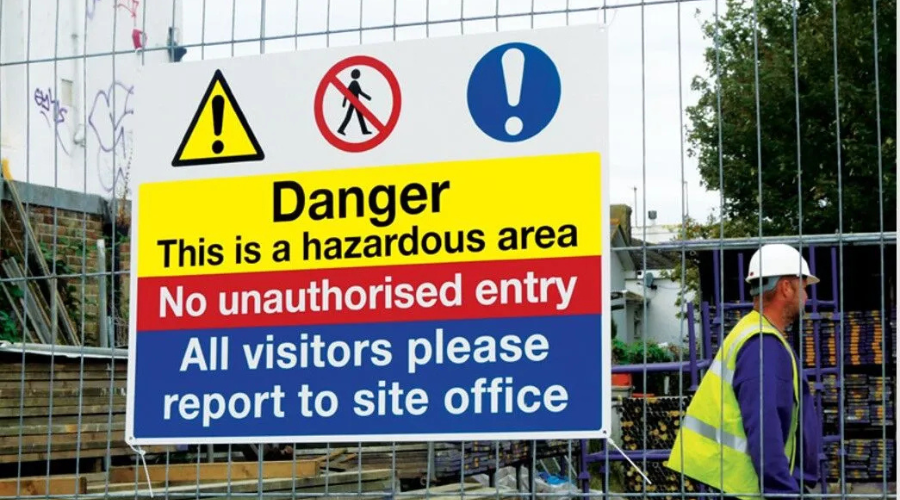
Understanding OSHA Jobsite Sign Requirements
OSHA Jobsite Sign Requirements play a core role in any construction site’s safety and communication strategy. As environmental graphics specialists, we at Riot recognize that compliant signage does more than fulfill a checklist – it creates a safer, more efficient working environment. Navigating the web of OSHA regulations can be complex, but clear, well-placed signs are critical for hazard identification, directions, and essential notices required by law. We approach each project with the knowledge that the right signage isn’t just expected – it’s a necessity for workers, visitors, inspectors, and the continuity of your site’s operations.
Overview of Environmental Graphics in Construction Sites
Environmental graphics go beyond traditional signs; they set the tone for how people interact with spaces throughout a construction site. We design and install graphics that do more than comply – they shape safe journeys, designate secure areas, and ensure vital information is easily recognizable. From color-coded safety notices to branded site barriers, environmental graphics organize and enhance the flow of traffic, improve accessibility, and increase awareness of potential hazards. Our work is not just about sticking to standards – it’s about integrating jobsite messaging into the very fabric of your project environment. This creates consistency, visibility, and efficiency, connecting every worker and visitor to the information they need the moment they arrive on-site.
Importance of Compliant Signage for Safety and Communication
Ensuring compliance with OSHA Jobsite Sign Requirements goes hand in hand with fostering a secure construction environment. We know that every site faces its own set of challenges – from heavy equipment operations to pedestrian management and emergency procedures. Proper signage reduces confusion, signals hazards clearly, and highlights crucial procedures such as first aid locations and evacuation routes. When environmental graphics meet OSHA standards, they don’t just tick boxes for inspectors; they help prevent incidents and injuries before they have a chance to occur.
What Are OSHA Jobsite Sign Requirements?
We understand that OSHA Jobsite Sign Requirements form the backbone of construction site safety. The Occupational Safety and Health Administration (OSHA) mandates different types of signage, including danger, warning, caution, and informational signs. Each must be clearly visible, designed with specific color schemes, and contain language that is easy to understand. These requirements ensure not only regulatory compliance but also that anyone onsite can act quickly and correctly in any situation. Every project presents unique risks, so we assess jobsite needs early, ensuring the right mix of required signs are included from the outset.
Additionally, OSHA guidelines dictate that safety signs must be maintained in a legible condition – they cannot be faded, obscured, or damaged. We work to ensure updates are seamless, replacing signs as conditions change or new hazards emerge. Whenever revisions to OSHA requirements occur, our team is ready to review existing graphics so your project is always up to code. Following OSHA Jobsite Sign Requirements also fosters a proactive safety culture, helping everyone from new hires to seasoned project managers stay aware of their responsibilities on site.
Common Jobsite Signage Types and Their Specific Requirements
On any construction site, certain types of signage are consistently required. Each type has its characteristics designed to promote quick comprehension and effective safety communication. We focus heavily on details like contrast, size, and placement to ensure each message is adequately conveyed. Here are some key types and what OSHA expects from them:
- Danger Signs: These feature red, black, and white and indicate immediate hazards. OSHA requires them where there is a risk that could result in serious injury or death. We place these at eye level and near the source of the hazard to maximize visibility.
- Warning Signs: Used when hazards are present but not as immediate as those requiring a danger sign. They use orange as the primary color.
- Caution Signs: These alert to potential hazards or unsafe practices. They are yellow and black, calling attention to conditions like slippery floors or PPE requirements.
- Safety Instruction & Emergency Signs: Green is used for these, indicating safe conditions or locations of first aid kits, eye wash stations, and emergency exits.
- Fire Safety Signs: Red signs highlight fire extinguishers, alarms, and related equipment, positioned according to code requirements for distance and visibility.
Moreover, we ensure each sign includes proper symbols and wording according to ANSI standards where required. Placement is as important as design – signs must not be blocked or hidden by equipment or structures. We periodically audit sign locations to match the changing conditions and work zones typical on dynamic jobsites.
How Environmental Graphics Enhance OSHA Compliance and Site Safety
Our approach blends regulatory compliance with environmental graphic design, resulting in sites that are safe, organized, and easy to navigate. While traditional signs fulfill basic requirements, environmental graphics can go further by integrating safety information into large-scale murals, barrier wraps, and floor markings. This integration aids not just workers but also visitors and delivery personnel who may be unfamiliar with the site.
We tailor environmental graphics so wayfinding, hazard zones, and restricted areas are clearly communicated as people move throughout the site. Strategic placement of visual cues means fewer questions and less confusion, which reduces downtime and promotes seamless operations. Additionally, custom graphics can incorporate your brand colors and guidelines, reinforcing company identity while meeting all necessary safety measures.
Benefits of Integrating Environmental Graphics with OSHA Sign Requirements
Combining environmental graphics with construction graphics that meet OSHA Jobsite Sign Requirements is more than just a regulatory obligation – it’s an opportunity to enhance safety, wayfinding, and communication throughout every phase of your project. When we deploy graphics that clarify hazards and direct movement, we’re supporting a safe and efficient work environment. Compliant and thoughtfully designed signage helps everyone – from subcontractors to project managers – quickly recognize instructions and warnings, reducing the risk of accidents or confusion.
Integrating environmental graphics also helps reinforce a shared commitment to health and safety. Stakeholders, inspectors, and visitors will immediately notice our attention to detail and our adherence to OSHA Jobsite Sign Requirements. Moreover, custom graphics can strengthen our site’s visual identity, supporting project branding while ensuring regulatory compliance.
Tips for Maintaining and Updating Jobsite Signage
Jobsite conditions evolve quickly, and our signage should keep pace. We regularly audit signs to ensure they remain visible, unaltered, and up to OSHA standards. Fading, damage, or outdated information can undermine the effectiveness of even the best signage. A review at each new project phase or after significant changes keeps our communications effective.
Keep an inventory of frequently used signs, labels, and graphics on hand. This enables quick replacement or updates as the jobsite evolves. During team meetings or site walkthroughs, it’s good practice to ask for feedback on signage clarity and placement. Open communication helps us discover and address issues before they impact jobsite safety.
Where to Find Reliable Sources on OSHA Signage Standards
Staying current with OSHA Jobsite Sign Requirements is critical. We always reference official guidance when designing or installing signage. The primary federal guideline is 29 CFR 1926.200, which details requirements for accident prevention signs and tags in the construction industry. For broader OSHA regulations and interpretive materials, the OSHA website is our go-to source. Additional compliance information and resources are available from local state agencies and safety councils.
By aligning our environmental graphics with OSHA standards and using reliable resources for reference, we maintain a jobsite that is not only safe but also visually cohesive and easy to navigate. As our projects progress and our teams change, these practices ensure our signage continues to meet the highest safety benchmarks.
FAQ
What are the basic OSHA jobsite sign requirements?
Our jobsite signage must comply with OSHA standards, specifically 29 CFR 1926.200. Additionally, we make sure all signs are visible, legible, and in the appropriate language for the workforce. Importantly, proper colors, wording, and symbols help ensure immediate recognition and understanding, thus protecting the safety of everyone on site.
Why are environmental graphics important on construction sites?
Environmental graphics not only guide and inform, but also enhance OSHA compliance on our construction sites. With clear and well-designed visuals, we vastly improve site navigation, reinforce important safety messages, and ultimately help prevent accidents by drawing attention to hazards and important procedures.
What types of jobsite signage are commonly required?
On our jobsites, we utilize several types of OSHA-compliant signage, including Danger, Warning, Caution, Notice, and Safety Instruction signs. Each serves a distinct purpose: for instance, Danger signs indicate immediate hazards, while Notice signs communicate general information about the site.
How do environmental graphics enhance site safety?
By integrating environmental graphics into our signage, we maximize clarity and visibility. This means workers receive vital information quickly, which helps prevent confusion and accidents. Furthermore, eye-catching graphics prompt faster reaction times, especially in emergencies.
How often should we update our jobsite signage?
We regularly inspect our signs and update them whenever work conditions change or when signs show wear and tear. Because site conditions can evolve rapidly, frequent reviews ensure our signage always remains accurate and compliant.
What are the penalties for non-compliance with OSHA signage standards?
Failing to comply with OSHA jobsite sign requirements can lead to hefty fines, legal consequences, or even site shutdowns. More critically, non-compliance increases the risk of workplace injuries, so we always prioritize maintaining proper signage.
Where can we find official OSHA signage requirements?
We rely on authoritative sources such as OSHA.gov and the 29 CFR 1926.200 standard for precise guidance. Additionally, these sources provide templates and best practices, so our signage meets all federal standards.
How do we ensure signage is understood by everyone on site?
We design our signage using universal symbols, plain language, and multiple languages when needed. Since a diverse workforce is common, this approach guarantees everyone receives the necessary safety information, regardless of their background.
What materials should we use for jobsite signs?
We select durable materials that withstand weather and construction wear, such as aluminum, rigid plastic, or high-grade vinyl. This ensures our signs remain legible and compliant through all jobsite conditions, thereby minimizing replacement needs.
How do we integrate environmental graphics with OSHA jobsite signage?
We thoughtfully combine required OSHA notifications with branded, site-specific graphics, which maintains compliance and supports overall site organization. Through consistent color schemes, fonts, and iconography, we deliver clear, professional, and effective communication across the jobsite.