What Are Environmental Graphics and Why Do They Matter for Jobsites?
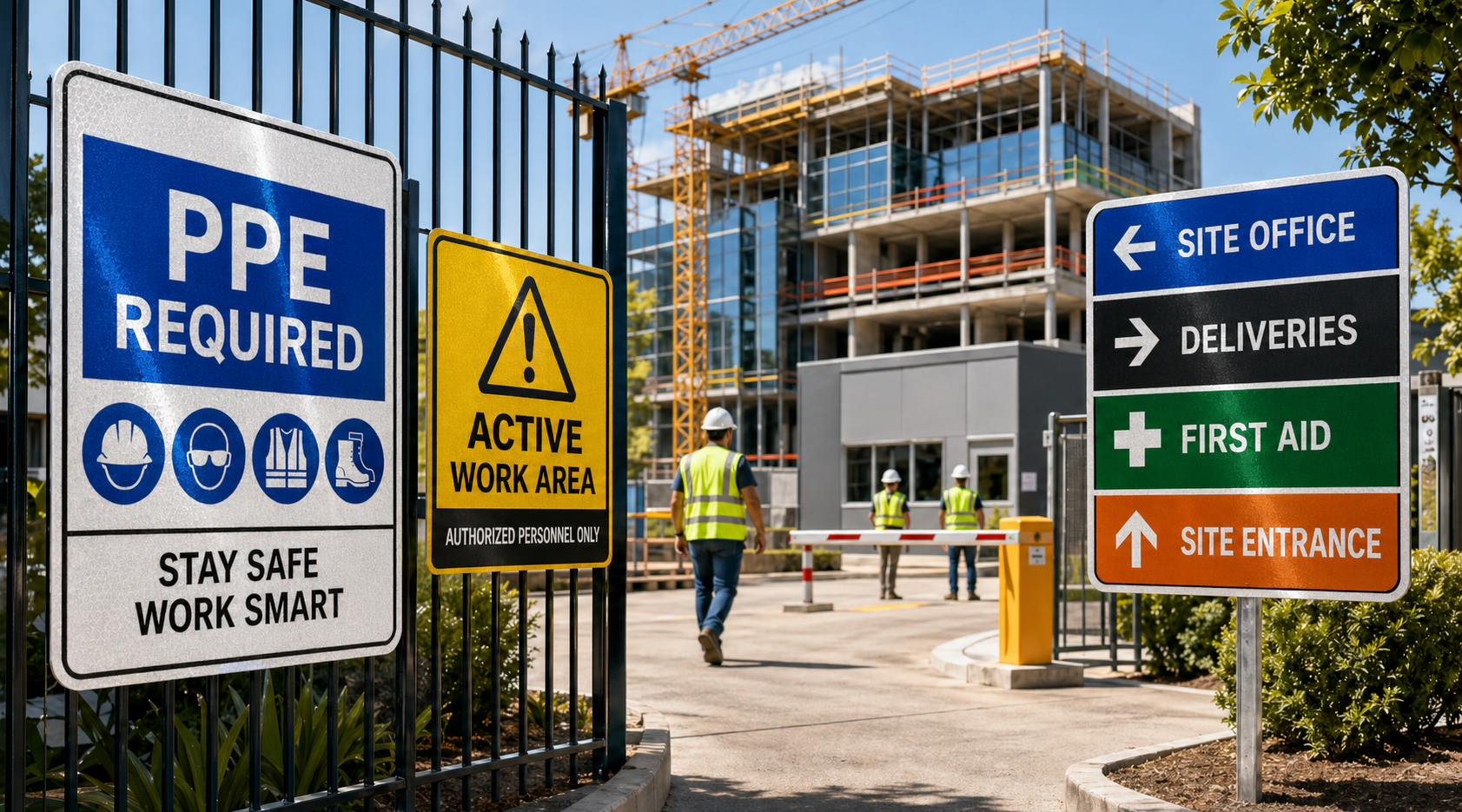
Reflective Safety Signs for Jobsites are an essential part of our environmental graphics solutions at Riot because they help safeguard workers and visitors in often dynamic and potentially hazardous environments. Environmental graphics, at their core, are visual elements strategically designed and placed to communicate vital information within a built environment. On jobsites, this means clarity around safety routes, equipment zones, hazards, and regulations – all through easily understood and highly visible graphics.
By employing environmental graphics, including reflective safety signage, we contribute not just to orderly movement on-site but to significant reductions in risks and incidents. These visuals ensure everyone on-site is aware of key information, even under low-light conditions or during emergencies. For organizations concerned with compliance, environmental graphics support industry requirements and demonstrate a commitment to worker safety. At Riot, we view these signs as more than just regulatory obligation; they are proactive tools in maintaining clear communication and order.
Understanding Reflective Safety Signs: Materials, Technology, and Visibility
The effectiveness of environmental graphics depends on materials and technologies selected. Reflective safety signs leverage advanced engineering-grade or high-intensity prismatic films that capture and return available light, making the messages readable at dusk, dawn, or overnight when other signs might fade into the background. These materials, used for roadways and industrial environments, ensure durability even in challenging weather conditions.
Modern technology has expanded the capabilities of reflective safety signs. Advancements in printing methods allow us to create signage that not only stands out for visibility but also delivers detailed, crisp information, including icons, warnings, and instructions. Visibility remains a core goal; our team considers the viewing angle, placement height, and background contrast on every project. This approach means our signage is consistently legible wherever and whenever it’s needed.
The Legal Requirements for Reflective Safety Signs on Jobsites
How Reflective Safety Signs for Jobsites Improve Safety and Reduce Accidents
Reliable visual cues are integral to preventing accidents on jobsites. By providing clear, unmistakable warnings and guidance in real time, reflective safety signs help orient workers and visitors, especially in rapidly changing environments. For example, in areas where vehicles and heavy machinery operate late in the day or under artificial lighting, the increased visibility of reflective graphics reduces the risk of collisions or misplaced entries.
Additionally, employing these specialized signs can also enhance overall awareness. When installed at decision points – such as near equipment zones, entryways, or access controls – they reinforce safety protocols consistently. Over time, workers recognize and respond faster to well-placed signage, contributing to safer behaviors and fewer incidents. That’s why our approach includes ongoing evaluation, ensuring our graphics are delivering the necessary impact as jobsites evolve.
Best Practices for Designing and Installing Reflective Safety Signs for Jobsites
Successful environmental graphics hinge on thoughtful design and precise installation. The messaging must be concise, universally understandable, and strategically located. We focus on several fundamental design principles:
- Using high-contrast color combinations to enhance readability under variable lighting conditions.
- Incorporating easily recognizable icons and symbols alongside concise text for rapid comprehension.
- Adhering to consistent sizing and placement standards according to visibility requirements and likely viewing angles.
- Ensuring that regulatory language and required identifiers are integrated where needed.
During installation, we conduct site assessments to determine optimal locations, avoiding cluttered visuals or physical obstructions. By routinely inspecting installed signs, we catch wear, fading, or obstructions early. Regular maintenance maximizes both safety and compliance, and allows us to adapt to changes on the jobsite as work progresses or conditions shift.
Sourcing Durable, High-Quality Reflective Materials: Standards and Certifications
To ensure performance, durability, and compliance, we adhere to industry-leading standards in sourcing materials. All reflective substrates used in our signage meet or exceed OSHA and ANSI Z535 guidelines, which are recognized benchmarks for safety communication. Additionally, we evaluate manufacturers based on their certifications – such as being listed with the American Traffic Safety Services Association (ATSSA).
Selecting the right reflective films and inks contributes to longevity. For jobsites exposed to harsh weather, chemicals, or physical impact, high-intensity or diamond-grade prismatic sheeting provides the necessary resilience. Our process includes verifying performance under operational conditions. When required, we liaise with suppliers to provide documentation reflecting adherence to industry certifications.
By balancing initial cost with lifecycle value, we deliver signage solutions that continue performing over the life of the project. This minimizes reinstallation and replacement, and ultimately helps keep jobsites safe, organized, and compliant with all relevant regulations.
Key Takeaways: The Role of Environmental Graphics in Jobsite Safety
As we reflect on the importance of environmental graphics, it becomes clear that incorporating high-visibility signage is essential for maintaining safe and efficient jobsites. Reflective Safety Signs for Jobsites elevate situational awareness, which is critical in environments where visibility is often compromised by weather conditions, fluctuating light, or fast-paced activity. By using reflective materials that meet established safety standards, our signage solutions provide straightforward communication and guidance that directly impacts incident reduction and compliance with regulatory requirements.
Reflective Safety Signs for Jobsites: Compliance and Cost-Savings
Implementing Reflective Safety Signs for Jobsites not only fulfills OSHA and ANSI Z535 legal mandates but also supports our long-term operational goals. Durable reflective signs reduce the need for frequent replacements and lower overall maintenance costs. Investment in quality signage – and the integration of reflective technology – minimizes liability risks and contributes to worker protection, which can translate into favorable insurance rates and fewer costly disruptions. Over time, these factors combine to deliver notable cost-savings and enhanced compliance for both small- and large-scale operations.
Expert Recommendations for Optimizing Jobsite Visibility and Worker Protection
To maximize the effectiveness of Reflective Safety Signs for Jobsites, we recommend thorough site assessments to determine priority areas where reflective signage delivers the most impact. Ensuring that signs are appropriately placed at eye level and strategically located at entrances, exits, and hazardous zones is vital for quick recognition and response. Regular inspections and cleaning schedules maintain optimal reflectivity, while utilizing certified reflective materials offers consistency and durability. Our focus extends beyond basic warning signs to encompass a comprehensive approach with construction graphics that improve navigation, reinforce safe behavior, and support our clients’ branding needs.
In summary, reflective safety signage is an integral part of our commitment to efficient, safe, and visually cohesive jobsites. By prioritizing standards-based signage and embracing innovative graphics, we help create environments where safety and productivity go hand in hand.
FAQ
What are environmental graphics and why are they important for jobsites?
Environmental graphics, including reflective safety signs, help clearly communicate crucial information on jobsites. By making hazards, directions, and safety reminders highly visible, we dramatically increase awareness and decrease the risk of accidents. Moreover, these graphics help ensure that workers, visitors, and emergency personnel can easily understand and navigate the environment, even in low light or challenging weather conditions.
How do reflective safety signs work?
Reflective safety signs use specialized materials that bounce light—such as from vehicle headlights—back toward its source. This technology ensures that signage remains visible in darkness or low-light conditions, which is especially critical on jobsites open after dark. As a result, our signs provide consistent, reliable visibility around the clock, contributing to overall jobsite safety.
What materials are commonly used in reflective safety signs?
We use high-grade reflective materials like microprismatic vinyl and glass bead sheeting, which meet rigorous industry standards. Choosing durable and certified materials not only maximizes visibility but also extends the lifespan of our signage. This leads to reduced replacement costs and helps us maintain both compliance and safety over time.
Are there legal requirements for reflective safety signs on jobsites?
Yes, reflective safety signs must meet legal requirements such as OSHA regulations and ANSI Z535 standards. These rules dictate color, font, symbol use, and the level of reflectivity required for each type of sign. Because safety and compliance go hand in hand, we stay informed about changing regulations and update our products accordingly.
How do reflective safety signs reduce accidents?
Our reflective signs catch the attention of workers and drivers, even in darkness or while exposed to strong glare. By offering clear messages and warnings, these signs help prevent missteps, collisions, and injuries. Subsequently, this contributes to a culture of safety and allows everyone to be more aware of their surroundings.
What are best practices for designing and installing reflective safety signs?
We follow proven guidelines: use high-contrast colors, large fonts, and universally recognized symbols. It’s important to position signs at eye level and in well-trafficked areas for maximum impact. Additionally, we securely mount all signs to withstand wind, weather, and tough jobsite conditions, ensuring ongoing visibility and effectiveness.
How can we ensure our reflective safety signs are durable and compliant?
We source certified materials from reputable suppliers and test our signs against industry benchmarks. By adhering to standards like ANSI Z535 and utilizing quality adhesives and substrates, we guarantee that our signs endure heavy use and harsh environments. As a result, clients enjoy reliable, long-lasting solutions that stay compliant year after year.
What certifications or standards should we look for in reflective materials?
Always look for materials with certifications such as those from ASTM, ANSI, or recognized suppliers like 3M. These standards guarantee high reflectivity, durability, and weather resistance. When you choose certified products, you not only fulfill legal requirements but also boost jobsite safety and efficiency from day one.
How does investing in reflective safety signs contribute to long-term cost savings?
Installing compliant, high-quality reflective signs reduces the likelihood of accidents and OSHA violations. By decreasing the risk of injury and downtime, we help lower insurance premiums and avoid costly lawsuits or fines. Furthermore, our durable signs rarely need replacement, which results in substantial savings over time.
What are your expert recommendations for optimizing jobsite visibility and worker protection?
We recommend a comprehensive sign audit for every new project, ensuring all hazards are clearly marked with certified reflective signs. Regular maintenance checks and cleaning remain important, particularly in dusty or wet environments. Finally, combine signage with other environmental graphics – such as floor markings or banners – to provide layered, unmistakable cues for everyone on your jobsite.