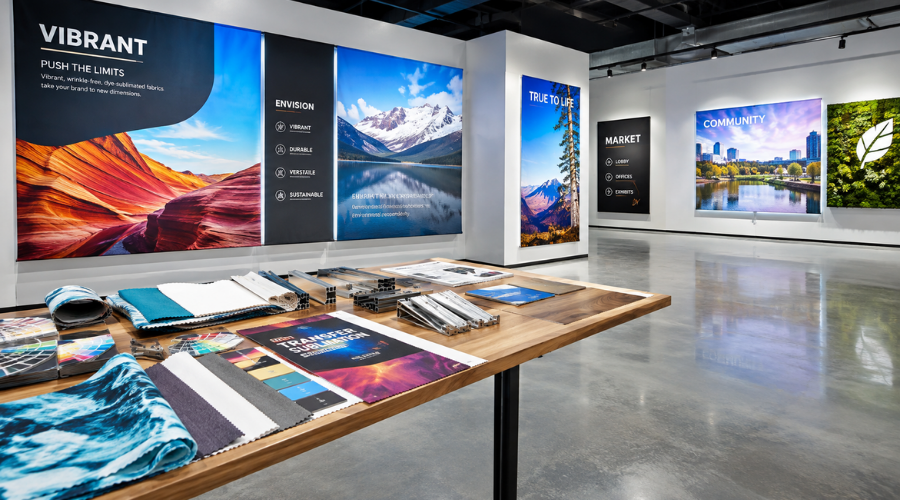
What Is Fabric Dye-Sublimation Printing? Technology and Process Explained
We use this process to place full-color graphics into polyester-based fabric. First, we print the artwork onto transfer paper with specialty dyes. Then, heat and pressure turn those dyes into gas, which bonds with the fabric fibers. As a result, the image becomes part of the material instead of sitting on top of it.
This matters in built environments because graphics often need to look clean from different distances. For example, a wall display may need to support navigation, reinforce a brand message, and work with the space’s lighting. We plan for those needs before production begins.
In our workflow, file preparation, color management, fabric selection, and finishing all affect the final result. Therefore, we review scale, viewing distance, installation method, and site conditions early. We also look at how the graphic will handle movement, tension, and routine use.
Industry sources often describe dye-sublimation as a heat-transfer process used for polyester textiles and coated materials. However, the practical value comes from matching the process to the space. We focus on how the finished graphic will perform in offices, retail areas, campuses, venues, and public-facing interiors.
Benefits of Using Fabric Printing for Environmental Graphics
Fabric graphics give us flexibility when a space needs clear communication without heavy construction. They can cover large areas, wrap around frames, or hang as suspended elements. Many systems also let teams update graphics without replacing the full structure.
For clients planning environmental graphics, this helps with seasonal campaigns, department changes, rebrands, and event schedules. The fabric can ship folded or rolled, which also helps with storage and logistics. As a result, we can support multi-location programs with more consistent production planning.
- Large-format coverage for walls, frames, exhibits, and interior feature areas
- Lightweight materials that can simplify handling and installation planning
- Color output suited for brand graphics, photography, patterns, and wayfinding elements
- Interchangeable displays that help extend the life of hardware systems
- Soft surfaces that can reduce glare compared with some rigid graphic materials
Durability also depends on the setting. For instance, a lobby graphic has different needs than a trade show display. We discuss cleaning, touch points, sunlight, and expected lifespan before we recommend a fabric and finish.
Because environmental graphics often interact with architecture, we also consider seams, edges, and mounting details. Small decisions can affect how professional the final installation feels. Therefore, we coordinate production choices with field measurements and installation requirements.
Real-World Applications: Successful Projects and Best Practices in Environmental Branding
We often use fabric graphics when clients need branded spaces that can change over time. Retailers may need campaign walls, fitting room graphics, or ceiling banners. Meanwhile, corporate teams may need reception displays, collaboration zones, or internal culture messaging.
Healthcare, education, and civic spaces can also benefit from this approach. Graphics can support wayfinding, donor recognition, student engagement, or community messaging. However, each environment needs a different balance of visibility, tone, and maintenance.
Best practice starts with the goal of the space. We define what visitors should see, understand, or do after they enter. Then, we connect that goal to layout, material, print method, and installation details.
Before production, we recommend checking wall conditions, lighting, ceiling height, and traffic flow. In addition, we confirm brand colors and artwork resolution. These steps help reduce surprises during installation.
Key Considerations When Choosing Fabric Dye-Sublimation Printing for Your Next Project
When deciding how to bring environmental graphics to life, it’s important for us to evaluate the technical and visual needs of each unique space. Fabric Dye-Sublimation Printing offers versatility across different applications, but not every material or finish serves every purpose. We always consider intended longevity, the amount of direct sunlight, cleaning protocols, and whether installations are temporary or permanent. Our goal is to recommend the right combination of fabric, ink, and hardware for each project, so the graphics not only look great but perform reliably over time. By asking the right questions up front, we ensure a final product that supports the client’s objectives and timeline with minimal disruption to daily operations.
Balancing Sustainability, Durability, and Brand Impact with Fabric Graphics
Balancing sustainability, durability, and visual impact is essential in our work with environmental branding. Fabric Dye-Sublimation Printing allows us to use eco-friendly materials, including recycled polyester, while delivering colors and imagery that capture attention. At the same time, the process ensures graphics withstand repeated handling, cleaning, and exposure to light, fitting the environmental conditions of lobbies, retail spaces, offices, and beyond. We focus on sourcing materials and finishes that support environmentally responsible practices while maintaining high standards for color vibrancy and sharpness. These choices help our designs remain inviting and on brand, while also meeting organizations’ growing sustainability goals.
Inspiring the Future of Environmental Graphics Through Innovative Printing Technologies
Innovation is shaping the future of environmental graphics, and our commitment to technologies like dye-sublimation positions us at the forefront of this evolution. As organizations look for new ways to express their identity, reimagine spaces, and foster connections with their audiences, fabric-based solutions stand out for their flexibility and visual quality. We continuously monitor advancements in printers, inks, and fabrics to offer solutions that meet evolving demands. By collaborating closely with our clients, we not only deliver installations that make an immediate impact, but also create adaptable experiences that grow with their spaces. Fabric Dye-Sublimation Printing is one avenue we use to help turn creative ideas into expressive, high-performing environments – setting a foundation for future possibilities.
FAQ
What are environmental graphics, and why do they matter?
Environmental graphics are visual elements strategically integrated into spaces to enhance branding, guide visitors, and create immersive experiences. At Riot, we believe these graphics matter because they help tell compelling stories and make spaces memorable and engaging, leading to stronger brand recognition and improved visitor experiences.
How do visuals in environmental graphics impact brand perception?
Visual storytelling plays a significant role in creating emotional connections with visitors. Through environmental graphics, we transform brand environments by conveying messages, shaping moods, and amplifying a brand’s personality. As a result, visitors are more likely to remember and connect with your brand.
Why are fabric-based solutions increasingly popular in environmental graphics?
Fabric-based graphics have gained momentum because of their versatility, vibrant color reproduction, and sustainability. Additionally, we find that fabric solutions offer unique textures and eco-friendly materials that resonate with modern brands seeking innovative, yet responsible, presentation methods.
What is fabric dye-sublimation printing, and how does it work?
Fabric dye-sublimation printing is a cutting-edge technique where heat transforms solid dye into gas, allowing it to infuse fibers of the fabric directly. We use this process to produce durable, high-resolution graphics that are resistant to fading, ensuring our installations look stunning over time. (Sources available upon request.)
What benefits does fabric dye-sublimation printing provide for environmental graphics?
Using dye-sublimation printing, we achieve vivid, long-lasting colors that don’t crack or peel. The process supports larger, seamless graphics and enables us to create lightweight displays that are both safe and easy to install. Furthermore, many clients appreciate the recyclable options we offer, aligning with sustainability goals.
Can you share examples of successful projects using fabric graphics?
Absolutely! We have transformed office spaces, event venues, and retail environments with our fabric graphics – some notable projects include branded feature walls, wayfinding systems, and immersive exhibit displays. Each project demonstrates our commitment to merging aesthetics, function, and brand messaging effectively.
How do fabric graphics contribute to sustainability?
By using eco-friendly fabrics and water-based dye-sublimation inks, we reduce environmental impact. In addition, our graphics are often reusable and recyclable, which supports our clients’ sustainability initiatives and aligns with many modern brands’ environmental values.
Are fabric graphics durable enough for high-traffic areas?
Yes, our dye-sublimated fabric graphics are highly durable, making them suitable for both high-traffic indoor and certain outdoor environments. Because the dye becomes part of the fabric, these graphics resist scratching and fading, offering long-term performance even in demanding spaces.
What should we consider when choosing dye-sublimation for our project?
When selecting this printing method, consider the intended location, lighting, and design complexity. Our team will help you weigh sustainability, budget, and durability requirements to ensure that your environmental graphics meet your project’s unique needs and exceed expectations.
How does Riot ensure our environmental graphics have maximum brand impact?
We take a strategic approach – starting with your brand goals and spatial needs, then crafting a visual narrative supported by the latest printing technology. Along the way, we offer advice on materials, sustainability, and installation best practices, ensuring that your investment delivers transformative results.