Key Features of Lightbox Film Materials for Environmental Graphics
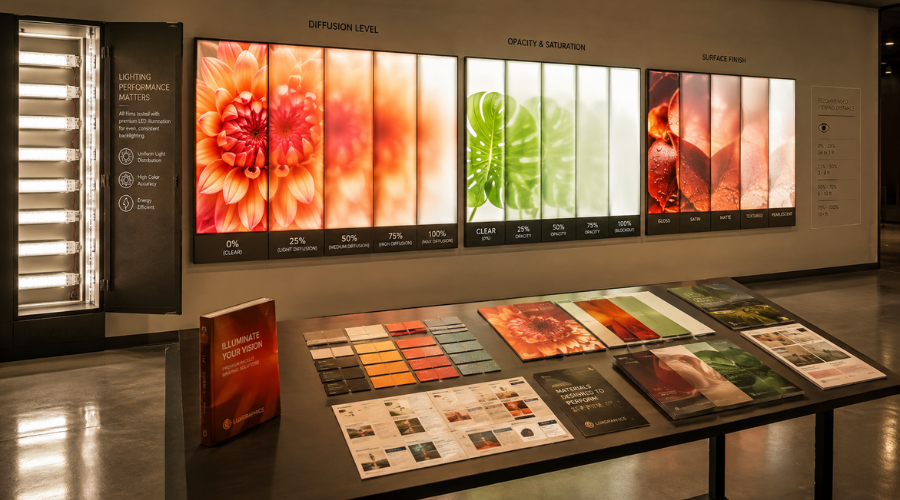
For environmental graphics, the film behind an illuminated display influences color, legibility, and service life. We look at the viewing distance first. Then, we consider lighting, location, and the message. A lobby directory needs different material than a retail wall display. Likewise, a campus map may need stronger diffusion than a simple brand panel. Lightbox films vary in opacity, surface finish, print compatibility, and diffusion. These qualities affect how graphics look during the day and at night. For example, higher diffusion helps reduce hot spots from LEDs. However, too much diffusion may soften fine text or detailed imagery. We balance those factors before we recommend a material.
We also review how the film will fit the display system. Some projects require rigid inserts, while others need flexible films. In addition, edge clearance and panel size can affect installation. When we plan early, we reduce reprints, trimming issues, and delays on site. Durability also matters. Interior lightboxes often face cleaning, fingerprints, and ongoing exposure to light. Meanwhile, transit, healthcare, education, and retail settings may need films that support frequent updates. Our team considers how the space operates, not just how the graphic looks on day one.
How to Choose the Right Lightbox Film Material for Your Project
We start each project by asking how the display needs to perform. A brand wall may prioritize color consistency. In contrast, directional signage may require sharp contrast and easy reading from a distance. This helps us narrow material options before design production begins.
Next, we review the light source. LED brightness, spacing, and color temperature can change the final result. Therefore, a material that works in one cabinet may not work in another. We prefer to test when color accuracy or visibility carries a high priority.
- Define the viewing distance and primary audience.
- Confirm the lightbox size, depth, and lamp type.
- Review artwork colors, text size, and image detail.
- Decide whether the graphic needs short-term or long-term use.
- Check cleaning needs, access points, and replacement plans.
After the technical details are clear, we match the film to the environment. For example, a museum display may call for controlled brightness and smooth tone transitions. However, a quick-service restaurant menu board may need frequent changeouts and strong color output. The same material rarely suits every setting. We also consider how installation teams will handle the finished graphic. Larger panels may need extra care during transport and placement. Additionally, tight frames can limit material thickness. By reviewing these details early, we help keep production and installation aligned.
Benefits of Utilizing the Lightbox Film Material Guide in Creating Impactful Displays
The Lightbox Film Material Guide gives us a practical way to compare options before production. It helps our team explain material differences in clear terms. As a result, clients can make decisions with fewer assumptions. This matters when a display supports wayfinding, identification, donor recognition, or branded space updates.
Using a guide also supports better planning across teams. Designers, project managers, fabricators, and installers can work from the same material expectations. Consequently, we reduce confusion around finish, density, and lighting performance. That shared reference helps protect both visual quality and project timing.
Environmental graphics often need to serve many users at once. Visitors need clarity. Staff need reliable signs. Facilities teams need materials that fit maintenance routines. Therefore, our material choices must support appearance, use, and upkeep.
Best Practices for Implementing Lightbox Film Materials in Environmental Graphics
When approaching environmental graphics, thoughtful integration of lighting and materials is essential to connect the space and brand. At Riot, we recommend starting with clear communication of project goals and environment constraints. Each installation has unique requirements – consider ambient lighting, traffic flow, and the expected lifespan of the display. Choosing the right materials, from substrates to finishes, will ensure your graphics function visually and practically in the intended space.
Before finalizing your approach, we recommend prototyping or testing the selected backlit film in your space. Evaluating how materials respond under true lighting conditions can prevent surprises and enable better decisions. Regular collaboration between design, production, and installation teams further ensures that the end result aligns with our original vision.
Future Trends Shaping Lightbox Film Material Usage
As technology and materials evolve, so do the applications for lightbox film in modern environments. We observe a growing preference for sustainability, prompting manufacturers to develop eco-friendly films that do not compromise image vibrancy or durability. Digitally adaptive films and materials that allow rapid changeouts are becoming more prevalent, offering flexibility for seasonal campaigns or evolving brand messaging.
We also note a convergence between print and digital, with illuminated displays integrating interactive elements and dynamic lighting. Our teams stay current with material innovations and lighting advances, ensuring that environmental graphics benefit from the latest technologies. By adapting to evolving trends, we can create installations that remain relevant and impactful beyond their initial rollout.
Action Steps: Getting Started with the Lightbox Film Material Guide for Your Next Project
To begin planning your next environmental graphics installation, familiarize yourself with the Lightbox Film Material Guide. This industry resource offers practical advice for choosing and comparing film types, addressing common questions about density, diffusion, and application methods. Using this guide, we can help you navigate the broad range of available materials and identify those most aligned with your project goals.
Contact our team early in the process for a consultation. Together, we can outline your requirements and use the Lightbox Film Material Guide as a shared reference point, making material selection and design more efficient. Regular dialogue enables us to address challenges promptly, coordinate schedules, and ensure seamless installation.
Environmental graphics make a strong impression when backed by strategic material selection and careful planning. By leveraging best practices, tracking material innovations, and utilizing comprehensive references like our Lightbox Film Material Guide, we can deliver lightbox displays that meet both functional and aesthetic priorities.
FAQ
What are environmental graphics and how do lightbox films fit in?
Environmental graphics use visual elements to enhance spaces and communicate within built environments. At Riot, we find that lightbox films play a crucial role by illuminating graphics, making them vibrant and engaging for both branding and navigation.
Why is material selection important for lightbox graphics?
Choosing the right material ensures that your graphics appear as intended, with accurate color rendition and consistent illumination. We always recommend thoughtful material selection, as it dramatically impacts the durability, appearance, and effectiveness of your display in various lighting conditions.
What key features should I look for in lightbox film materials?
When selecting a lightbox film, consider factors such as translucency, print compatibility, durability, and fire ratings. Our guide highlights industry-standard features that ensure your graphics stay vibrant and safe throughout their lifespan.
How does the Lightbox Film Material Guide help me choose the right product?
Our guide streamlines the selection process by outlining each material’s specifications and best use cases. With clear instructions and easy-to-read comparisons, you can confidently select the film that best suits your project’s needs.
What benefits do we gain by using lightbox film materials in our displays?
By using the right lightbox film materials, we achieve striking visuals with even illumination, ensuring our graphics capture attention. Additionally, robust materials can withstand wear and tear, lowering maintenance and replacement costs.
Are there any best practices when implementing lightbox graphic materials?
Absolutely! We recommend proper surface preparation, choosing the correct adhesive or mounting solution, and verifying print compatibility before production. By following these steps, you can avoid common installation issues and maximize the longevity of your graphics.
How do trends in lightbox film material impact environmental graphics?
Trends like sustainability and digital integration are shaping how we select materials. For instance, new eco-friendly options make it easier for us to create stunning displays while minimizing our environmental footprint. This allows us to stay on the cutting edge of architectural design.
Can the Lightbox Film Material Guide assist with custom or unique installations?
Definitely! Because our guide includes information on a wide variety of materials and application tips, it’s an invaluable resource for custom projects. We can help you identify the best film for unconventional surfaces or creative concepts with confidence.
What steps should we take to get started with the Lightbox Film Material Guide?
Begin by outlining your project scope and identifying environmental constraints. Next, consult our guide to compare materials and review their unique advantages. With these insights, you can make informed decisions and coordinate more effectively with your project team.
How can we ensure our lightbox graphics look impactful and professional?
To guarantee impressive results, combine the insights from our Lightbox Film Material Guide with expert printing techniques and professional installation. Moreover, regularly evaluate emerging trends and technologies to keep your displays fresh and relevant.