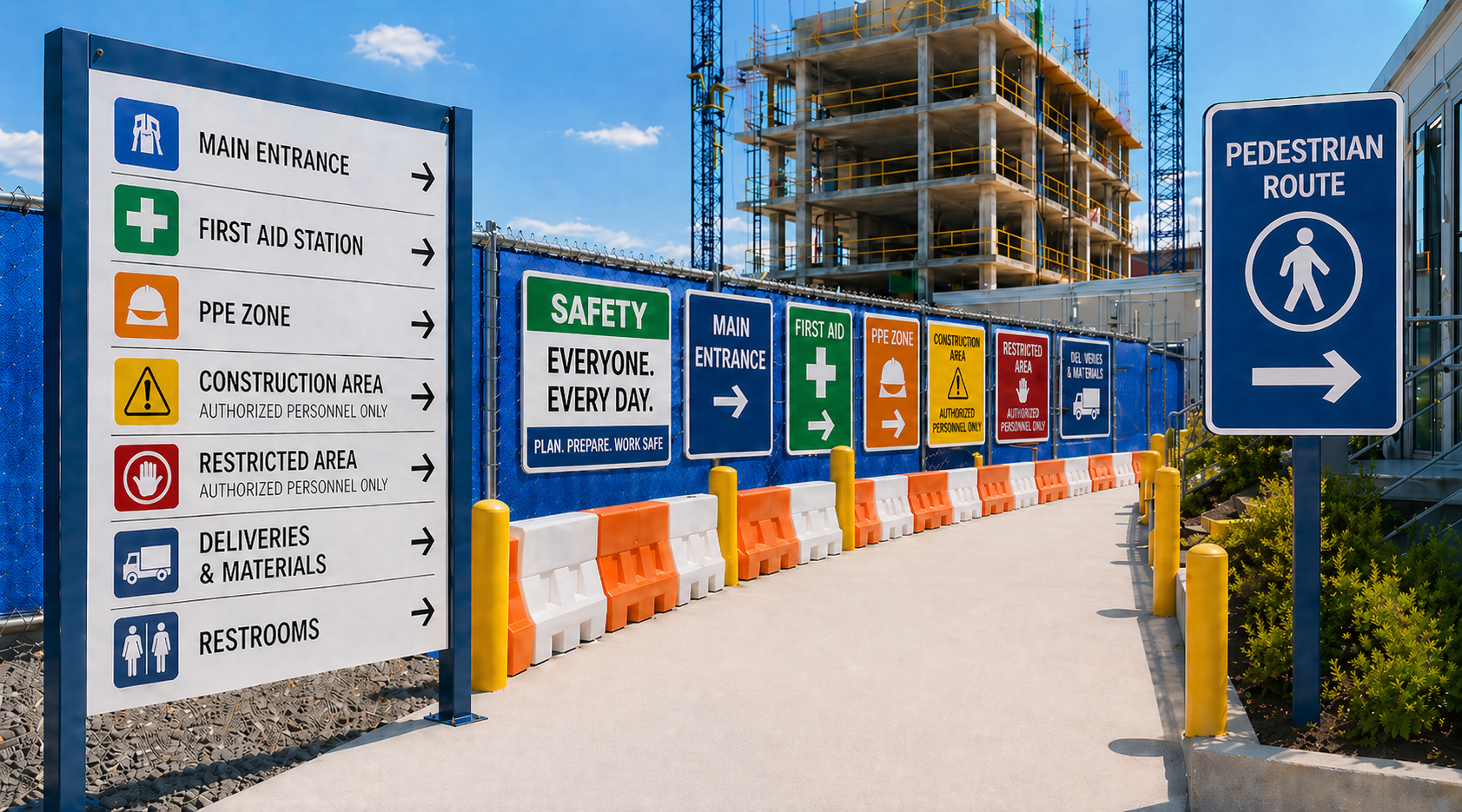
Understanding Jobsite Wayfinding Systems and Their Role in Construction
Jobsite Wayfinding Systems play a vital role in every phase of a construction project. As we design and install environmental graphics, we recognize that wayfinding is more than just directional signs – it’s a strategic approach to guiding individuals, improving safety, and supporting the daily movement of workers and visitors. Our systems reduce confusion on-site, help maintain flow, and give everyone the information they need where and when they need it. As jobsite conditions change, adaptable wayfinding is crucial for the smooth progression of work.
The Growing Need for Effective Wayfinding on Jobsites
The demands on construction sites have grown, leading to more complex site layouts and busier work zones. With these developments, the need for clear, intuitive wayfinding has only become more important. Our clients are often managing multi-phase projects with changing access points, frequent re-routing, and a diverse workforce that may include temporary staff or outside contractors. Without proper wayfinding, the risk of miscommunication, accidents, and lost time increases. We see effective environmental graphics as a solution that addresses these issues directly, creating jobsites that are not only efficient but also safer and more organized for everyone involved.
What Environmental Graphics Bring to Jobsite Wayfinding
Incorporating environmental graphics into wayfinding brings a level of clarity and engagement that traditional signs may not achieve. By integrating consistent colors, symbols, and language familiar to the site’s workers, our approach helps people locate areas such as entrances, exits, first aid stations, and restricted zones quickly. These graphics extend beyond mere functionality; they support brand communication, reinforce safety messaging, and create a unified visual experience across the entire jobsite. Through thoughtful design, we can support both orientation and morale, making it easier for individuals to navigate unfamiliar spaces confidently and efficiently.
How Environmental Graphics Enhance Jobsite Safety and Navigation
When we use environmental graphics on active jobsites, we improve not only the look of the space, but also its safety and efficiency. Graphics bridge language gaps and reinforce safety practices for all workers, regardless of experience or background. By placing wayfinding elements at every decision point, we help direct foot and vehicular traffic, reducing the likelihood of congestion or accidents. It is important to consider how people move across the site during different phases, as each stage can bring new hazards or navigation challenges.
Moreover, our approach goes beyond the basics. Environmental graphics prompt attention to emergency exits, PPE zones, and first aid stations. We see that consistent communication, delivered visually throughout the jobsite, has a direct impact on awareness. Because people become familiar with the visual guidance, compliance with safety protocols increases, and incidents of unauthorized access to restricted areas decrease. In turn, this results in a safer jobsite and more predictable workflows for everyone involved.
Design Strategies for Effective Jobsite Wayfinding Systems
Designing wayfinding graphics requires a balance of clarity and adaptability. We begin by mapping site circulation and identifying key decision points – places where workers might need clear direction. Our team selects colors and symbols that can be recognized even under challenging site conditions, such as dust or poor weather. In addition, placement is critical. We install graphics at heights and locations that will not be easily blocked by equipment or temporary storage. This ensures that the signs remain visible as the jobsite evolves.
Furthermore, our strategies allow for change over time. Modular graphics allow adjustments as the project progresses, so temporary paths and rerouted access can be clearly marked without confusion. To guarantee comprehension, we rely on universally understood icons, minimal text, and consistency across all signage elements. This simplifies navigation and helps us support a workforce that may include non-English speakers or new hires unfamiliar with the site.
Key Elements and Materials Used in Jobsite Wayfinding Systems (with sources cited, e.g., OSHA, NCSG)
Creating robust jobsite wayfinding requires the right blend of materials and visual cues. We refer to guidelines from organizations such as OSHA and the National Construction Safety Group to ensure compliance and best practices. Typical materials include durable plastics, aluminum panels, and weather-resistant adhesives. These materials withstand changing outdoor conditions and the wear that comes with a bustling work environment.
- Safety color-coding: High-visibility colors such as yellow for caution and red for restricted or emergency zones (OSHA standards).
- Clear directional arrows: Large, bold graphics to quickly direct traffic or indicate safe paths.
- Temporary, moveable signage: Allows for flexible placement as site access changes with each project phase (NCSG recommendations).
- Identification markers: Graphics that designate locations for first aid, restrooms, or material storage.
- Multilingual messaging: Supports clear communication for a diverse workforce, which aligns with OSHA’s best practices for safety signs and tags.
We also consider the lifespan of each phase, choosing materials that can be easily replaced as needs change. Since compliance and safety are non-negotiable, we regularly audit our installations to verify effectiveness and adherence to regulatory standards. By prioritizing legibility, durability, and flexibility, our environmental graphics become a foundation for improved site safety and operational success.
The Measurable Benefits of Investing in Environmental Graphics for Wayfinding
Investing in environmental graphics for wayfinding offers visible and practical returns for construction projects of all sizes. When we implement tailored visuals and navigational systems, we minimize confusion, reduce the risk of on-site incidents, and help workers and visitors move more efficiently. Site productivity improves because critical information is always accessible and clear. These systems also support regulatory compliance by ensuring safety messaging meets OSHA and other industry standards. Over time, these factors contribute to cost savings and greater satisfaction for everyone on the jobsite.
Best Practices for Implementing Successful Jobsite Wayfinding Systems
Drawing from our experience, effective wayfinding solutions start with a thorough site assessment and collaborative planning with project stakeholders. It is essential to understand the flow of people, materials, and equipment when determining the location and content of each graphic or sign. Consistency of design supports quick recognition, while durable materials ensure messaging remains visible in challenging jobsite conditions. By keeping messages simple, using recognized icons, and updating signage as the project evolves, we help ensure the wayfinding system remains relevant and effective throughout the construction process.
Looking Ahead: The Future of Jobsite Wayfinding and Environmental Graphics Integration
As construction environments grow more complex, the role of environmental graphics and construction graphics will only increase. Emerging technologies, such as QR codes and digital displays, offer new means to deliver time-sensitive directions and safety messages. We anticipate greater integration with site management platforms, allowing for dynamic updates and analytics that measure efficiency and compliance. At Riot, we are committed to adapting our solutions to the evolving needs of our clients, ensuring Jobsite Wayfinding Systems continue to improve safety, accessibility, and operational flow for all.
FAQ
What are jobsite wayfinding systems?
At Riot, we define jobsite wayfinding systems as integrated signage, graphics, and communication tools that help clearly guide workers, visitors, and deliveries safely and efficiently through a construction site. With well-designed wayfinding, everyone can navigate complex jobsites with greater confidence and clarity.
Why has jobsite wayfinding become increasingly important?
With construction sites growing in size and complexity, the need for effective wayfinding has increased dramatically. In addition, more strict regulatory and safety standards mean that clear navigation isn’t just helpful – it’s crucial. Consequently, investing in professional systems is now considered an industry best practice.
How do environmental graphics improve jobsite wayfinding?
We harness the power of environmental graphics to add visual cues, vibrant colors, and purposeful graphics that instantly communicate direction, hazards, and important site information. By doing so, our solutions transform navigation into a much safer and more intuitive experience for everyone on-site.
How does improved wayfinding enhance jobsite safety?
Our wayfinding systems reduce confusion, minimize the risk of accidents, and aid in emergency response by clearly marking routes and critical areas. Moreover, when workers know exactly where to go, incidents resulting from misdirection or restricted area access become far less likely.
What design principles do we use for jobsite wayfinding?
We employ design strategies built upon legibility, consistency, visibility, and durability. For example, our signage typically incorporates high-contrast text, universal symbols, and weather-resistant materials to ensure communication remains effective even in challenging conditions.
What materials do we typically use for our environmental graphics?
We select materials such as durable aluminum, rigid plastics, reflective sheeting, and weatherproof adhesives. According to OSHA and the National Construction Safety Group (NCSG), choosing robust, visible materials helps ensure longevity and compliance with safety standards.
How do we measure the benefits of our wayfinding systems?
We track key metrics like a reduction in site incidents, faster onboarding for new workers, and improved feedback from site audits. As a result, our clients frequently notice measurable improvements in both safety and operational efficiency after implementing our systems.
What are best practices for implementing jobsites’ wayfinding?
We always recommend site-specific planning, regular audits, and worker input when designing and deploying new wayfinding systems. Furthermore, maintaining consistent updates and ensuring high visibility across changing site conditions is essential for ongoing effectiveness.
Can we customize environmental graphics for unique project needs?
Absolutely. We specialize in tailoring our graphics and signage packages to fit the unique challenges of each jobsite. Whether it’s bilingual communication, innovative materials, or specific branding guidelines, our solutions flex to suit every project’s requirements.
What trends are shaping the future of wayfinding in construction?
New innovations – including digital signage, modular graphic systems, and real-time location aids – are rapidly evolving how we think about jobsite wayfinding. As we look ahead, integrating technology and sustainable materials will further enhance these essential systems.