The Function and Benefits of Temporary Construction Walls for Airport Renovation Projects
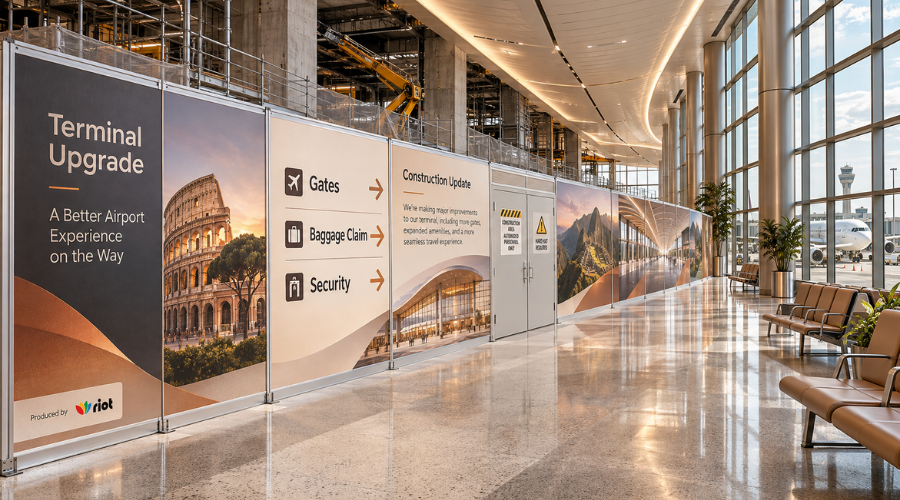
During airport construction, walls do more than cover work zones. At Riot, we use them to create controlled edges for passengers, staff, and project crews. Clear barriers help separate active construction from daily terminal operations. Therefore, the work area can stay contained while travelers continue moving through the airport.
These wall systems also support wayfinding. Airports change quickly during renovations, and routes may shift as phases change. As a result, travelers need visual cues that reduce hesitation. We use graphics, messaging, maps, arrows, and branded content to guide people through adjusted paths.
Temporary barriers can also reduce questions for airport teams. For example, a clear detour message can direct passengers before they reach a closed corridor. Meanwhile, project updates can explain what work is happening nearby. This helps turn a construction area into a communication tool.
– Help separate passengers from construction activity
– Support revised circulation routes and gate access
– Share project updates in visible locations
– Reduce visual clutter around work zones
– Provide space for airport branding, sponsor content, or public messaging
In addition, graphics can make long renovation timelines easier for the public to understand. We can align wall messaging with project phases, airline needs, and terminal operations. That approach helps our clients use each surface with a clear purpose.
Design Strategies for Effective Environmental Graphics on Construction Barriers
Good construction graphics begin with the passenger journey. We look at where people enter, pause, turn, queue, and make decisions. Then, we plan messages around those moments. This keeps the wall system useful, not just decorative.
Readability matters in airport spaces. Travelers often move with luggage, children, or limited time. So, we recommend short copy, strong contrast, and simple directional language. Icons can also help when visitors speak different languages.
Scale also affects performance. A message that works at five feet may fail across a busy concourse. Therefore, we size type and graphics for real viewing distances. We also consider lighting, sightlines, and competing signs.
Brand consistency remains important, but it should not create confusion. We can match airport standards while keeping detour information clear. However, wayfinding messages should stand apart from promotional or project storytelling content. Each panel needs a defined job.
Material planning supports the design. Some projects need frequent graphic changes. Others need durable panels for longer phases. Additionally, we review wall surfaces, install timing, maintenance access, and removal needs before production starts.
Compliance, Durability, and Safety Considerations in Airport Renovation Installations (Include citations: OSHA 29 CFR 1926.200; FAA Advisory Circular 150/5370-2G)
Airport renovation work requires close attention to safety and construction rules. OSHA 29 CFR 1926.200 addresses accident prevention signs and tags on construction sites. Because of this, we coordinate visual graphics with required safety signage, not against it.
FAA Advisory Circular 150/5370-2G provides guidance for operational safety during airport construction. It covers planning, coordination, and protection of airport operations during work. Therefore, our graphics planning must respect access control, secure areas, and operational routes.
Durability also affects safety. Loose edges, damaged panels, or fading messages can create confusion. So, we select materials based on foot traffic, cleaning routines, wall conditions, and expected project length. We also plan installations to limit disruption during active airport hours.
Finally, coordination keeps the project moving. We work with contractors, airport teams, architects, and facility managers before production. This helps our crew install graphics in the right sequence. It also helps the finished barriers support passengers and the construction schedule.
Enhancing Passenger Experience With Temporary Construction Walls for Airport Renovation Projects
At Riot, we understand that airport renovation projects can disrupt the routine flow of passengers, often causing confusion and impacting overall experience. By integrating well-designed temporary construction walls, we help minimize inconvenience and provide clear guidance throughout the journey. These solutions are crucial not just for safety, but also for creating a visually cohesive and informative environment during transition periods. With our experience in environmental graphics, we focus on strategically placed visuals that streamline wayfinding, highlight vital information, and communicate your airport’s story, even amid construction. This approach plays a tangible role in comforting travelers and maintaining trust during necessary changes within airport spaces.
Case Studies: Successful Airport Renovation Projects Utilizing Environmental Graphics
The value of temporary construction walls for airport renovation projects is evident in several successful renovations. For example, during the Denver International Airport expansion, environmental graphics played an active part in maintaining positive traveler sentiment. Carefully crafted temporary walls featured visuals of upcoming renovations, clear wayfinding, and essential safety messaging, which aligned with research from The National Academies Press on effective airport terminal construction management. By installing visually engaging barriers, the airport not only protected guests from active worksites but also fostered curiosity and enthusiasm about the improvements underway. Such thoughtful integrations of graphics have helped organizations remain compliant with FAA and OSHA guidelines while turning necessary obstacles into opportunities for communication and branding.
How to Choose the Right Environmental Graphics Partner for Your Next Airport Project
Selecting the right partner for environmental graphics and temporary construction walls for airport renovation projects requires thoughtful consideration. Begin by seeking a team that prioritizes compliance, understands airport regulations, and has experience working with high-traffic public spaces. Attention to durability and safety standards is critical, and your provider should utilize materials and designs suited to withstand the unique demands of airport environments. Collaboration is also key – look for a partner who listens to your priorities and develops tailored solutions that align with your renovation timeline and branding objectives.
Our process at Riot emphasizes transparent communication from initial consultation to final installation. We offer a wide range of customizable options, including modular construction barricades, which are engineered to be flexible, compliant, and easily reconfigured as your project’s needs evolve. Our priority is enabling you to keep your project on track, passengers reassured, and messaging consistent – whether the renovations are minor upgrades or major terminal overhauls. When you’re ready to discuss how environmental graphics can enhance your airport renovation, contact our team to explore solutions that safeguard efficiency and reinforce your vision.
FAQ
What are temporary construction walls for airport renovation projects?
Temporary construction walls are modular barriers we install during airport renovation projects to separate active construction zones from operational passenger areas. These walls ensure safety, streamline workflow, and minimize disruption, while enabling us to use the surfaces for impactful visual communication.
Why are environmental graphics important in modern construction?
Environmental graphics add clear wayfinding, engaging visuals, and branded messages to otherwise blank construction walls. By integrating environmental graphics, we enhance both the navigational experience and the overall atmosphere, resulting in higher passenger satisfaction throughout renovation phases.
How do temporary construction walls benefit airports specifically?
Airports are high-traffic environments and, consequently, need innovative solutions to guide and inform travelers during renovations. Our temporary construction walls create physical safety barriers and double as communication tools to preserve a seamless passenger experience, even when significant construction is underway.
What materials are used for temporary construction walls in airports?
We use durable, lightweight materials such as modular aluminum frames, polycarbonate panels, and specialty vinyl wraps. These materials are designed to meet industry standards for fire safety, visibility, and structural integrity, ensuring both compliance and efficiency in installation.
How do you design effective environmental graphics for airport settings?
Our team considers traffic flow, sightlines, cultural touchpoints, and airport branding when designing environmental graphics. For example, we use clear icons for wayfinding, bilingual messaging when necessary, and vibrant imagery to reinforce a sense of place – maximizing the visual impact and clearly communicating any directional changes.
What regulations apply to the installation of these walls and graphics?
We strictly adhere to standards such as OSHA 29 CFR 1926.200 for construction signage, as well as FAA Advisory Circular 150/5370-2G, which addresses airport safety during construction. By following these guidelines, we safeguard passengers, workers, and airport operations without compromise.
How do these installations impact the passenger experience?
High-quality temporary walls and graphics reduce confusion, maintain aesthetics, and provide travelers with up-to-date information. As a result, even during disruptive renovation periods, passengers enjoy a smoother and more visually pleasing journey through the airport.
Can you provide examples of successful airport renovation projects using environmental graphics?
Absolutely! At Denver International Airport, our environmental graphic solutions transformed the renovation zone into an engaging space, while maintaining clear wayfinding and safety. This approach, recommended by The National Academies Press in “Airport Terminal Construction Management,” ensures operational continuity and passenger engagement.
How do you ensure the durability and safety of the construction walls?
We select robust materials designed to withstand heavy foot traffic and frequent maintenance routines. Additionally, our installations comply with industry safety codes, integrate anti-skid surfaces, and are regularly inspected so that they remain secure throughout the project’s duration.
What should we look for when choosing an environmental graphics partner for our next airport project?
When selecting a partner, consider proven expertise in airport environments, strong compliance credentials, and a design portfolio that demonstrates both creativity and clarity. We offer all these strengths, ensuring your renovation project is both safe and visually inspiring from start to finish.