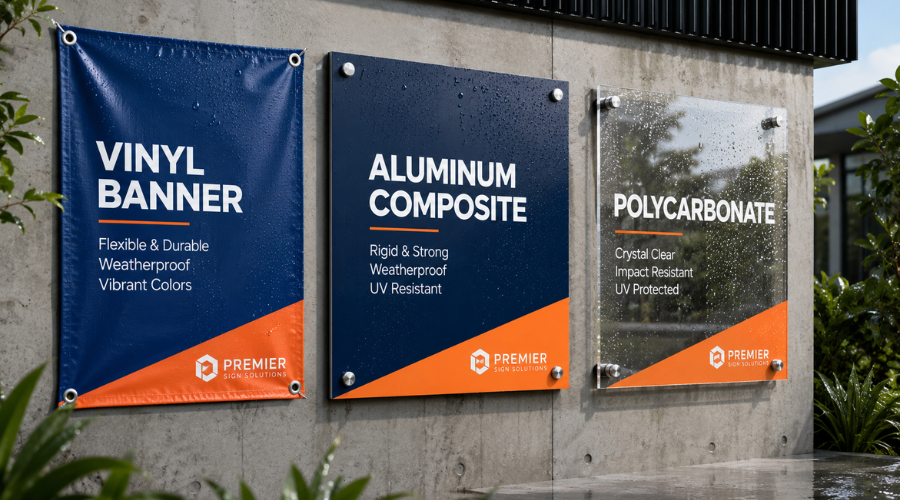
Weatherproof Sign Materials Comparison: What Are Environmental Graphics and Why Do They Matter?
Weatherproof Sign Materials Comparison is an essential starting point for any project that requires environmental graphics. At Riot, we believe that environmental graphics do more than convey information; they create connections, guide people through spaces, and reinforce our clients’ identity in every environment we touch. Environmental graphics have the power to transform an ordinary location into a branded experience – indoors or out. They can uplift corporate campuses, help navigate complex healthcare facilities, introduce educational campuses, or strengthen wayfinding and storytelling in public spaces. Whatever your intention, the choice of materials is critical to the impression your signage makes, for both short-term campaigns and permanent installations.
The Role of Weatherproof Sign Materials in Creating Lasting Impressions
Outdoor graphics are exposed to the elements – from harsh sunlight and driving rain to snow, pollutants, and daily wear and tear. Without the right weatherproof materials, even the most compelling design will quickly fall victim to fading, warping, or damage. As a result, the selection of substrate and print technology becomes as important as the design itself. At Riot, we see weatherproof sign materials as the foundation for all enduring environmental graphics. When signage looks sharp and remains intact over time, it signals to your audience that your organization is committed to quality and attention to detail. The right choice in materials protects your investment and ensures that first impressions remain consistent – regardless of the season or weather conditions.
Key Factors That Impact Signage Durability Outdoors
Before we delve into a Weatherproof Sign Materials Comparison, it’s helpful to understand the primary factors that influence the lifespan of your outdoor signage. Environmental exposure is the most obvious: sun, rain, wind, and temperature fluctuations all play a role. Materials like vinyl, aluminum, and polycarbonate each respond differently to UV rays, moisture, and seasonal changes.
Weatherproof Sign Materials Comparison: Vinyl, Aluminum, and Polycarbonate
Advantages and Limitations of Popular Substrates for Outdoor Graphics
Choosing the right substrate is central to ensuring your outdoor graphics last and look their best. At Riot, we routinely work with vinyl, aluminum, and polycarbonate due to their proven performance in various conditions. Each material offers unique strengths and faces specific challenges, making careful consideration essential.
Vinyl is flexible, affordable, and widely adaptable for many different installations. It’s a strong contender for short-term campaigns or when frequent updates are required, such as promotions or event signage. Vinyl withstands moisture well and is available in both adhesive wraps and banners. However, it is more susceptible to fading and shrinking under constant sun exposure, and isn’t as structurally rigid as other options.
Aluminum stands out for its longevity and resistance to rust. Because it doesn’t warp, crack, or combust, aluminum is especially suited for permanent signs like building directories, parking indicators, and regulatory notices. We often recommend aluminum when seeking a heightened level of durability or a more professional appearance. Yet, it can be dented by impact, and while lightweight, installing larger panels may require additional support to prevent bending in high winds.
Polycarbonate delivers both impact resistance and excellent optical clarity, making it suitable for illuminated signs, protective face panels, or panels at risk from vandalism. Its resilience against harsh conditions is impressive, but over time, some polycarbonates can develop a yellowish tint if not treated with UV inhibitors. Additionally, while tougher than acrylic, it only meets the highest durability expectations when correctly maintained.
Cost, Sustainability, and Maintenance: What to Consider When Choosing Sign Materials
The upfront price is often one of the first things considered, but it’s equally important to look at total lifecycle costs. Vinyl is typically the least expensive option, which makes it attractive for temporary installations. Aluminum, while higher in initial cost, often provides long-term savings as it rarely needs to be replaced. Polycarbonate is positioned between these two in terms of price, reflecting its balance of flexibility and durability.
When our clients focus on sustainability, recycled aluminum or environmentally friendly vinyls are coming increasingly into play. Some vinyls and polycarbonates can be recycled, but it’s important to know local recycling capabilities. However, because environmental impact is now top of mind for many organizations, we help clients select products that meet both durability and sustainability criteria.
- Assess the intended lifespan of your signage before selection.
- Consider environmental factors specific to your site – direct sun, humidity, or risk of impact damage.
- Review maintenance expectations, as some materials need periodic cleaning or refinishing to remain attractive.
- Factor in aesthetics, as the texture and finish of different materials can impact how graphics are perceived.
We support our partners in balancing all these factors to ensure each material selected aligns with the brand experience you want to achieve, while respecting budget and sustainability priorities.
Weatherproof Sign Materials Comparison: Which Is Best for Your Project?
Deciding on the right material for outdoor signage is critical for the impact and longevity of environmental graphics. In our Weatherproof Sign Materials Comparison, we carefully reviewed vinyl, aluminum, and polycarbonate, examining durability, appearance, and practical concerns. It’s clear that each material brings unique strengths. Vinyl provides affordability and versatility, making it good for short-term or easily updated displays. Aluminum offers excellent durability and resistance to rust, serving well in areas with high exposure to rain or sunlight. Polycarbonate stands out for projects requiring strong impact resistance and clarity, such as illuminated or complex graphic elements.
As you consider your project requirements, evaluate the local climate, expected lifespan, graphic complexity, and how much ongoing maintenance you can support. Each factor influences not only the functional success of the signage but also its visual impression over time. There is no single answer – the best option depends on your site conditions and project goals. We can help select a substrate that aligns with both your design intent and the real-world environment where your graphics will live.
Expert Tips for Maximizing the Longevity of Environmental Graphics
Maximizing outdoor signage performance starts with material selection, but it doesn’t end there. Proper finishing and installation are crucial; weatherproof coatings, UV-resistant inks, and secure mounting all contribute to extended life. We recommend periodic inspection and gentle cleaning suited for the given substrate, which helps mitigate accumulated dirt, mold, or other environmental effects. In some cases, it makes sense to plan for seasonal checks or to source materials with built-in protective properties. Our team integrates these elements into each project, prioritizing resilience without compromising visual quality.
Another important approach is collaborating early in the design phase, making sure your signage solution anticipates site-specific exposures like prevailing winds, sun orientation, and possible vandalism or impact risks. Our experience with a wide range of outdoor environments allows us to advise on the nuanced choices that support long-term integrity and appearance. To see a detailed overview of our environmental capability, please review our dedicated resource.
Trusted Industry Sources to Guide Your Sign Material Selections
Staying informed about innovations in sign-making materials and installation methods is a core part of our process. We routinely reference industry standards, supplier recommendations, and case studies relevant to high-performance substrates. These are combined with our field experience to recommend reliable solutions for each project. For clients interested in conducting their own research, organizations like the International Sign Association (ISA), Specialty Graphic Imaging Association (SGIA), and Underwriters Laboratories (UL) offer up-to-date information and resources.
Ultimately, our goal is to ensure your environmental graphics project meets both your branding goals and the demands of outdoor exposure. If you need further guidance following this Weatherproof Sign Materials Comparison, we’re equipped to provide personalized recommendations and practical support from concept through installation. Collaboration and attention to detail are how we deliver signage solutions that last.
FAQ
What are environmental graphics and why do they matter?
Environmental graphics are visual elements – like signage, murals, or wayfinding systems – integrated into the built environment. We craft these graphics to enhance the user experience, reinforce branding, and help people navigate spaces efficiently. Because effective environmental graphics create memorable spaces, they can leave a lasting impression and strengthen your brand identity.
Why is choosing weatherproof sign material important?
Weatherproof materials ensure our outdoor signage can withstand sun, rain, wind, and other harsh conditions. When we choose the right materials, our graphics retain their color, clarity, and function for years, minimizing maintenance and replacement costs. Investing in durable materials ultimately supports the reliability and longevity of our visual communications.
Which materials are most weatherproof for outdoor signage?
We frequently recommend three standout materials: vinyl, aluminum, and polycarbonate. Each offers superior weather resistance and durability in different scenarios. While aluminum resists rust and fading, vinyl provides flexibility, and polycarbonate delivers impact protection. Therefore, our choice depends on your project’s specific needs.
What are the pros and cons of vinyl, aluminum, and polycarbonate for outdoor signs?
Vinyl is cost-effective and flexible but can degrade with prolonged UV exposure. Aluminum is lightweight, won’t rust, and is highly resistant to the elements, but it can dent under impact. Polycarbonate delivers excellent strength and shatter resistance, although it can be more expensive. As a result, we weigh these factors based on your requirements.
How does climate affect outdoor sign material selection?
Climate is a major consideration. We recommend UV-resistant finishes in sunny climates and corrosion-resistant materials in coastal or rainy regions. In areas prone to high winds or vandalism, impact-resistant substrates like polycarbonate may be best. By selecting based on local conditions, we maximize the lifespan of your signage.
Are sustainable sign materials available for environmental graphics?
Absolutely! We offer eco-friendly options such as recycled aluminum, responsibly sourced wood, and low-VOC inks. By choosing sustainable materials, our clients can reduce environmental impact without compromising on durability or visual appeal. Moreover, sustainable signage can even reinforce your organization’s commitment to the environment.
How do weatherproof materials affect the overall cost of signage?
While weatherproof materials might have a higher upfront cost, they generally offer better longevity and lower maintenance expenses. Because our durable signs last longer and require fewer repairs or replacements, your total investment is more cost-effective over time. Therefore, selecting quality materials pays off in the long run.
What maintenance is required for outdoor environmental graphics?
We recommend periodic cleaning to prevent dirt and debris from degrading your signs. Additionally, checking for damage and performing minor repairs promptly extends the life of your graphics. Because maintenance needs vary by material, we always provide customized care instructions for each project to ensure longevity.
How can we maximize the lifespan of our outdoor signs?
To maximize your signage’s lifespan, we suggest choosing the right weatherproof material for your environment, applying protective coatings, and performing regular maintenance. Because proper installation is also critical, our experienced team ensures every sign is fitted securely and to industry standards.
Where can we find trusted information to help select outdoor sign materials?
We rely on resources from industry leaders, material manufacturers, and organizations like the International Sign Association for the latest standards. Additionally, our team’s expertise ensures you receive tailored recommendations based on current data and project-specific needs. Together, these resources guide us in delivering the best solutions for your signage projects.