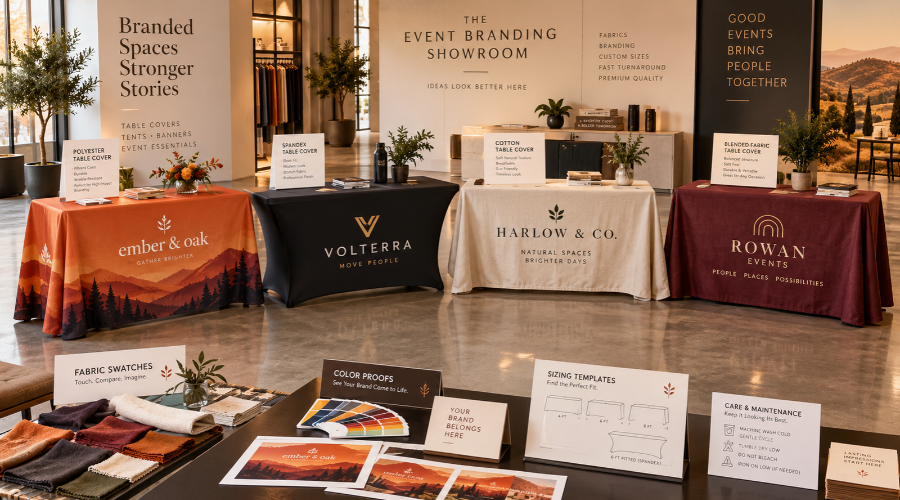
Common Table Cover Fabric Types for Environmental Graphics
Table covers support displays in lobbies, events, pop-ups, schools, clinics, and sales environments. We use them to help connect printed branding with the physical space around it. Fabric choice affects the way color appears, how the cover fits, and how long the piece remains useful.
Polyester remains a common option because it balances print clarity, cost, and maintenance. It holds color well during dye-sublimation printing. Also, it resists wrinkles better than many natural fabrics. For teams that move displays often, polyester can reduce setup time.
Spandex works well when a fitted, contoured look matters. It stretches around the table and creates clean lines. As a result, logos and patterns can appear more integrated with the table shape. However, stretch can affect artwork placement if the file and template do not align correctly.
Cotton offers a softer surface and a more natural texture. It can work for specific brand settings where a less synthetic feel matters. However, cotton may wrinkle more easily and absorb stains faster. We consider those factors when planning high-use spaces.
- Polyester supports frequent transport, bold color, and practical care.
- Spandex creates a fitted profile for events and compact display areas.
- Cotton adds texture for selected indoor environments and shorter campaigns.
- Blended fabrics can balance structure, feel, and print response.
Comparing Benefits: Polyester vs. Spandex vs. Cotton Table Covers
Each fabric brings a different role to an environmental graphics program. Therefore, we start with how the table cover will function. A registration table needs a different solution than a retail demonstration counter.
Polyester suits repeated use because it handles folding, packing, and cleaning with fewer issues. It also supports consistent color across multiple pieces. For example, a front desk cover and event table cover can share a unified color system. That consistency helps our branded spaces feel planned.
Spandex offers a more tailored presentation. It works well where the table must look neat from several angles. It also reduces loose fabric near walkways. This can matter in crowded venues or narrow interior paths.
Cotton gives a different visual and tactile impression. It may support community events, wellness settings, or handmade product displays. Still, we review care needs before recommending it. Staining, shrinking, and pressing requirements can affect daily use.
Meanwhile, blends can provide a measured compromise. A polyester-cotton blend may soften the appearance while improving durability. A stretch blend may add shape control without the tightest spandex finish. We match those choices to the space, not just the artwork.
How Table Cover Fabric Types Influence Print Quality and Longevity (Source: PrintingUnited; PrintWeek)
Print quality depends on how ink, heat, fabric texture, and finishing work together. Industry coverage from PrintingUnited and PrintWeek often notes that material selection shapes print results. We see that in color density, edge detail, and wash performance.
Polyester usually supports dye-sublimation well. The process bonds color with the fibers and helps graphics withstand handling. Consequently, polyester can maintain strong color through regular event cycles. It also dries quickly after cleaning.
Spandex needs careful planning because stretch changes image proportions. We check safe zones, logo placement, and seam locations before production. Otherwise, a mark may curve or shift after installation. Clear templates help reduce that risk.
Key Considerations When Selecting Table Cover Fabric Types
Choosing the right fabric for environmental graphic applications goes far beyond color and size. As we collaborate with organizations to elevate their visual presence, we recognize that the choice of table cover fabric types can directly influence both appearance and brand impression. Factors like durability, ease of care, and print vibrancy must be weighed against event demands, frequency of use, and logistical challenges like transportation. For example, polyester offers a reliable blend of strength and color retention, while spandex provides versatility and a sleek profile, making it suitable for dynamic branded environments. Cotton, on the other hand, can offer a classic texture but may require more careful upkeep. Ultimately, understanding the strengths and limitations of each material ensures that your graphics stand out and perform over time.
Trends and Innovations in Table Cover Materials for Branded Environments
As the world of environmental graphics evolves, we are seeing a notable shift in material innovation. There is a growing preference for fabrics derived from recycled content, reflecting the increasing demand for sustainability in branded presentations. New finishing processes are also improving stain resistance and print sharpness, allowing us to offer table cover solutions that hold their visual appeal through multiple setups and events. Digital printing technology pairs especially well with high-performance polyesters, producing colors that remain crisp and accurate even after repeated handling. For clients seeking easily transportable and wrinkle-resistant covers, stretch materials like spandex are proving especially popular. These advancements mean more tailored options as we bring brand aesthetics to life in various event spaces.
Choosing the Fabric That Supports Your Brand Story and Visual Goals
Selecting from among the available table cover fabric types should be driven by your brand’s story, your usage needs, and your desired visual outcomes. Our expertise helps guide clients toward solutions that align with their environmental setting, event schedule, and maintenance preferences. For organizations aiming for a professional, unified look, our table cloths offer a range of customization options that support both functional requirements and brand messaging. By considering how fabric properties interact with your graphics, we ensure your displays communicate consistency and quality. Ultimately, the right choice in table cover fabric types will strengthen your branded environment, helping you make a memorable, lasting impact at every touchpoint.
FAQ
What are environmental graphics, and how do our table covers fit into them?
Environmental graphics use visual elements to shape and enhance spaces, especially in branded or experiential environments. Our table covers serve as key tools within these graphics, adding both visual impact and cohesive branding to spaces like trade shows, events, and lobbies.
Why does table cover fabric selection matter for branding?
Choosing the right table cover fabric directly influences how your brand is perceived. Since the fabric affects color vibrancy, print clarity, and overall professionalism, we prioritize quality materials to ensure our branding stands out and leaves a lasting impression.
What are the most common types of table cover fabrics we offer for environmental graphics?
We primarily offer polyester, spandex, and cotton table covers. Depending on your need – whether it’s stretchability, durability, or a premium feel – we can recommend the fabric that best amplifies your message and stands up to event demands.
How do polyester table covers compare with spandex and cotton?
Polyester is durable, wrinkle-resistant, and ideal for vibrant prints. Spandex offers a snug, modern look that contours tables, making it popular for sleek events. Alternatively, cotton provides a natural feel and classic aesthetic but may wrinkle more easily and require extra care.
Will the type of table cover fabric affect the print quality and longevity?
Absolutely! The fabric you choose significantly impacts how well colors appear and how long your graphics last. For example, polyester holds dye exceptionally well and resists fading, while cotton, though beautiful, can show wear after repeated washing. Spandex holds prints tightly due to its stretch but is best for bold designs rather than fine details.
How do we ensure our table covers enhance the branded environment?
We carefully match fabric choices with your visual goals and the intended setting, ensuring our graphics blend seamlessly into your branded environment. Because every space is unique, our recommendations are tailored to highlight your brand while maintaining functionality.
What are some recent trends or innovations in table cover materials?
Recently, we’ve seen a shift toward eco-friendly and recycled fabrics, as well as specialized finishes that resist stains or offer antimicrobial properties. As we continue innovating, we’re always on the lookout for materials that not only look great but support sustainability and enhance user experience.
Are our table cover fabrics easy to maintain?
Yes, most of our table cover fabrics are designed for easy maintenance. For example, polyester and spandex are machine washable and resist wrinkling, making clean-up and repeated use stress-free. Cotton might require a little more care, but we provide clear care instructions to keep everything looking sharp.
Can we match specific brand colors with our table cover fabrics?
Yes, we use advanced printing techniques to achieve precise color matching on all our fabric options. Because brand consistency is critical, we test colors for accuracy and longevity, ensuring your covers reflect your brand identity every time they’re displayed.
What should we consider when choosing table cover fabric types for our next project?
You’ll want to consider factors like your branding goals, expected usage, venue requirements, care needs, and, of course, budget. We guide you through each step so you can confidently select the fabric that best supports your story and visual aspirations, ensuring your message stands out wherever it’s seen.