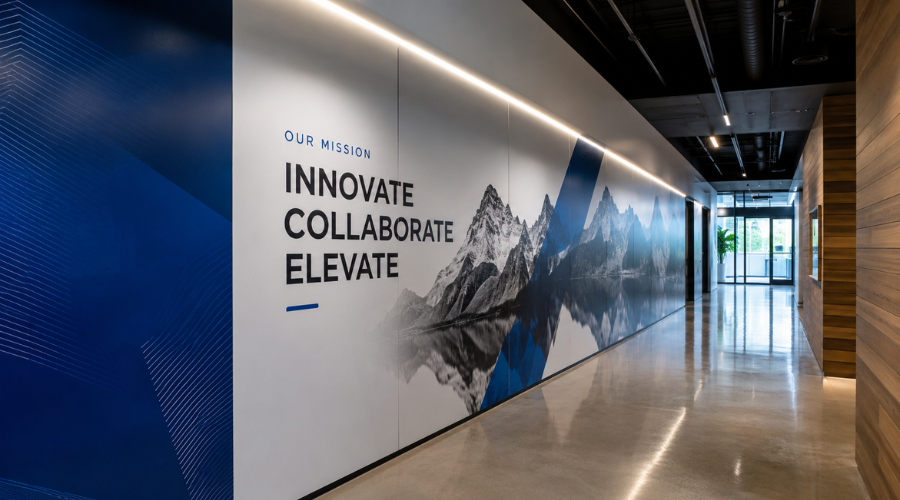
Understanding Environmental Graphics and Their Impact
Protective Overlaminate for Prints is a critical part of delivering reliable and visually appealing environmental graphics. At Riot, we understand that environmental graphics go beyond simple signs – they are essential elements that communicate a brand’s story and help direct, inform, or inspire those who interact with a physical space. Our experience in environmental graphics has shown that these visual elements perform best when they are designed to fit seamlessly into a location’s architecture and atmosphere. Whether used in hospitals, schools, corporate offices, or retail spaces, the right graphics have the power to create strong first impressions, guide navigation, and promote important messages.
Environmental graphics often need to withstand a wide range of environmental challenges. They can be exposed to foot traffic, UV rays, cleaning chemicals, and the touch of thousands of hands. Without the right protection, even the most precise and impactful designs can quickly show signs of wear. We have seen firsthand how faded colors, scratches, and peeling edges can undermine a message and the credibility of a business. This makes effective protection not a luxury, but a necessity for those investing in environmental graphics.
The Need for Durability in Printed Graphics
Longevity is a major concern for any graphic that needs to survive in a busy environment. At Riot, our clients expect solutions that not only look great upon installation but also maintain their integrity over time. When deciding on printed graphics for walls, floors, windows, elevators, or outdoor installations, it is critical to anticipate challenges such as abrasion, moisture, sunlight, and vandalism. In applications where graphics may be touched or cleaned regularly – like wayfinding signs, murals in children’s areas, or branded partitions – durability becomes even more important.
How Protective Overlaminate for Prints Enhances Environmental Graphics
When we design environmental graphics, our goal is to ensure that every element makes a lasting impact while withstanding real-world conditions. Protective overlaminates deliver an invisible shield that guards our prints against abrasion, everyday wear, UV damage, and moisture. That means our graphics can hold up in high-traffic spaces even when they’re exposed to frequent cleaning or heavy physical contact. With such protection in place, vibrant colors and crisp details are preserved far beyond installation, which allows our clients to enjoy extended visual performance and a positive audience experience.
Investing in overlaminates also offers practical benefits that go beyond appearance. By adding this layer, we make graphics easier to clean and ensure greater resistance to staining and chemical exposure. For graphics in schools or healthcare settings, this helps create environments that look professional and meet hygiene standards as surfaces are regularly sanitized. Additionally, overlaminating can defend against graffiti or intentional tampering, providing extra value for graphics located in public or semi-public areas.
Applying overlaminates helps us lower replacement frequency and reduce energy spent on maintenance. That’s why over time, these protective layers can support business goals by reducing total cost of ownership for wayfinding systems, branding installations, and custom displays. As we develop solutions for clients looking for both performance and efficiency, we’ve seen how protective overlaminate for prints can significantly exceed expectations for longevity and day-to-day usability.
Key Features and Material Types of Protective Overlaminates (Sources: Avery Dennison, 3M)
The right overlaminate needs to match the specific demands of each project. We work with an array of materials sourced from brands like Avery Dennison and 3M to suit different durability requirements and application surfaces.
- Film Types: Our options include cast, calendared, and specialty films for use on flat or contoured surfaces. Each type balances flexibility with toughness, allowing us to address complex wall graphics or textured surfaces.
- Adhesive Systems: Some overlaminates use permanent adhesives for long-term installations, while others feature removable adhesives, making them ideal for temporary displays or rebranding cycles.
- Finish Options: We offer gloss, matte, satin, and textured finishes. Gloss finishes deliver an eye-catching vibrant look, while matte and textured finishes reduce glare and add visual interest. Non-slip textures may be required for floor graphics to meet safety standards.
- Special Properties: Certain materials provide UV-resistance, anti-graffiti coatings, and antimicrobial surfaces. For outdoor graphics in sun-exposed locations, UV protection is critical for color retention. Anti-graffiti and antimicrobial finishes provide additional confidence in busy or sensitive environments.
We select each overlaminate based on factors like durability expectations, cleaning protocols, and aesthetic goals – all while factoring in budget considerations. This allows us to recommend a material that aligns precisely with the project’s demands.
Application Methods and Best Practices for Overlaminate Protection
For overlaminates to work as intended, proper application is essential. We follow proven techniques to ensure that our graphics are protected evenly and that there are no areas prone to early failure. Using specialized laminating equipment, we bond the overlaminate to printed graphics using consistent pressure, which prevents air bubbles or wrinkles that could compromise durability. Edge sealing and trimming are completed with care, extending protection right to the substrate margins and reducing the risk of peeling or contamination over time.
Benefits of Protective Overlaminate for Prints in Real-World Environments
At Riot, we know that environmental graphics need to perform exceptionally in a range of demanding settings. Utilizing Protective Overlaminate for Prints helps our products maintain clarity, vibrancy, and durability in the face of physical contact, variable weather, and constant exposure to UV light. As a result, our graphics remain visually striking and intact for their intended lifespan, minimizing the need for frequent replacements. Incorporating quality overlaminates means we can consistently deliver projects that uphold branding and messaging standards in any location, whether indoors or out.
Common Mistakes to Avoid When Using Overlaminates
Protective Overlaminate for Prints delivers real value, but awareness of common pitfalls is key to maximizing performance. One mistake is selecting an overlaminate with the wrong finish or thickness for the specific environmental conditions, potentially leading to premature wear or visibility issues. Skipping proper surface preparation or neglecting to use the right application tools can also undermine adhesion, resulting in bubbling or peeling. Additionally, overlooking compatibility between our base print material and the chosen laminate can cause issues over time. It’s essential to match the technology and installation technique to the unique requirements of each job to guarantee long-term success.
Choosing the Right Protective Overlaminate Solution for Your Business
Selecting the right Protective Overlaminate for Prints begins with a clear understanding of the intended installation environment and duration. Our team works closely with clients to assess exposure to sunlight, chemicals, moisture, and potential abrasions or impacts. We consider the visual demands of the project, such as gloss versus matte finishes, and factor in cleaning and maintenance protocols. By drawing on our expertise and close industry partnerships, we identify laminate materials that extend the life and appearance of graphics while complying with all project requirements. This process is supported by our environmental capability resources, allowing us to recommend sustainable and effective solutions based on tested results. The result: graphics you can trust to deliver a clear message, no matter the conditions.
FAQ
What are environmental graphics and why are they important?
Environmental graphics are visual elements such as signage, wall murals, and wayfinding graphics that we install in physical spaces to enhance the user experience. When used strategically, they communicate brand messages, improve navigation, and create engaging environments. Because these graphics are exposed to daily wear and environmental factors, their durability is crucial for lasting impact.
Why do our printed graphics require extra durability?
Our printed graphics often face challenges such as UV exposure, moisture, abrasion, and physical contact. To maintain their visual appeal and functionality, we must ensure that these graphics are protected from fading, scratching, and other forms of damage. Therefore, enhancing their durability is essential for maximizing our investment and upholding our quality standards.
What is a protective overlaminate for prints?
A protective overlaminate is a thin, transparent film that we apply over printed graphics to act as a barrier. This added layer not only shields our prints from environmental hazards but also improves their longevity and appearance. Importantly, it can provide different finishes like gloss, matte, or luster, depending on our needs.
How does a protective overlaminate enhance environmental graphics?
By using protective overlaminates, we greatly improve the life span and resilience of our environmental graphics. These overlaminates defend against scratches, UV rays, chemicals, and general wear, making the graphics look better for longer. As a result, our graphics continue to deliver their messaging and aesthetics without frequent replacements or touch-ups.
What are the key features of protective overlaminates?
Protective overlaminates offer several important features: UV resistance, scratch resistance, anti-graffiti properties, and chemical protection. According to trusted manufacturers like Avery Dennison and 3M, different materials can be chosen based on whether we need flexibility, outdoor durability, or special finishes, helping us meet diverse project requirements effectively.
What types of materials are used in overlaminates?
Depending on the application, we can choose overlaminates made from vinyl, polyester, or specialty composites. Each material offers varying levels of flexibility, weather resistance, clarity, and finish. Vinyl is often used for its flexibility, while polyester offers greater hardness and clarity for demanding conditions. Thus, we select materials that best match our project’s environmental demands.
How do we apply protective overlaminates to our graphics?
We apply overlaminates using either cold (pressure-sensitive) or heat-activated processes, depending on the graphic material and overlaminate type. By following industry best practices – such as ensuring a dust-free environment and proper alignment – we guarantee smooth, bubble-free application. FESPA and 3M recommend using professional laminators for the best results, which we always strive to do on every project.
What are the main benefits of using protective overlaminates in real-world environments?
The primary benefits include enhanced durability, easier cleaning, improved image quality, and resistance to harsh weather or vandalism. Because our graphics last longer and retain their original appearance, we enjoy reduced maintenance costs and positive impressions from our clients and their customers. Ultimately, overlaminates protect our investment and brand reputation.
What common mistakes should we avoid when using overlaminates?
Some frequent pitfalls we avoid include applying the overlaminate on graphics that haven’t fully cured, neglecting proper surface cleaning, and selecting the wrong finish or material for the environment. By planning ahead and following application guidelines, we ensure our results are flawless and durable every time. It’s vital to match the overlaminate characteristics with the specific challenges of each installation.
How do we choose the right protective overlaminate solution for our business?
We assess factors like the intended location, expected wear and tear, required finish, and environmental challenges. Then, we collaborate with leading material providers and review case studies to compare options. By tailoring our choice to the unique needs of each project, we guarantee maximum protection, appearance, and value for our clients.