Essential Backlit Display Brightness Tips for Eye-Catching Environmental Graphics
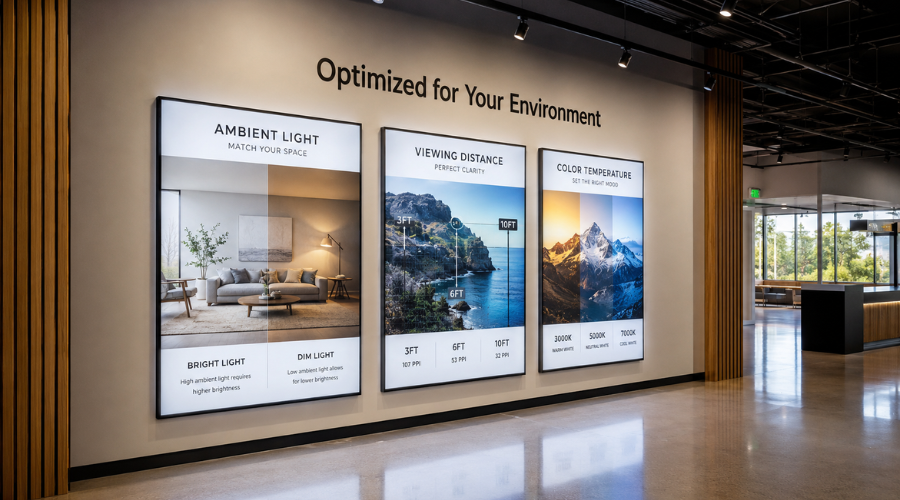
When we plan environmental graphics, brightness needs to support the space, not overpower it. Our goal is to help visitors see the message quickly and comfortably. However, the right setting depends on lighting, viewing distance, surface material, and traffic flow. A display in a lobby needs different output than one near exterior glass. Likewise, a retail wall may need more contrast than a directional sign in a hallway.
We start by reviewing how people will approach the graphic. Then, we consider whether they will read it from a few feet away or across a room. Brightness should help the message stand out without creating glare. In addition, it should protect brand color and keep images from looking washed out. When we align brightness with the environment, the display feels intentional and useful.
- Measure ambient light at the intended display location during normal business hours.
- Match brightness to viewing distance, message size, and expected dwell time.
- Check contrast between text, imagery, and background materials.
- Review finishes, because glossy surfaces can increase reflected light.
- Test content at full scale before approving final production.
For many projects, we also look at dayparting. This means we adjust output for morning, afternoon, and evening conditions. As a result, the display stays readable without using more energy than needed. It also helps reduce eye strain for employees and visitors who see the graphic often.
Understanding Lumens, Candela, and Color Temperature: What the Science Says
Lumens describe total light output from a source. Candela measures light intensity in a specific direction. For backlit graphics, candela often matters because viewers see the illuminated surface from defined angles. Therefore, we consider both output and direction when we specify display components.
Color temperature also affects how people perceive the graphic. Warmer light can soften imagery, while cooler light can sharpen whites and blues. However, too much shift can change brand colors. We compare the display lighting with nearby architectural lighting before we finalize settings. This step helps our team keep color closer to the approved standard.
Brightness alone does not create readability. Contrast carries much of the message. For example, light text on a bright background can lose clarity. Meanwhile, dark copy against a controlled illuminated field can read faster. We balance brightness, contrast, and color so the viewer can process the graphic without effort.
Ambient conditions can change throughout the day. Sunlight, overhead fixtures, window tint, and nearby digital screens all influence perception. Consequently, we avoid setting brightness in an empty shop or isolated production area only. We test in context whenever possible, because the final location gives the most reliable feedback.
Best Practices for Calibrating and Maintaining Backlit Displays
Calibration begins before installation. We review artwork, materials, light source, and diffuser layers as one system. Then, we check how evenly the light spreads across the surface. Uneven lighting can distract from the message and make the display look inconsistent. After installation, we adjust brightness while viewing the display from normal paths of travel. This helps us see what customers, staff, patients, guests, or tenants will actually see. In addition, we document settings so future service visits can restore the same appearance. Clear records reduce guesswork.
Maintenance also matters. Dust, aging LEDs, and changed room lighting can affect output over time. Therefore, we recommend periodic reviews, especially in high-traffic spaces. We may clean surfaces, inspect power supplies, and compare current brightness against the original target. Small adjustments can keep the graphic aligned with the space.
Key Takeaways on Maximizing Environmental Graphic Impact with Proper Backlighting
At Riot, our experience shows that well-executed backlighting is essential for environmental graphics that engage viewers and maintain brand consistency. The process goes beyond simply installing a light source; understanding and controlling brightness is fundamental. Effective use of backlighting ensures that colors remain true to their intended vision, messages remain legible, and graphics stand out in varying ambient light conditions. Taking the time to assess lumen output, color temperature, and uniformity maximizes the visual impact and aids in delivering a consistent brand experience across different environments.
Common Pitfalls to Avoid When Implementing Backlit Display Brightness Tips
Even with the best Backlit Display Brightness Tips, there are common missteps we see repeatedly. Over-brightening can lead to washed-out graphics and discomfort for viewers, while insufficient lighting can leave colors looking dull and messages unclear. Neglecting the ongoing calibration and maintenance of displays can gradually degrade the appearance of your environmental graphics, undermining your investment. Another frequent issue is mismatching backlight intensity with the specific type of backlit film being used, which can compromise both color fidelity and clarity. Avoiding these pitfalls will set your project up for long-term success.
Next Steps: Partnering with Experts for Picture-Perfect Environmental Graphics
Backlit environmental graphics require attention to detail from concept through installation and maintenance. If you’re just beginning with these solutions or looking to improve an existing display, a partnership with professionals who understand Backlit Display Brightness Tips is crucial. We collaborate with our clients at every stage, guiding everything from material selection and specification to installation and scheduled maintenance. By drawing on our technical expertise and proven processes, we ensure your graphics maintain their impact day and night. Get in touch with us to discuss how we can help bring your visual communications to life with precision-controlled backlighting and dependable results.
FAQ
What is the importance of environmental graphics in modern spaces?
Environmental graphics play a crucial role in shaping how people experience and interact with spaces. By blending branding, storytelling, and wayfinding, these graphics help us create immersive environments that leave a lasting impression. As technology advances, we can harness new tools – like backlit displays – to make messages even more impactful and engaging.
How do backlit displays transform visual communication?
Backlit displays enhance visual communication by making graphics brighter and more vivid, ensuring messages are seen day or night. With this technology, we can bring your brand to life, reinforce your story, and maintain consistency throughout your space. Additionally, dynamic lighting draws attention and sets a modern, professional tone.
Why does brightness matter for environmental graphics?
Brightness significantly affects how graphics are perceived. If the lighting is too dim, messages might go unnoticed or appear dull. Conversely, overly bright displays can create glare or color distortion. By getting brightness right, we can achieve maximum impact while protecting brand integrity and ensuring comfort for everyone in the space.
What are lumens, candela, and color temperature?
Lumens measure the total amount of visible light from a source, while candela refers to the intensity of light in a specific direction. Color temperature, expressed in Kelvin, describes the color appearance of the light (ranging from warm yellow to cool blue). Understanding these scientific concepts helps us select and fine-tune backlit displays for optimal effect.
How do we determine the best brightness levels for our backlit displays?
We assess several factors, including ambient lighting, viewing distance, and the intended mood for your space. By carefully balancing these variables, we set the right brightness to ensure your graphics stand out without overpowering their environment. Furthermore, we incorporate industry best practices, so your message is always clear and compelling.
What are the key tips for achieving eye-catching backlit environmental graphics?
First, we recommend using high-resolution images designed specifically for backlit applications. Next, we calibrate displays to the correct brightness, color, and contrast levels. Additionally, regular maintenance ensures longevity and consistent performance. By following these steps, we guarantee your graphics attract and captivate your audience.
How do we calibrate and maintain backlit displays effectively?
Our team uses specialized tools to measure brightness and color output, making precise adjustments as needed. Over time, light sources may degrade, so we routinely inspect and recalibrate displays. This proactive approach helps prevent inconsistencies and ensures your graphics always look their best, protecting your investment in the process.
What are some common pitfalls to avoid with backlit display brightness?
Many people make the mistake of using the same brightness settings in every situation. We always consider environmental factors so graphics aren’t washed out by sunlight or lost in dim corners. Another pitfall is neglecting maintenance, which can result in uneven lighting and diminished visual impact. With ongoing care, we prevent these issues before they arise.
Can we customize the color temperature to match our brand?
Absolutely! We tailor both brightness and color temperature to best reflect your brand’s unique identity. By fine-tuning these settings, we can evoke the right emotions and complement your space’s architecture. In addition, this customization allows your branding to remain consistent no matter where your graphics appear within your facility.
How do we get started with expert support for environmental graphics and backlit displays?
Getting started is easy. Simply contact our team to discuss your goals and challenges. We provide comprehensive consultations, handle technical planning, and manage installation from start to finish. With our expertise, you can rest assured your environmental graphics will shine – literally and figuratively – with perfect brightness every time.