How Much Does Custom Retail Signage Cost for a New Store? Key Price Influencers
Custom retail signage costs change based on scope, materials, site conditions, and installation needs. For a new store, we usually start by defining what each graphic must do. Some signs guide visitors. Others support brand recognition, promote products, or shape the in-store experience.
However, cost depends on more than square footage. A small wall graphic can require careful surface prep. A larger window display may use standard production methods and install quickly. Therefore, we look at the full environment before we price a program.
Location also affects cost. Mall spaces, street-level stores, airports, and mixed-use developments often have different rules. In addition, landlords may require submittals, color approvals, insurance documents, or after-hours work. These steps can add time, labor, and coordination.
Design readiness matters as well. If our team receives finished files, the project can move faster. If we need to adapt brand assets, build production files, or survey the site, the budget should include that work. As a result, early planning helps avoid change orders.
Installation complexity can shift the final number. High walls, tight access, textured surfaces, electrical coordination, and phased construction all affect labor. Also, rush schedules may require overtime or added crews.
Most new store signage programs include several cost centers. We break them out so our clients can see where the budget goes. That transparency helps us make better choices together.
Breakdown of Common Types and Materials Used in Environmental Graphics
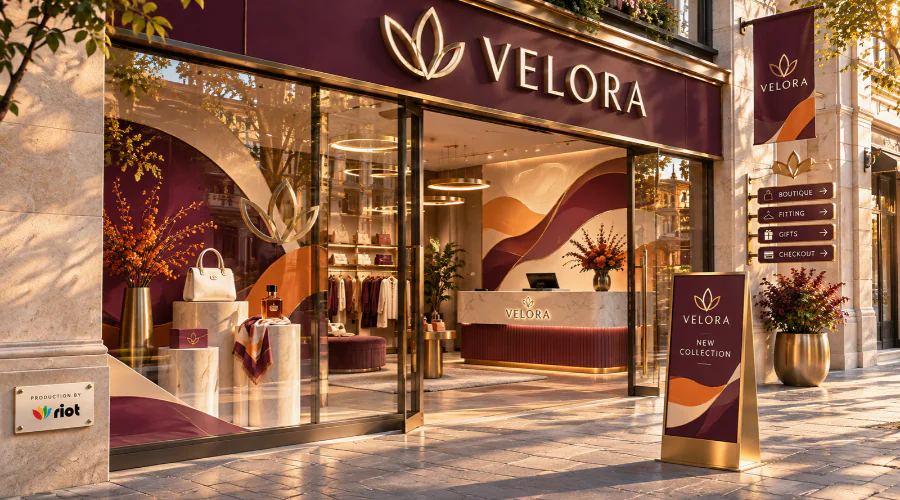
Environmental graphics can include window vinyl, wall murals, dimensional letters, wayfinding signs, floor graphics, barricade graphics, and exterior identification. Each type uses different materials and production methods. Because of that, pricing can vary widely across one store package.
Window graphics often use cut vinyl, printed film, or perforated film. These options work well for promotions, privacy, and brand messaging. However, exposure to sunlight and cleaning methods should guide material selection.
Wall graphics may use vinyl, fabric, rigid panels, paint masks, or dimensional elements. Smooth painted drywall supports many options. Meanwhile, brick, concrete, tile, and textured walls may need testing before production.
- Printed vinyl graphics for walls, glass, counters, and temporary campaigns
- Dimensional letters made from acrylic, foam, metal, wood, or PVC
- Rigid signs using aluminum composite, acrylic, polycarbonate, or PVC
- Wayfinding systems for departments, fitting rooms, pickup areas, and restrooms
- Floor graphics with slip-resistant overlaminates for short-term use
- Illuminated signs that require electrical planning and code review
Dimensional signage usually costs more than flat graphics. It includes fabrication, finishing, mounting hardware, and more detailed installation. However, it can help key brand elements stand out.
Temporary graphics can support launch events or seasonal programs. These pieces often use lower-cost materials and faster production methods. Still, we match the material to the expected life span and surface.
Exterior signage adds another layer. Permits, engineering, weather exposure, and access equipment may affect the price. Therefore, we recommend reviewing exterior needs early in the store planning process.
How to Maximize ROI: Budgeting Tips and Real-World Examples
A strong signage budget starts with priorities. We first identify the graphics that affect traffic flow, brand recognition, and customer decisions. Then we separate must-have items from items that can wait.
Estimating Your Store’s Signage Budget with Professional Guidance
When it comes to opening a new retail store, estimating the budget for custom signage is a critical step in the planning process. At Riot, we work with our clients to determine a clear scope, choose the right materials, and map out installation needs. Because each environment is unique, the question of, “How Much Does Custom Retail Signage Cost for a New Store,” often depends on factors including store size, location, and the complexity of the graphic elements. Engaging with a professional team early on allows you to leverage experience, avoid common pitfalls, and allocate your budget to both short-term impact and long-term durability. Our consultants are available for walkthroughs and discussions at any stage of your project, ensuring the signage plan aligns with your goals and branding requirements.
Where to Find Reliable Data and Sources on Retail Signage Costs
Transparent cost forecasting is grounded in access to reliable data and up-to-date industry benchmarks. We recommend reviewing recent case studies, manufacturer pricing catalogs, and trade association reports as starting points. At Riot, we draw from our network of suppliers and completed projects to deliver cost ranges you can count on. This approach is especially important if you plan to include innovative environmental graphics or large-scale installations in your store. Open communication and data sharing with your signage partner will help you avoid surprises as the project moves ahead.
Final Thoughts on How Much Does Custom Retail Signage Cost for a New Store
As you finalize your plans, it’s helpful to remember that investment in custom signage and graphics extends well beyond the initial visual appeal. Strong signage supports brand consistency, improves shopper navigation, and often boosts revenue through increased foot traffic and positive customer experiences. At Riot, we strive to answer your questions fully and help you understand all facets of “How Much Does Custom Retail Signage Cost for a New Store,” with both clarity and transparency. By grounding your budget in real-world data and leveraging professional advice, your investment in custom signage can set the stage for a successful store opening and continued business growth.
FAQ
How much does custom retail signage typically cost for a new store?
The cost of custom retail signage for a new store can vary widely, generally ranging from $2,000 to $20,000 or more. While small stores with basic requirements may spend at the lower end, larger spaces with complex environmental graphics should expect higher costs. Since every project is unique, we recommend a personalized estimate to reflect your specific needs.
What main factors influence the price of environmental graphics in retail spaces?
Several factors drive the price, including overall dimensions, material choices, installation complexity, and design customization. Additionally, the location, accessibility, and type of graphics (such as window decals, wall murals, or illuminated signage) can impact the final quote. By working closely with us, you can make choices that align with your budget and brand vision.
Why should we choose custom signage over standard off-the-shelf options?
Custom signage gives your store a unique look, helping you stand out in a competitive retail environment. More importantly, it ensures consistency with your brand identity and can elevate the overall customer experience. Because every business has specific needs, we believe that investing in personalized, professional graphics leads to better long-term results.
What types of materials are commonly used in custom signage?
We use a wide range of materials, including vinyl, acrylic, aluminum, wood, and specialty substrates like brushed metals or sustainable options. Depending on your desired finish and durability requirements, we can recommend materials that complement your store’s design and atmosphere. Ultimately, the right choice balances budget with long-term appeal.
How do we determine the best signage solutions for our new store?
Our process starts with an in-depth consultation to understand your goals, target audience, and brand guidelines. After that, we evaluate the space, lighting, and existing architecture to recommend tailored signage concepts. By combining our expertise with your insights, we ensure the end result matches your vision and business objectives.
Can custom retail signage increase our return on investment (ROI)?
Absolutely! Well-designed environmental graphics improve wayfinding, reinforce branding, and enhance the shopping experience, all of which can lead to higher sales and stronger customer loyalty. Since your signage is often a first impression, investing in quality design can deliver significant returns over time.
Are there ways to reduce costs without compromising on quality?
Yes, working with us, you can find cost-effective design and material options that don’t sacrifice visual impact. For instance, consolidating installations, opting for multi-use signage, or prioritizing high-traffic areas first can help you maximize value. We always look for creative solutions that balance affordability and effectiveness.
How long does it take to design, produce, and install custom signage for a new store?
Timelines fluctuate based on project scope, but generally, the process takes three to eight weeks from consultation to installation. Because everything is custom, factors like revisions, material lead times, and site preparation can impact the schedule. Nonetheless, we work closely with you to manage timelines and ensure on-time delivery.
Where can we find accurate data or benchmarks on retail signage costs?
Reliable data can be found through industry associations, manufacturing partners, and case studies from leading graphics firms. Furthermore, we offer transparent quotes and share real-world examples to help you navigate the budgeting process with confidence. Our team stays up to date on the latest cost information to guide your decisions.
How do we get started with estimating our store’s signage budget?
To get started, simply reach out to us for an initial consultation. Because every project is unique, we’ll discuss your goals, assess your space, and provide a tailored quote based on your requirements and vision. We guide you every step of the way, ensuring a seamless and successful project from concept to installation.