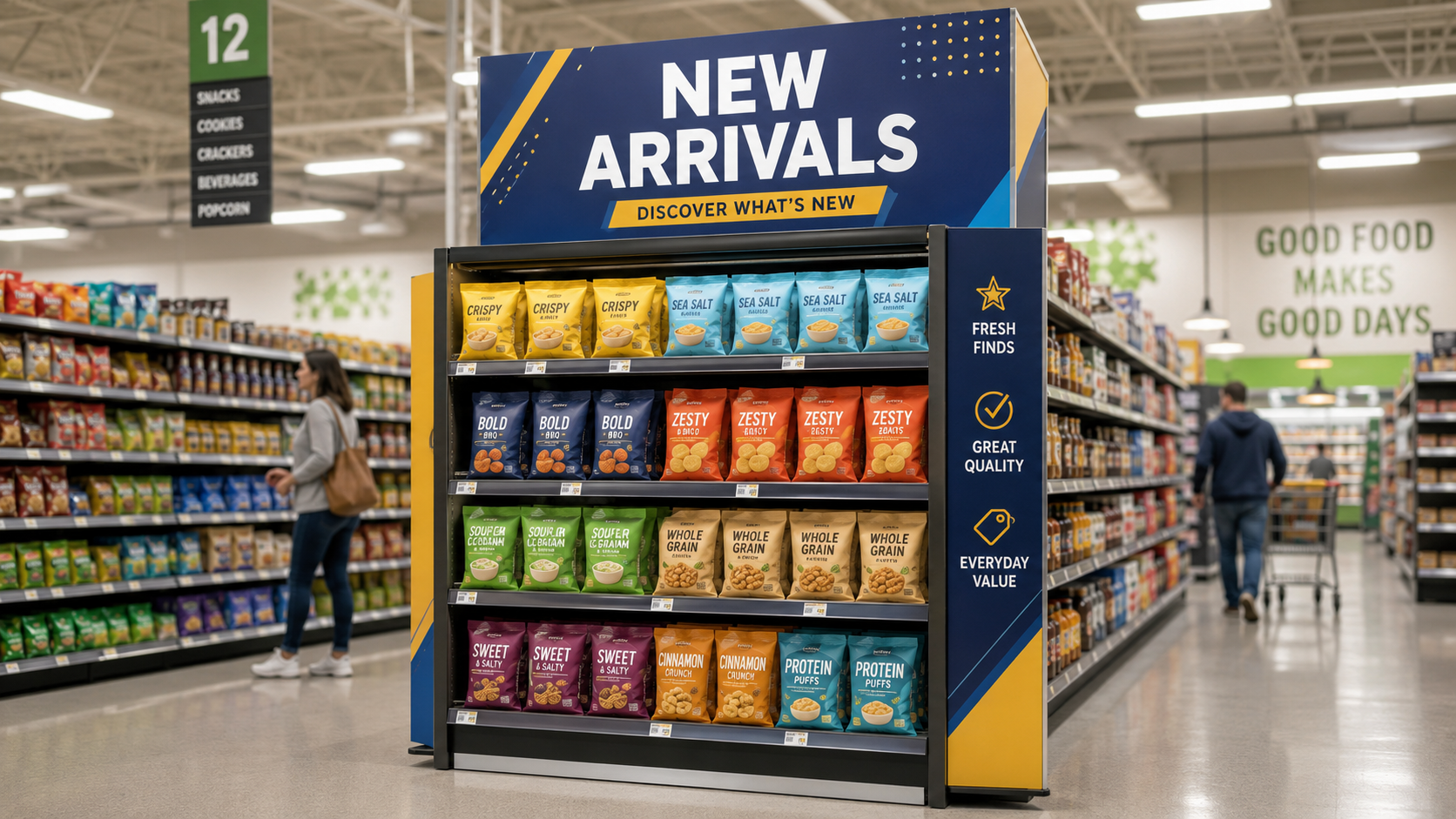
Design Best Practices for Effective Endcap Header Signs
We approach retail graphics as part of a broader store experience. At Riot, our goal is to help shoppers understand an offer quickly and move with less friction. First, we define the job of the display before design starts. Some headers introduce a new product, while others support a promotion or seasonal program. Next, we match scale to the aisle, fixture height, and viewing distance. A shopper should read the message without stopping in traffic.
However, clarity matters more than decoration. We recommend one primary message, one clear visual cue, and a layout that supports fast scanning.
- Use short copy that a shopper can read in a few seconds.
- Keep brand marks visible without crowding the offer.
- Choose colors that stand apart from nearby packaging and shelves.
- Plan materials around store conditions, campaign length, and installation needs.
- Test sightlines from the main aisle before final production.
In addition, we consider how lighting affects color and contrast. Gloss, glare, and shadows can reduce legibility in busy retail spaces. Because every store has limits, we plan for mounting methods early. This helps our team reduce installation issues across multiple locations. We also review consistency across related graphics. Headers, shelf strips, floor graphics, and window messaging should guide the same shopper decision.
How Endcap Header Signs Drive Sales and Product Awareness
Endcap Header Signs help place a brand message where shoppers already pause, turn, and compare. That location supports discovery without asking shoppers to search. As a result, the header can connect the product, offer, and aisle context in one view. This helps shoppers link the display to a need. For example, a beverage promotion may highlight flavor, pack size, and price point. The header gives the display a reason to exist. Therefore, we focus on message hierarchy. The shopper should notice the category first, then the benefit, then the action. Environmental graphics also support recall. When the graphic language matches other campaign elements, shoppers see a repeated cue across the store. Meanwhile, store teams need graphics that work with daily operations. We account for restocking, traffic, cleaning, and fixture changes. We often recommend flexible systems for changing offers. Interchangeable panels or modular parts can extend campaign value across seasons. In practice, strong endcap programs reduce shopper uncertainty. They point to the product and make the next step easy.
Case Studies: Brands Successfully Using Environmental Graphics at Endcaps
Industry coverage from Shop! Association often highlights how point-of-purchase programs turn limited space into a focused brand moment. We study those examples for structure, not just style. Shopper Marketing Magazine has also reported on campaigns that connect display design with shopper missions. These programs usually pair simple messages with coordinated retail media. Retail Dive frequently covers shifts in store strategy, including the need for stronger in-store experiences. We see that need across grocery, pharmacy, specialty, and big-box channels. For a consumer goods rollout, a coordinated header and shelf system can introduce a new line faster. The graphic gives shoppers a clear anchor during comparison. For a seasonal retail push, a brand can use high-contrast color and concise copy to create urgency. The endcap then supports both awareness and purchase intent. For a private-label program, consistent headers can help a retailer build trust across categories. Over time, shoppers recognize the visual system and navigate with more confidence.
Maximizing ROI with Strategic Placement and Design
As specialists in environmental graphics, we understand that effective use of endcap header signs is a strategic investment. Placing these signs at high-traffic aisle ends ensures they attract maximum shopper attention, driving both engagement and sales lift. To further maximize ROI, our approach focuses on simplicity, clear messaging, and integration with overall brand visuals. Functional placement based on traffic patterns and sightlines amplifies the sign’s reach and potential to influence decisions. We recommend ongoing monitoring – reviewing which product categories perform best in each location and adjusting as data informs us. Creating synergy between endcap header signs and core branding not only delivers on objectives but provides lasting value for evolving retail environments.
Future Trends in Environmental Graphics for Retail Spaces
Retail is always evolving, and environmental graphics are keeping pace. We see emerging trends placing greater emphasis on sustainability; this means sourcing eco-friendly materials and using ink technologies with reduced environmental impact. Personalization is another trend as brands leverage data to adapt messaging and visuals to local preferences or promotional cycles. Interactive and digital elements are increasingly layered into display headers, offering shoppers an engaging mix of static and dynamic content. Our team continues to research and test innovative substrates and construction methods for endcap header signs – ensuring our solutions remain relevant and effective in tomorrow’s retail spaces.
Key Takeaways: Unlocking Retail Success with Endcap Header Signs
For store operators and brand managers seeking better engagement, the guiding principle is clear: endcap header signs work best when rooted in strategic design, clear communication, and thoughtful placement. These signs are more than informational – they’re a tool for clarifying value and building connection in a competitive retail landscape. As you plan your next project, prioritize alignment with brand identity and ensure the graphics work together with in-aisle and front-of-store messaging. For a deeper look at how our retail graphics capabilities can bolster product awareness and boost your bottom line, connect with us. We’re committed to ensuring your endcap header signage delivers measurable results today and is positioned for success in the future.
FAQ
What are environmental graphics in retail?
Environmental graphics are visual elements, such as signs, murals, or wayfinding, intentionally designed to enhance the retail environment. At Riot, we use environmental graphics to strengthen brand identity, guide shoppers, and create a memorable in-store experience. By using bold visuals and strategic messaging, we ensure customers feel engaged from the moment they enter.
How do endcap header signs influence customer behavior?
Endcap header signs attract immediate attention, often guiding shoppers to featured products and promotions. By tapping into the science of visual communication, we make sure that our header signs help drive impulse purchases and direct consumer flow through key aisles. As a result, these graphics have a strong impact on how and what shoppers buy.
What are the best practices for designing endcap header signs?
For our endcap header signs, we prioritize clarity, bold colors, and brand consistency. We integrate concise messaging and high-quality images to maximize impact. Additionally, we regularly test and update our designs to align with both current retail trends and customer needs, ensuring our graphics consistently deliver results.
How do endcap header signs boost sales and awareness?
Effective endcap header signs directly influence purchasing decisions by spotlighting featured items and promotions. When positioned strategically, our signage draws attention to new or seasonal products, making them hard to miss. Consequently, this increased visibility leads to enhanced sales performance and brand recognition.
Where should endcap header signs be placed for maximum ROI?
Placement is key for success. We recommend installing endcap header signs at high-traffic intersections or the ends of primary aisles. These locations naturally capture customer attention and encourage interaction with promoted products, which leads to increased ROI when compared to less visible spots.
What makes Riot’s approach to environmental graphics unique?
At Riot, we combine data-driven design with in-depth industry insights. Our team collaborates closely with retailers to tailor each sign to fit specific brand DNA and shopper demographics. Through constant innovation, we stay ahead of emerging trends, ensuring our clients gain a distinctive advantage in the marketplace.
How do we measure the effectiveness of environmental graphics?
We use a combination of sales data, shopper engagement metrics, and feedback from in-store staff to assess performance. By comparing periods before and after installation, we gain clear insights into how our graphics influence customer journeys and boost conversions. This continuous improvement cycle ensures sustained results.
Can you share examples from brands using endcap graphics effectively?
Definitely! Several major brands have increased sales using bold endcap header signs. For example, as featured in Shop! Association case studies, grocery chains achieved double-digit lifts in promoted items through prominent endcap signage. These results highlight how impactful our strategic, vivid graphics can be.
What future trends should retailers watch for in environmental graphics?
Looking ahead, we anticipate even greater integration of digital elements, sustainability-focused materials, and interactive features. By embracing these advancements, retailers partnering with Riot can stay ahead of competitors while offering an elevated, tech-forward shopping experience. Moreover, personalization will play a bigger role as customer expectations evolve.
How can retailers get started with Riot for their endcap header signage?
Getting started is easy. Simply reach out to our team via our website or contact your Riot representative directly. We’ll guide you through design, production, and installation, ensuring your brand maximizes the potential of environmental graphics at endcaps. Your ROI and shopper experience will thank you!