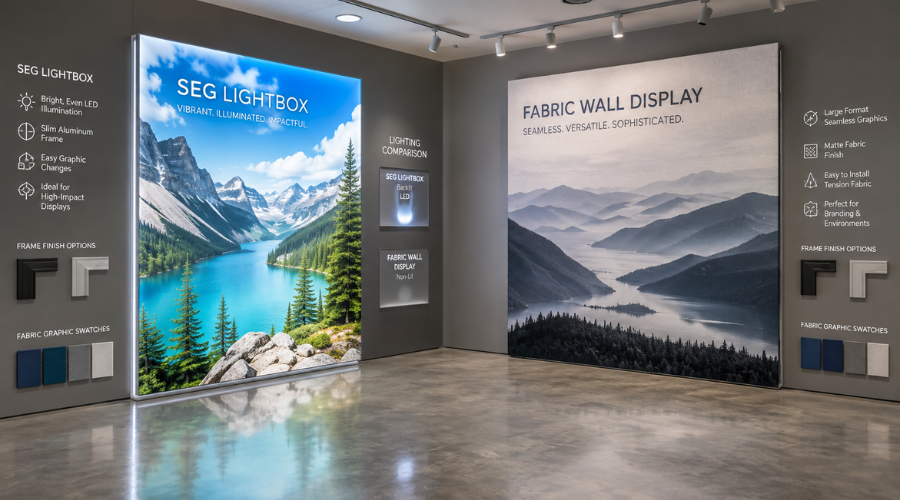
SEG Lightbox vs. Fabric Wall Comparison: Defining Features and Construction
We start any environmental graphics plan by matching the display system to the space. SEG lightboxes use silicone-edge graphics that fit into a framed channel. LED lighting sits behind the fabric, so the graphic gains consistent illumination. Because the fabric pulls tight, the finished surface looks smooth and clean.
Fabric walls use printed tension fabric without internal lighting. We stretch the graphic across a frame, wall-mounted system, or built environment feature. Therefore, this option works well when the room already has enough light. It also supports larger wall coverage with fewer seams.
The main construction difference comes down to light, depth, and installation needs. Lightboxes need power, a deeper frame, and space for service access. However, fabric walls usually need less depth and fewer electrical steps. That can help when we work around columns, narrow corridors, or existing finishes.
- SEG lightboxes: best for illuminated brand moments, retail displays, and high-focus messaging.
- Fabric walls: best for broad graphics, temporary campaigns, office interiors, and event backdrops.
- Both systems: useful for replaceable graphics, consistent color control, and modular updates.
Performance, Visual Impact, and Customization: An In-Depth Look
Performance depends on how people move through the environment. For example, a lightbox can pull attention in a busy lobby or storefront. The illumination helps the message stand apart from surrounding signs. As a result, we often use it for key brand statements. Fabric walls perform differently. Instead of adding light, we use scale, layout, and material tension to guide attention. In contrast, this creates a quieter presentation that can support workplace, healthcare, education, and hospitality settings. It can also cover uneven walls while keeping the space organized.
Customization matters in both systems. We can adjust frame size, profile depth, fabric opacity, color, and finish. Additionally, we can design graphics for close viewing or long viewing distances. That decision affects type size, image resolution, contrast, and message hierarchy. Maintenance also shapes performance over time. We can remove and replace SEG graphics without rebuilding the frame. Likewise, many fabric wall systems allow updated campaigns or seasonal messaging. This helps our clients refresh the environment without starting from zero.
Cost, Durability, and Best Use Cases Backed by Industry Data
Cost varies by frame size, lighting, fabric type, site access, and installation hours. Generally, lightboxes cost more upfront because LEDs, wiring, and power coordination add steps. However, the higher visibility may support sales, wayfinding, or visitor engagement goals. We review those goals before recommending a system.
Fabric walls often provide better coverage per square foot. Therefore, we use them when a project needs large visuals on a controlled budget. They also help when timelines are tight, especially for events or phased interior updates. Print replacement usually stays manageable.
Durability depends on traffic, cleaning needs, and exposure. Interior SEG fabric can perform for years when people do not touch it often. Meanwhile, fabric walls in high-contact areas may need added planning. We may suggest protective placement, darker design zones, or spare graphic sets.
Industry production standards favor dye-sublimated and UV-printed fabrics for consistent results. Typical LED systems can run for tens of thousands of hours. Also, many tension fabric graphics fold for shipping and storage. That reduces freight weight compared with rigid panels.
We recommend lightboxes when a message needs emphasis, visibility, and repeated attention. We recommend fabric walls when the goal involves scale, flexibility, and efficient coverage.
Key Takeaways from the SEG Lightbox vs. Fabric Wall Comparison
As we wrap up our SEG Lightbox vs. Fabric Wall Comparison, it’s clear that both solutions serve distinct roles in environmental graphic projects. SEG lightboxes bring vivid illumination and exceptional visibility, while fabric walls offer broad coverage and flexible design options. The choice between them isn’t always obvious, but analyzing the impact, installation needs, and branding goals can guide the right decision for your space. Our experience shows that understanding the unique benefits of each – like the backlit vibrancy of SEG lightboxes versus the seamless expanses of fabric walls – helps create environments that communicate effectively and leave a lasting impression.
Choosing the Right Environmental Graphic Solution for Your Goals
Selecting the best solution goes beyond comparing surface-level features. We encourage our clients to look closely at project objectives – whether that’s creating a statement piece, layering brand storytelling, or enhancing wayfinding. Lightboxes excel in drawing focus and providing consistent brightness, making them strong candidates for installations where visibility is critical. Fabric walls, on the other hand, are valuable for large-scale presentations or when frequent updates are anticipated. The SEG Lightbox vs. Fabric Wall Comparison highlights that combining elements is often the optimal path, especially for dynamic environments like retail, corporate interiors, or tradeshow displays.
Additional Resources and Sources for Informed Environmental Graphics Decisions
We understand the importance of making informed decisions. For those looking to dive deeper into product specifications or evaluate real-world use cases, we encourage you to reach out for further guidance or review case studies relevant to your sector. Leveraging industry reports, partner resources, and expert consultation ensures that your environmental graphics achieve your communication and branding objectives – whether you land on an SEG lightbox, fabric wall, or a hybrid approach. Our commitment is to help you find the solution that offers the best value, aligns with your vision, and enhances your environment for years to come.
FAQ
What are SEG lightboxes and fabric walls, and how do we use them in environmental graphics?
SEG lightboxes are display systems that use silicone edge graphics stretched over illuminated aluminum frames, creating vibrant backlit visuals. Fabric walls, on the other hand, feature printed textiles mounted on frames without illumination, offering a versatile, softer aesthetic. We use both in modern spaces to enhance branding and storytelling, depending on your project’s needs.
How do SEG lightboxes and fabric walls differ in visual impact?
SEG lightboxes deliver high-impact visuals with bold, evenly distributed LED lighting, making them ideal for areas where attracting attention is key. Conversely, fabric walls offer a more subtle, elegant look without backlighting, perfect for creating ambiance or acting as feature walls. As a result, each option supports different branding strategies.
Can we customize both SEG lightboxes and fabric walls?
Absolutely! We can fully customize both solutions with various sizes, shapes, and custom-printed designs. Furthermore, SEG lightboxes allow for interchangeable graphics, letting us easily update your message. Fabric walls also support vibrant graphics and creative displays, ensuring your brand identity is always front and center.
Which option is more cost-effective: SEG lightboxes or fabric walls?
Generally, fabric walls tend to be more affordable initially due to the lack of integrated lighting and simpler hardware. However, the long-term value of SEG lightboxes comes from their reusability and high attention-grabbing potential. Depending on your project’s scope and goals, we can help you determine which solution delivers the best return on investment.
How durable are SEG lightboxes compared to fabric walls?
Both SEG lightboxes and fabric walls are engineered for lasting durability in commercial environments. However, SEG lightboxes feature sturdy aluminum frames and LED modules, which typically offer a longer lifespan. Our fabric walls use high-quality textile graphics that resist fading and wear, making them ideal for frequent updates or semi-permanent installations.
What are the best use cases for SEG lightboxes versus fabric walls?
We recommend SEG lightboxes for retail displays, trade shows, and branded environments that require impactful, illuminated graphics. In contrast, fabric walls excel in offices, event backdrops, or hospitality settings where ambiance and seamless aesthetics are priorities. Let us help you match the right solution to your environment’s unique requirements.
How easy is it to install and maintain SEG lightboxes and fabric walls?
We design both systems for straightforward installation and simple maintenance. SEG lightboxes use a tool-free, snap-together frame and quick-change graphics, making updates efficient. Likewise, fabric walls offer lightweight components and intuitive assembly, so your team can refresh graphics as needed without specialized skills.
Are SEG lightboxes energy-efficient?
Yes, our SEG lightboxes utilize energy-efficient LED lighting technology, which reduces power consumption while providing excellent brightness. Moreover, LEDs generate minimal heat and offer long operational lifespans, delivering both environmental and cost benefits for your space.
Can SEG lightboxes and fabric walls be used together in a single project?
Absolutely—we frequently integrate both solutions within a single environment to create visually dynamic, layered spaces. For instance, you might use SEG lightboxes for key focal points while fabric walls define zones or supplement the design. This balanced approach not only enhances brand storytelling but also maximizes adaptability.
Where can we find more information and resources to choose the right solution?
We offer a range of resources, including case studies, product guides, and consultations, to help you make informed choices. Furthermore, our team is always available to answer specific questions and provide tailored recommendations, ensuring your next environmental graphics project exceeds expectations.