Integrating Environmental Graphics Into Your Trade Show Booth Layout Planning
Environmental graphics shape how visitors read, enter, and move through a booth. We use them to support wayfinding, product focus, and message clarity. In a busy hall, people make quick choices. Therefore, our graphics need to help them understand where to go and why it matters.
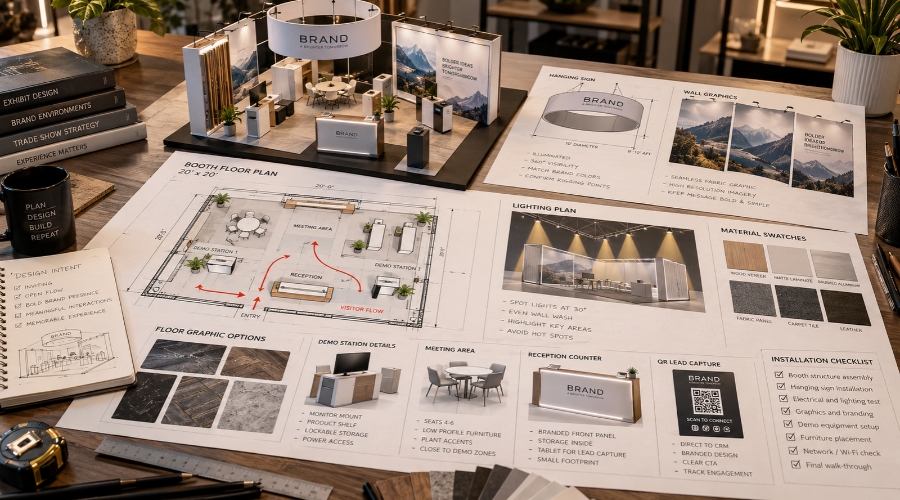
We start by looking at the floor plan, sightlines, entry points, and visitor behavior. Then, we connect each graphic to a specific job. A hanging sign may help people find us from across the aisle. Meanwhile, wall graphics can support key product details. Floor graphics can guide movement without adding another structure.
For clients who need environmental graphics, planning early helps reduce revisions. It also helps align print sizes, substrates, lighting, and installation needs. As a result, the booth works as one system instead of separate parts.
We also consider how staff will use the space. Graphics should not block conversations, demo areas, or storage access. Instead, they should support those moments. When our team plans graphics with the booth layout, we can improve visibility while keeping the space practical.
Key Elements of Effective Environmental Graphics for Traffic Flow and Engagement
Good environmental graphics guide attention in layers. First, visitors need a clear read from the aisle. Next, they need a reason to step closer. Finally, they need details that support a conversation with our team.
Scale plays a major role. Large graphics should carry simple messages. Smaller graphics can explain features, compare options, or support demos. However, every graphic should have enough space around it. Crowded layouts make people work harder to understand the message.
- Use high-level signage for visibility from main aisles.
- Place core messages at natural eye level.
- Keep entry zones open and easy to read.
- Align product graphics with demo stations or samples.
- Use floors, counters, and walls to guide movement.
- Limit copy so staff can lead deeper conversations.
Color and contrast also affect movement. For example, a strong color change can mark a reception point. In addition, consistent graphic zones can help visitors know where to pause. We can use these cues while keeping the booth clean and easy to navigate.
Lighting matters as well. Glare can reduce legibility, especially on glossy surfaces. So, we review lighting angles before final production. This step helps our graphics perform under show conditions, not just on a proof.
A clear messaging hierarchy prevents confusion. We usually separate the primary message, supporting points, and detailed content. Because attendees move quickly, each level must earn its place. Clear hierarchy also helps our booth staff point to information during live discussions.
Best Practices: Choosing the Right Materials and Display Techniques (with sources from Exhibit City News, EXHIBITOR Magazine, and the Center for Exhibition Industry Research)
Material choices affect cost, durability, shipping, and installation. We match each substrate to the graphic’s purpose and expected use. For short-term shows, fabric, vinyl, and rigid boards can all make sense. For repeated events, we review wear, repair options, and packing methods.
Industry coverage from Exhibit City News often highlights installation timing, labor planning, and show-floor coordination. Therefore, we factor those issues into our production schedule. A graphic that looks simple may still need careful mounting, alignment, or rigging approval.
EXHIBITOR Magazine frequently focuses on exhibit performance, attendee behavior, and practical design choices. Based on that approach, we look beyond the print file. We ask how the graphic supports demos, meetings, lead capture, and staff interaction.
Measuring the ROI of Strategic Environmental Graphics in Trade Show Booths
Every investment in environmental graphics should contribute directly to our objectives, whether that’s increasing qualified leads, generating memorable brand interactions, or simply boosting booth traffic. Calculating ROI for these elements goes beyond just tallying up the costs; we assess engagement through badge scans, dwell times, and post-show recall. Working with partners who rely on industry benchmarks helps in setting realistic, measurable goals for each event. With a clear Trade Show Booth Layout Planning strategy, we are better equipped to connect tactical design choices to tangible business outcomes.
Practical Tips for Collaborating with Environmental Graphic Partners
We see collaboration as an essential part of the process. When working with environmental graphic partners, early engagement can help ensure that visual storytelling is built into the booth’s core, not simply added on later. Clear communication about brand values, event theme, and logistical considerations allows everyone involved to develop three-dimensional experiences that serve visitors’ needs and encourage exploration. Establishing expectations for timeline, materials, and on-site adaptability keeps the creative process running smoothly. Informing partners about the planned event schedule and high-traffic windows allows for real-time support and troubleshooting, optimizing the final outcome for our tradeshow booths.
Looking Ahead: Future Trends in Environmental Graphics and Booth Design
The landscape of trade shows is evolving, and so too are expectations for booth engagement. We’re seeing trends toward more immersive environments, often blending digital and traditional elements – think augmented reality overlays or programmable LED graphics that react to visitor interaction. Increasingly, sustainability is also a core component, with demand rising for reusable materials and eco-conscious graphics solutions. Drawing on data from event analytics and visitor feedback, our Trade Show Booth Layout Planning continues to adapt, balancing innovation with clarity of message. As we move forward, flexible modular displays and interactive storytelling tools are likely to become new standards in tradeshow booth design, driving deeper engagement while streamlining logistics.
FAQ
What are environmental graphics and why do they matter for trade shows?
Environmental graphics are visual elements – such as signage, wayfinding, wall murals, and branded displays – that create a cohesive and immersive experience in a physical space. At trade shows, they transform our booth environments, helping us tell our brand story, direct traffic, and leave a lasting impression. Without them, our booth might struggle to stand out or engage visitors as effectively.
How do environmental graphics support booth layout planning?
Environmental graphics work hand-in-hand with booth layout planning by guiding attendees through the space and making information easy to find. When we strategically integrate these graphics into our layout, we can control sightlines, encourage flow, and ensure key messages or products are highlighted exactly where we want them to be seen.
What is the connection between visual storytelling and brand engagement?
Visual storytelling uses imagery, color, and design motifs to convey our brand’s values and messaging in an engaging way. Through thoughtful environmental graphics, we immerse attendees in our story, making our booth more memorable and deepening their engagement. This direct connection boosts both visitor recall and our overall event success.
How can we ensure our environmental graphics encourage positive traffic flow?
By planning graphics as wayfinding tools and information beacons, we can subtly direct traffic while avoiding bottlenecks. Using cues like arrows, color-coded zones, or floor graphics, our team guides visitors naturally to key areas – such as interactive demos or meeting spaces – enhancing both their experience and our booth’s efficiency.
What factors should we consider when choosing materials for our trade show graphics?
We should always assess durability, ease of installation, environmental impact, and visual impact. According to Exhibit City News and EXHIBITOR Magazine, materials like fabric, vinyl, and rigid substrates each offer unique benefits. For example, lightweight fabrics offer flexibility for large backdrops, while rigid materials provide a premium feel and excellent longevity.
Can environmental graphics help us measure ROI at trade shows?
Definitely! With well-designed graphics, we can increase booth traffic, dwell time, and engagement rates – all of which are measurable metrics. Additionally, the Center for Exhibition Industry Research confirms that attendees are more likely to remember and interact with booths where the graphics enhance the brand story, boosting inquiries and lead generation as tangible results.
What are some best practices for integrating environmental graphics into booth design?
We recommend establishing brand consistency, factoring in sightlines and lighting, and designing graphics to answer attendee needs quickly. Furthermore, it’s essential that our graphics remain accessible and readable from various distances, ensuring no message gets lost regardless of attendee flow through our booth space.
How can we collaborate effectively with our environmental graphic design partners?
Collaboration works best when we share our brand guidelines, project goals, and target audience insights early in the process. Regular communication, feedback loops, and clear timelines ensure our vision aligns with the creative team’s expertise, resulting in graphics that support our strategic objectives seamlessly.
What future trends should we keep an eye on regarding environmental graphics for trade shows?
As trade show technology evolves, trends like interactive digital signage, sustainable materials, and augmented reality overlays are becoming more prevalent. Staying ahead means continually evaluating how these new tools can help us enhance storytelling, improve engagement, and create even more dynamic booth experiences in the future.
Are there simple tips we can use to immediately improve our environmental graphics strategy?
Absolutely! Start by auditing current graphics for clarity and brand alignment; update outdated elements to reflect our latest messaging; and involve stakeholders in brainstorming sessions. Additionally, test readability and impact from various angles to ensure our visuals work effectively under real trade show conditions.