Materials and Technologies Used in Portable Display Shipping and Crating
When we prepare environmental graphics for transport, we start with the material mix. Rigid panels, fabric graphics, vinyl, acrylic, dimensional letters, and hardware all react differently during handling. Therefore, our packing plan changes with the graphic type, finish, size, and destination.
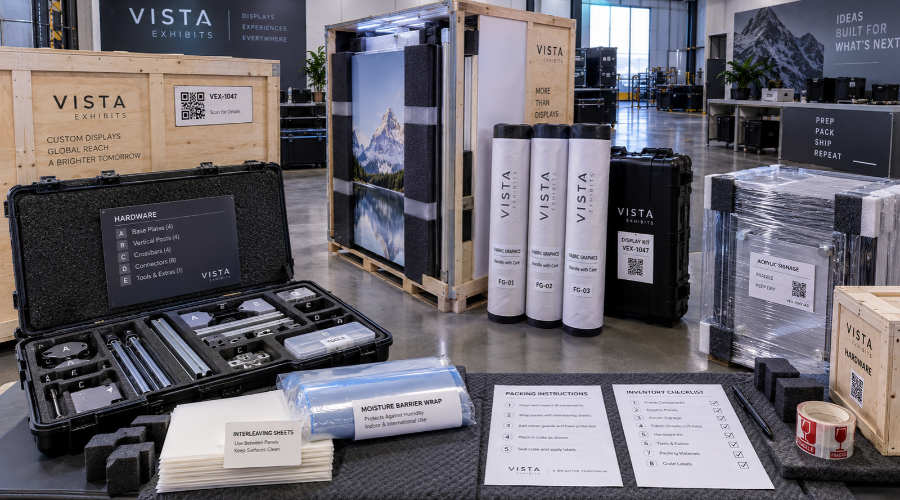
For flat panels, we often use foam, corner guards, interleaving sheets, and reinforced cartons. For fabric displays, we focus on clean folding, roll protection, and moisture control. Also, we separate metal hardware from printed surfaces, since shifting parts can scratch graphics during transit.
Crates matter when displays include multiple components or higher-value finishes. We select wood, composite, or reusable cases based on weight and travel frequency. In addition, we consider lift points, pallet access, and internal blocking so crews can move each unit without guesswork.
Common Challenges in Shipping Environmental Graphics and How to Overcome Them
Environmental graphics often include large formats, custom shapes, and mixed materials. As a result, shipping errors can affect installation schedules. A bent panel, missing bracket, or scuffed face can delay a launch, event, or interior refresh.
One common issue is movement inside the package. Even a strong outer case can fail when parts shift. So, we secure each element with padding, dividers, and labeled compartments. This approach helps installers find parts quickly and reduces repacking confusion.
Another challenge is inconsistent handling between facilities. However, we can reduce risk with clear labels and packing instructions. We also document contents before shipment, which helps our team confirm quantities when the display arrives.
- We measure each component before packing to confirm case size and support needs.
- We wrap printed surfaces so ink, laminate, and edges stay separated from hardware.
- We label crates by location, sequence, or room to support faster installation.
- We include inventory details so receivers can check items before work begins.
- We plan for return shipping when graphics need reuse after an event.
Weather can add another layer of concern. For example, moisture may affect paper-based materials, adhesives, and some substrates. Therefore, we use liners, wraps, and sealed containers when the route or storage site creates exposure risk.
Best Practices for Preparing Environmental Graphics for Safe Shipment
Before we pack, we review the installation plan. This step helps us group graphics in the order crews will need them. Meanwhile, it limits extra handling at the site, which can reduce wear on finished pieces.
We also check edges, corners, and surface finishes before anything leaves our facility. Then, we photograph key components and note special handling requirements. These records help our team respond quickly if questions come up during receiving.
Clear identification supports smoother handoffs. We mark each package with project details, contents, orientation, and handling notes. In addition, we avoid vague labels because crews may handle many similar cartons at once.
For multi-stop projects, we plan packaging around the route. A display traveling to several locations needs stronger organization than a one-way shipment. Also, reusable cases can help when graphics must return, rotate, or travel to future events.
Finally, communication keeps the shipment aligned with the project timeline. We confirm delivery windows, dock access, contact names, and storage limits before pickup. With that information, our team can pack for real site conditions instead of assumptions.
The Role of Professional Services in Streamlining Portable Display Shipping and Crating
At Riot, we understand that the safe and efficient transport of environmental graphics is essential to preserving your investment. Our focus is on delivering professional shipping and crating services that are designed specifically for the unique demands of portable displays. By leveraging tailored packing solutions and proven logistical processes, we reduce the chances of damage and ensure your displays arrive ready for installation. Our expertise in handling trade show displays, exhibition graphics, and branded environments allows us to navigate tight deadlines, unexpected complications, and changing venue requirements with reliability. Whether you are shipping locally or across the country, our experience provides peace of mind at every stage of the process.
Future Trends in Portable Display Solutions and Shipping Logistics
As expectations around branding and graphics continue to evolve, so too do the methods for transporting and presenting them. We are seeing growth in modular, lightweight displays that require specialized shipping techniques. Ongoing advancements in packing materials and tracking technologies are helping refine the Portable Display Shipping and Crating process, providing more information and transparency to our clients. Additionally, customer demand for faster turnaround and greater flexibility is influencing the way we plan and execute display shipments.
Looking ahead, we anticipate more integration of digital solutions to monitor shipments and more environmentally friendly options for crating materials. The goal is always to maximize security while minimizing excess weight and waste, enabling a smoother experience for those using our services for events, activations, and trade show displays.
Ensuring Sustainability and Cost-Effectiveness in Environmental Graphics Transport
Sustainability is a growing focus for organizations utilizing environmental graphics. At Riot, we are committed to offering crating options that are reusable or constructed from recycled materials wherever feasible. Efficient packing methods are continuously refined to reduce material usage and limit the environmental impact of each shipment. By optimizing crate sizes and selecting the appropriate shipping partners, we help mitigate unnecessary expenses and streamline the delivery process.
Cost-effectiveness does not come at the expense of protection. Through careful assessment and attention to the physical requirements of each graphic, we provide a balance between safeguarding your assets and controlling transport costs. This approach supports both your business goals and environmental responsibility, ensuring your displays are ready to make an impact upon arrival.
In summary, professional guidance in Portable Display Shipping and Crating is key to the success of your branding initiatives. Through ongoing process improvements, a focus on sustainability, and a commitment to client needs, we’re prepared to meet the changing landscape of environmental graphics logistics.
FAQ
What are environmental graphics and why are they important for modern branding?
Environmental graphics are visuals strategically placed in spaces to communicate a brand’s identity, enhance customer experiences, and reinforce messaging. At Riot, we fully understand that well-designed environmental graphics can set brands apart and create memorable interactions that strengthen our clients’ identities.
What does portable display shipping and crating involve?
Portable display shipping and crating involve expertly packaging, protecting, and transporting graphical displays or signage that are used in various environments. Our solutions are designed to ensure these valuable assets arrive safely and ready for installation, regardless of location.
Why is expert crating essential for shipping environmental graphics?
Expert crating is essential because it shields graphics from potential transit damage, including scratches, impacts, and environmental factors. Without proper crating, the investment in exceptional branding pieces can be compromised, so we always recommend professional handling to safeguard your assets.
What materials do we use for crating and packaging displays?
We use high-quality materials such as custom-fit foam, sturdy wooden crates, and durable barriers that protect against moisture and shock. By integrating advanced packing technologies, we ensure every display is securely housed and maintains its pristine appearance through every stage of transport.
What technological advancements have improved shipping for graphics?
Technological advancements like digital inventory tracking, barcoding, and moisture sensors now help us monitor shipments in real time. Additionally, innovative packing materials and modular crate designs allow greater flexibility, enabling us to optimize safety and efficiency at every turn.
What are common challenges in shipping environmental graphics?
Common challenges include size and weight limitations, delicate finishes, and exposure to harsh transit conditions. However, by employing carefully planned packaging and expert logistics, our team effectively overcomes these obstacles, ensuring displays remain undamaged and arrive on time.
How can we best prepare environmental graphics for safe shipment?
The most important steps include cleaning graphics thoroughly, securing all components, and using tailored protective materials. With meticulous documentation and labeling, along with strategic scheduling, we guarantee displays are prepared for even the most demanding shipping environments.
Why should I use professional services instead of shipping displays myself?
Entrusting your shipping needs to professionals like us means benefiting from specialized expertise, efficient processes, and risk mitigation. As a result, you save time and reduce worries, while your investment remains fully protected from unforeseen transportation hazards.
What future trends should I expect in portable display shipping and logistics?
We anticipate a continued focus on automation, real-time tracking, eco-friendly packaging, and modular display solutions. As we adapt to these innovations, our clients will enjoy greater convenience, better sustainability, and more cohesive branding experiences at every event or installation.
How does Riot ensure that shipping and crating are sustainable and cost-effective?
By choosing recyclable and reusable materials, optimizing crate sizes, and minimizing waste, we keep our environmental impact low while controlling costs. Our commitment to sustainable, efficient practices ensures clients enjoy affordable services without sacrificing protection or quality.