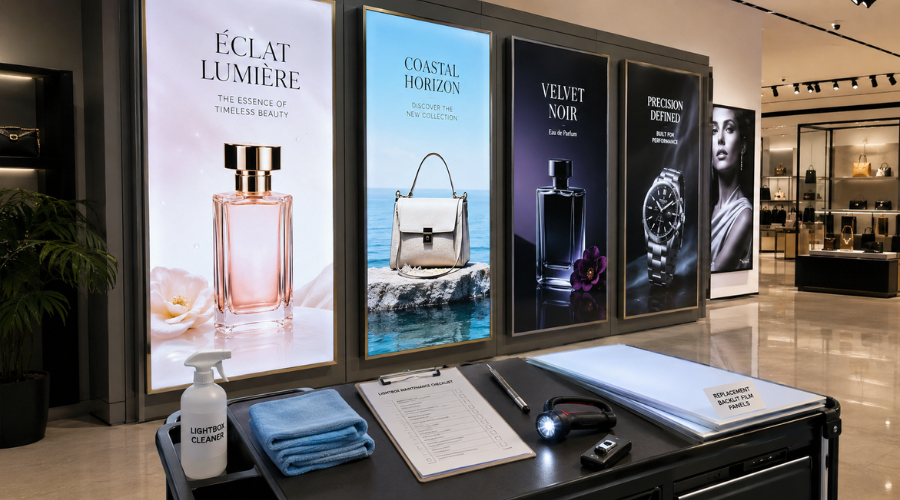
Understanding the Core Elements of the Retail Lightbox Maintenance Guide
Lightboxes support wayfinding, promotion, and brand messaging inside retail spaces. We treat them as part of a complete environmental graphics program, not as separate fixtures. Because shoppers interact with these displays at close range, small issues can affect the overall experience.
A practical maintenance plan starts with visibility, safety, and consistency. We look at face panels, frames, illumination, electrical access, and surrounding wall conditions. Also, we review how the display fits the current store layout and customer path.
Our team considers the graphic surface first. Scratches, dust, fading, and edge damage can make a message harder to read. Over time, these issues can also weaken the connection between the physical space and the brand system.
Lighting quality comes next. Uneven brightness, color shifts, and dark areas change how graphics appear. Therefore, we check lamps, LEDs, drivers, wiring, and diffusion materials during routine reviews.
Access matters as well. A lightbox that requires difficult service can lead to delayed upkeep. For that reason, we account for mounting methods, removable panels, and the space around the fixture.
Step-by-Step Best Practices for Effective Lightbox Upkeep
We recommend a simple schedule that supports daily operations. The goal is to reduce disruption while keeping signage clear and functional. However, each location may need a different rhythm based on traffic, exposure, and fixture type.
- Inspect the graphic face for dust, cracks, fading, and alignment issues.
- Clean surfaces with materials that match the panel and printed finish.
- Check brightness across the full display to locate dim areas.
- Review color consistency against nearby graphics and current brand standards.
- Confirm that frames, fasteners, hinges, and access points function correctly.
- Document findings with photos, dates, and notes for future service planning.
- Schedule repairs before small issues affect the customer experience.
Cleaning should follow the material requirements. We avoid harsh methods that can damage printed films, acrylic, polycarbonate, or diffusion layers. In addition, we test cleaning products in a limited area when needed.
Lighting components need regular attention. We look for flicker, heat buildup, loose connections, and signs of wear. Next, we compare the display to nearby illuminated elements to maintain a balanced presentation.
Graphic updates also belong in the process. Campaign changes, refreshed branding, or revised department layouts may require new inserts or panels. As a result, we coordinate maintenance planning with environmental graphics updates.
Documentation helps teams act faster. We keep notes clear, practical, and tied to each fixture location. Then, store staff and facility teams can understand what needs attention.
Common Challenges and Solutions in Lightbox Maintenance
One common challenge involves inconsistent brightness. This can happen when older components remain beside newer ones. We solve this by reviewing the full light source system instead of replacing only one visible part.
Another issue involves graphic warping or slipping. Heat, poor fit, or frequent panel changes may cause movement. When this happens, we check the panel size, retention method, and fixture ventilation.
Dust inside the display can also reduce clarity. Even clean exterior panels may look dull if the interior collects debris. Therefore, we include internal cleaning during planned service when access allows it. Retail teams often face tight service windows. Stores need maintenance without interrupting sales activity. So, we plan work around staffing, customer flow, and fixture access.
The Impact of Well-Maintained Lightboxes on Brand Perception
A well-executed retail environment relies on attention to detail, and maintaining key visual elements – like lightboxes – plays a pivotal role in shaping a brand’s identity. Any lapses in cleanliness, illumination, or presentation can directly influence how customers perceive the entirety of our space. When we ensure our lightboxes are operating at their best, consistently bright and free from dust or wear, we’re reinforcing trust and enhancing the experience for everyone who enters our store. The impression created by high-quality, vibrant lightboxes extends to all aspects of our brand, signaling that we prioritize not just products, but the care of our presentation.
Integrating the Retail Lightbox Maintenance Guide into Facility Operations
For those of us managing retail environments, integrating the Retail Lightbox Maintenance Guide into our daily facility operations is essential. Instead of viewing maintenance as a reactive process, we can weave these recommendations into our routine. Assigning responsibility, creating schedules, and conducting regular inspections contribute to the overall reliability of our displays. The guide helps us recognize early signs of wear, address issues before they impact customers, and maintain efficient lighting that keeps our retail displays looking their best. The benefit is a seamless visual experience, contributing to both operational efficiency and brand consistency across all locations.
Where to Find Reliable Resources for Lightbox Maintenance and Expert Support
Store teams don’t have to approach maintenance alone. We’re committed to equipping our clients with not only the Retail Lightbox Maintenance Guide, but also reliable support channels and resources. Whether it’s accessing technical documentation, training materials, or direct consultation, there are pathways to ensure every question is answered. When needed, we recommend reaching out for expert assistance to address complex electrical or structural concerns. This approach reduces downtime, promotes safety, and helps sustain the strong presentation of our retail displays over the long term. Our goal is to provide the tools and support that empower facility teams to deliver a consistently engaging environment for every customer visit.
FAQ
What role do lightboxes play in modern retail store design?
Lightboxes are crucial for creating vibrant, visually engaging retail environments. By illuminating graphics and messaging, we help our clients showcase their brand identity and promotions effectively. This not only enhances the customer experience but also draws attention to key products and offers. With evolving retail trends, lightboxes have become an essential aspect of dynamic store design.
Why is regular maintenance of lightboxes so important?
Regular maintenance ensures our lightboxes perform optimally and look their best. Over time, dust, debris, and electrical wear can diminish their brightness and visual appeal. By scheduling routine upkeep, we maintain consistent brand presentation and prolong the lifespan of our lightboxes. Additionally, well-maintained displays reduce long-term repair costs.
What are the core elements covered in the Retail Lightbox Maintenance Guide?
Our guide covers inspection protocols, cleaning procedures, component checks, and troubleshooting techniques. We break down each maintenance step into actionable items, making it easy for our teams to follow. Furthermore, the guide emphasizes safety and proper handling to prevent damage during upkeep.
How often should we inspect and clean our retail lightboxes?
Ideally, we recommend inspecting lightboxes at least once a month. Cleaning frequency may vary based on store location and traffic but should occur quarterly at minimum. Following these schedules helps us catch any issues early and ensures our lightboxes always look pristine. Consistent maintenance fosters a reliable retail atmosphere.
What cleaning products are safe to use on lightbox graphics and components?
We suggest using non-abrasive, mild cleaning solutions and soft microfiber cloths. Harsh chemicals or rough sponges can damage both the graphics and the lightbox surface. It’s essential for us to follow manufacturer recommendations to keep our displays looking brand new while preserving print integrity.
What are common challenges we might face during lightbox maintenance?
Some typical issues include flickering lights, dimming, or graphics that appear faded or dirty. We might also encounter connection or wiring problems. Fortunately, by following our guide, we can address these challenges efficiently. Regular preventative maintenance greatly reduces the likelihood of major disruptions.
How can we troubleshoot a lightbox that isn’t lighting properly?
First, we check power connections and ensure that bulbs or LED strips are secured and functional. If problems persist, we consult our maintenance guide for further testing and possible component replacements. For persistent issues, we recommend consulting our expert support team for professional assistance. Timely troubleshooting minimizes downtime.
What impact do well-maintained lightboxes have on our brand perception?
Clean, vibrant lightboxes enhance our brand’s reputation by reflecting quality and attention to detail. Customers are more likely to engage with appealing, well-lit displays. Conversely, neglected lightboxes can detract from the shopping experience and diminish trust in the brand. Thus, proper maintenance directly influences customer perceptions and loyalty.
How do we integrate lightbox maintenance into our regular facility operations?
We recommend incorporating lightbox upkeep into existing cleaning and facilities checklists. Assigning responsibility and scheduling regular reviews simplifies the process. Additionally, staff training on maintenance procedures ensures consistency and reduces oversight. With seamless integration, we maintain retail environments that always look their best.
Where can we find reliable resources or expert support for lightbox maintenance?
We provide comprehensive resources, including our Retail Lightbox Maintenance Guide, training materials, and on-call support. If unique challenges arise, our team is available to offer expert troubleshooting and repair services. By partnering with us, you ensure access to up-to-date solutions and ongoing professional assistance.