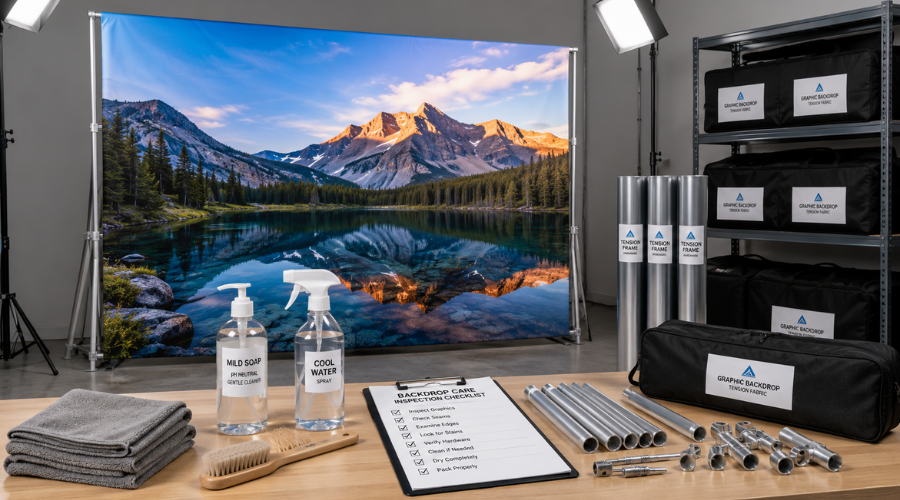
Best Practices for Fabric Backdrop Care and Storage
Fabric backdrops support trade shows, retail displays, lobbies, events, and brand environments. We treat each backdrop as part of a larger visual system, so routine care matters. First, we check the surface before and after every use. This helps us spot dust, loose threads, stains, or stress points early.
Next, we handle fabric with clean, dry hands or light gloves. Oils, lotion, and dirt can transfer quickly during setup. Also, we avoid dragging fabric across floors, tables, or hardware. Even small abrasions can affect how graphics look under lights.
We also keep food, drinks, markers, tape, and sharp tools away from printed fabric. However, busy installs can make this difficult. For that reason, we set a clean staging area before unpacking. Our crews can then inspect, assemble, and position each piece with fewer risks.
- Inspect the backdrop before installation and after removal.
- Use clean hands or gloves during handling.
- Keep fabric away from moisture, heat, and direct sunlight when not in use.
- Remove dust with approved, gentle methods before storage.
- Fold only when the material and print method allow it.
- Label each piece with project, size, location, and install notes.
Because environmental graphics often move between locations, we plan care around real use. A backdrop for a one-day event needs different handling than one used every month. Therefore, we document setup steps, hardware requirements, and cleaning limits for recurring programs.
Expert Tips for Cleaning, Handling, and Maintaining Fabric Backdrops
Cleaning should start with the least aggressive method. We usually begin with a lint roller, soft brush, or low-suction vacuum. Then, if a spot remains, we test a small hidden area before applying any cleaner. This helps protect the print and fabric finish. Some fabrics tolerate light spot cleaning with mild soap and water. However, not every print process responds the same way. We avoid bleach, solvents, harsh scrubbing, and high heat. In addition, we avoid soaking fabric because moisture can affect tension and shape.
Wrinkles need careful attention. We use a steamer only when the fabric specifications allow it. Also, we keep steam heads moving and avoid direct contact with printed areas. If tension frames hold the backdrop, proper stretching often reduces creases without added heat. Handling during removal matters as much as installation. We release tension slowly and keep hardware from pressing into the print. Meanwhile, we clear the floor so fabric never lands on debris. This small step helps protect edges and corners.
Maintenance also includes recordkeeping. We note stains, repairs, missing hardware, and packing issues after each use. As a result, our team can prepare replacements or adjustments before the next event or display cycle.
Recommended Storage Solutions and Organization Methods
Storage should match the fabric type, graphic size, and frequency of use. Rolled storage works well for many larger pieces because it reduces hard creases. For smaller items, careful folding may work when approved by the material guidelines. Either way, we avoid tight compression.
We prefer clean, dry, climate-stable storage areas. Excess humidity can lead to odor or mildew, while heat can affect coatings and inks. Also, direct sunlight can fade exposed areas over time. Simple environmental control helps preserve a consistent presentation. Organization saves time during reorders, installs, and multi-location rollouts. We label tubes, bags, and bins with clear project information. In addition, we separate fabric from metal parts, tools, and adhesive materials.
Consequences of Neglecting Fabric Backdrop Care and Storage
Neglecting Fabric Backdrop Care and Storage can quickly diminish the value and impact of our environmental graphic installations. Over time, improper care leads to visible issues such as fading colors, permanent creases, or structural damage. This not only affects the appearance of the backdrop but can also lessen the overall aesthetic quality of the spaces we have carefully curated. Especially in high-traffic environments or for trade show backdrops, even minor oversights can reduce the lifespan and effectiveness of our graphic assets. Routine neglect may also result in increased replacement costs, last-minute reprints, and other disruptions that can all be avoided with a disciplined approach to upkeep.
Resources and Industry Standards for Fabric Backdrop Maintenance
To maintain a professional standard, we prioritize access to reliable resources and adhere to industry guidelines for fabric backdrop maintenance. We frequently consult manufacturer care instructions, textile care organizations, and environmental graphics associations to ensure our methods align with best practices. These resources help us stay informed about safe cleaning agents, recommended storage temperatures, and handling protocols which minimize risk. By following industry standards, we protect our investments in visual communication while enhancing the long-term performance of our backdrop solutions.
Ensuring Consistent Visual Impact with Proper Fabric Backdrop Upkeep
Our dedication to effective fabric backdrop care and storage directly contributes to the visual consistency and professional appearance of every project we deliver. Proper cleaning, gentle handling, and well-sequenced storage routines reduce wear and maintain color vibrancy. By investing in regular inspections and considering factors like humidity and light exposure, we keep our environmental graphics ready for immediate use. This means less downtime, fewer unexpected issues, and a reliably strong first impression – qualities essential to our success and the impact of our spaces. Consistent upkeep remains one of the most reliable ways to protect our visual assets and maintain the desired atmosphere in any environment.
FAQ
What are environmental graphics, and why do they matter in modern spaces?
At Riot, we believe environmental graphics play a vital role in shaping the atmosphere of modern spaces. They engage audiences, reinforce branding, and help communicate key messages visually. With dynamic graphics like fabric backdrops, we can enhance interior and exterior environments, making them memorable and impactful.
Why is proper care of fabric backdrops essential?
Proper care extends the lifespan and preserves the high-quality appearance of our fabric backdrops. When we follow recommended maintenance practices, we prevent fading, creasing, and wear – ensuring our graphics always look their best during events and installations.
What common challenges do we encounter with fabric backdrops?
As we handle fabric backdrops, we often face challenges such as wrinkles, stains, and fabric stretching. Additionally, incorrect storage can result in color fading or mildew. By addressing these issues proactively, we maintain the integrity of our installations.
How should we clean our fabric backdrops?
To clean our fabric backdrops, we recommend spot cleaning with mild detergent and cold water. For deeper cleaning, we follow the manufacturer’s instructions. Whenever possible, we air dry backdrops to avoid shrinkage or damage from high heat.
What are the best handling practices for fabric backdrops?
We always handle fabric backdrops with clean hands or gloves to prevent oil and dirt transfer. Furthermore, we avoid dragging backdrops across floors, as this can cause snags or tears. Careful handling helps us maintain their condition between uses.
How do we prevent wrinkles and creases in fabric backdrops?
To minimize wrinkles, we store backdrops rolled rather than folded whenever possible. If creases develop, we use gentle steaming or a low-heat iron on the reverse side, always keeping a protective cloth between the iron and the fabric. This way, we avoid scorching the material.
What storage solutions do we recommend for fabric backdrops?
We suggest using breathable storage bags and sturdy, labeled tubes or racks. Moreover, we store backdrops in a cool, dry area, away from direct sunlight or moisture, as environmental factors can significantly impact fabric longevity.
How do we organize our fabric backdrops for easy access?
Efficient organization is crucial for us. We label each backdrop by size, project, or theme and keep an inventory list. Consequently, we can quickly locate and retrieve the backdrop needed for any specific event or installation.
What can happen if we neglect fabric backdrop care and storage?
If we neglect proper care, our fabric backdrops can become stained, faded, or permanently wrinkled. Over time, this leads to increased replacement costs and diminished visual impact during our projects. Clearly, investing the time in maintenance pays off in the long run.
Where can we find industry standards and additional resources on fabric backdrop care?
As part of our commitment to excellence, we refer to industry associations like the International Sign Association and Shared Knowledge Group for guidelines. Additionally, we consult product-specific care manuals provided by manufacturers to ensure our practices meet and exceed industry standards.