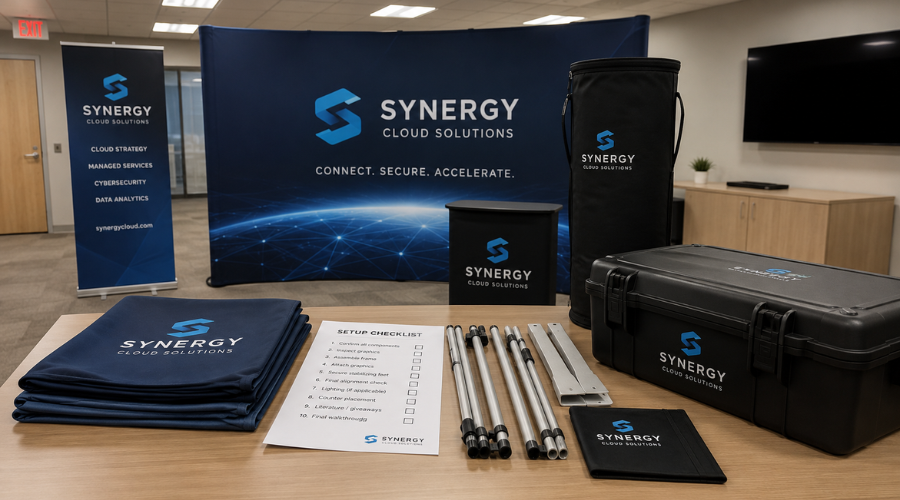
Key Benefits of Wrinkle-Resistant Fabric Displays in Environmental Graphics
For people planning environmental graphics, fabric displays can support clear messaging without adding heavy structure. We often use them when a space needs branded visuals that can move, store, and install with less friction.
First, wrinkle-resistant fabric helps keep graphics readable after transport or storage. That matters in offices, retail spaces, campuses, events, and healthcare settings where teams may reuse the same display several times. Additionally, these displays can reduce setup time. Our teams can stretch or fit fabric over compatible frames, which helps create a clean surface without repeated steaming or pressing. Because fabric is lightweight, it can also simplify logistics. We can ship, carry, and stage the materials with fewer handling concerns than many rigid display systems. However, performance still depends on the right material, print method, frame, and placement. A busy lobby may need different choices than a temporary trade show wall.
Color consistency is another benefit when the project uses the right production workflow. We use file checks, proofing steps, and controlled output practices to help brand elements stay aligned across locations.
- Use fabric displays for walls, backdrops, portable exhibits, directional graphics, and interior brand moments.
- Choose the fabric weight based on lighting, viewing distance, frame style, and expected use.
- Confirm finished size, bleed, seams, and hardware requirements before production begins.
- Store graphics folded or rolled according to supplier guidance and project needs.
- Inspect displays after each use so small issues do not affect the next installation.
Wrinkle-Resistant Fabric Display Tips for Lasting Impressions
To create a strong result, we start with the environment. We look at traffic flow, wall conditions, lighting, viewing angles, and how close people will stand to the display. Next, we match the message to the space. A reception area may need brand clarity, while a conference room may need support for culture or wayfinding. Also, we keep copy simple. Fabric displays work best when visitors can understand the message quickly and connect it to the surrounding space. Scale matters as well. Large graphics need clean artwork, balanced spacing, and enough contrast for easy reading from the intended distance. Therefore, we recommend confirming artwork resolution early. Low-resolution files can create soft edges, especially on large fabric panels. Placement should also support the visitor experience. For example, a backdrop near check-in can guide attention, while a hallway display can reinforce direction or identity. Meanwhile, lighting can change how colors appear. We review warm, cool, direct, and ambient lighting so the finished display fits the setting.
Finally, we plan for reuse when possible. If the display will travel, we consider modular frames, labeled bags, and a packing method that supports repeated handling.
Installation, Care, and Maintenance Best Practices for Wrinkle-Resistant Fabric Displays (Citing Industry Sources)
Industry groups such as PRINTING United Alliance, FESPA, and the International Sign Association often emphasize planning, material compatibility, and safe installation practices. We use that same approach when preparing fabric display projects. Before installation, we confirm the hardware and graphic match. This step helps avoid tension problems, loose corners, or distortion across the printed surface. Then, we handle the fabric with clean hands or gloves. Oils, dust, and debris can transfer to the surface during setup. During installation, we align corners first and apply even tension.
Common Mistakes to Avoid with Wrinkle-Resistant Fabric Displays
As we work with clients to enhance their spaces, it’s important to highlight some common pitfalls encountered with wrinkle-resistant fabric displays. One frequent issue is neglecting proper installation technique, which can lead to tension inconsistencies and visual flaws that compromise the intended effect. Our team regularly emphasizes the importance of following Wrinkle-Resistant Fabric Display Tips provided by manufacturers and our experts for smooth presentation.
Another mistake happens when displays are stored or shipped without the right folding methods. While the material resists creasing, long-term compression or improper rolling can create temporary set lines. We recommend using designated storage tubes or flat surfaces, never overstuffing or over-bending displays.
Improper cleaning practices also reduce longevity. Using harsh chemicals, abrasive brushes, or excessive moisture may damage the fibers or alter color. Always refer to care guidelines and, when unsure, consult our team for tried-and-true methods.
Future Trends: Sustainability and Innovation in Fabric Display Solutions
The environmental graphics industry is moving toward more sustainable and innovative solutions. We see a rise in the use of recycled and eco-friendly materials, as brands increasingly demand displays that reflect their commitment to environmental stewardship. Advances in dye-sublimation printing, fabric engineering, and modular frameworks are leading to displays that are not only wrinkle-resistant but also easier to recycle or repurpose.
We anticipate further development in smart textiles – such as antimicrobial coatings and fabrics with improved opacity or sound-dampening features – which can enhance the user experience and make displays even more adaptable. As your partner, we keep a close eye on advances to ensure your environmental graphics keep pace with evolving standards and audience expectations.
Empowering Your Brand with Effective Environmental Graphics and Proper Display Techniques
Effective environmental graphics are more than just a visual element – they are a tangible extension of your brand environment. With the right approach, our wrinkle-resistant fabric display tips and attention to installation, care, and maintenance can deliver a strong, consistent impact.
Choosing proven materials like wrinkle-free fabric displays will eradicate distractions caused by unsightly creases while making setup and turnover more manageable. When we apply well-established best practices for handling and regular upkeep, each display presents at its best throughout its lifespan.
Ultimately, our role is to guide you through the process, from design to final installation, ensuring that your environmental graphics are as memorable and reliable as the message they convey. By investing in quality solutions and following recommended Wrinkle-Resistant Fabric Display Tips, your brand can stand out in any environment, today and well into the future.
FAQ
What are environmental graphics, and why do they matter for our brand?
Environmental graphics are visual elements that shape the experience within physical spaces such as offices, retail stores, and events. By using these visuals, we can enhance brand recognition, create an immersive atmosphere, and foster emotional connections with our audience. Notably, they also influence how visitors perceive and remember our brand.
How have display materials evolved over the years in visual communication?
Over time, display materials have dramatically shifted from heavy, rigid substrates to lightweight, flexible, and sustainable options. Thanks to technological advancements, we now use wrinkle-resistant fabrics that offer vivid color, durability, and easier handling, setting new standards in visual storytelling and efficiency for our team and clients alike.
What makes wrinkle-resistant fabric displays unique in modern environments?
Wrinkle-resistant fabric displays stand out because they’re lightweight, portable, and maintain a crisp appearance, even after repeated use. Furthermore, their flexibility allows us to design seamless installations that adapt effortlessly to diverse spaces while saving time and resources during setup.
What are the key benefits of using wrinkle-resistant fabric displays in our environmental graphics?
Our wrinkle-resistant fabric displays offer several benefits, such as consistent visual appeal, enhanced durability, and reduced maintenance. Additionally, these displays are easy to transport and install, leading to cost savings and greater sustainability compared to traditional materials.
How can we maximize the impact of our wrinkle-resistant fabric displays?
To create lasting impressions, we combine bold designs, strategic placement, and optimal lighting. Moreover, regularly updating the graphics and maintaining cleanliness help us ensure that every installation continues to communicate our brand’s message effectively over time.
What are the best installation practices for wrinkle-resistant fabric displays?
We recommend carefully following manufacturer guidelines, using appropriate frames or tension systems, and ensuring the fabric is stretched smoothly without overstressing the material. For larger installations, it’s beneficial to have multiple team members collaborate, which streamlines setup and minimizes the risk of damage.
How can we maintain and care for our fabric displays effectively?
Cleaning regularly with gentle, non-abrasive products helps us preserve the integrity and color of the fabric. It’s also vital to store displays in cool, dry environments and to avoid folding them excessively, which prevents creasing. Industry sources suggest inspecting for wear to address small issues promptly, thus extending the lifespan of every display.
What mistakes should we avoid with wrinkle-resistant fabric displays?
We should avoid exposing the displays to harsh chemicals, improper storage, and over-stretching during installation. Additionally, neglecting regular cleaning or attempting DIY repairs without proper guidance could lead to irreversible damage or a diminished visual effect.
How are sustainability and innovation shaping the future of fabric display solutions?
As environmental concerns grow, we are increasingly adopting recycled materials and energy-efficient production processes for our wrinkle-resistant fabrics. Simultaneously, innovations in printing technology are enabling us to create even more vivid, customizable, and eco-friendly graphics, leading to a greener and more dynamic future.
How do environmental graphics and proper display techniques empower our brand?
By combining effective environmental graphics with advanced display solutions, we create spaces that not only reflect our brand but also inspire engagement and loyalty. Using proper techniques ensures our message remains compelling and consistent, reinforcing our reputation and supporting our business goals in an ever-evolving market.