Key Benefits of Floor Lamination for High Traffic Areas
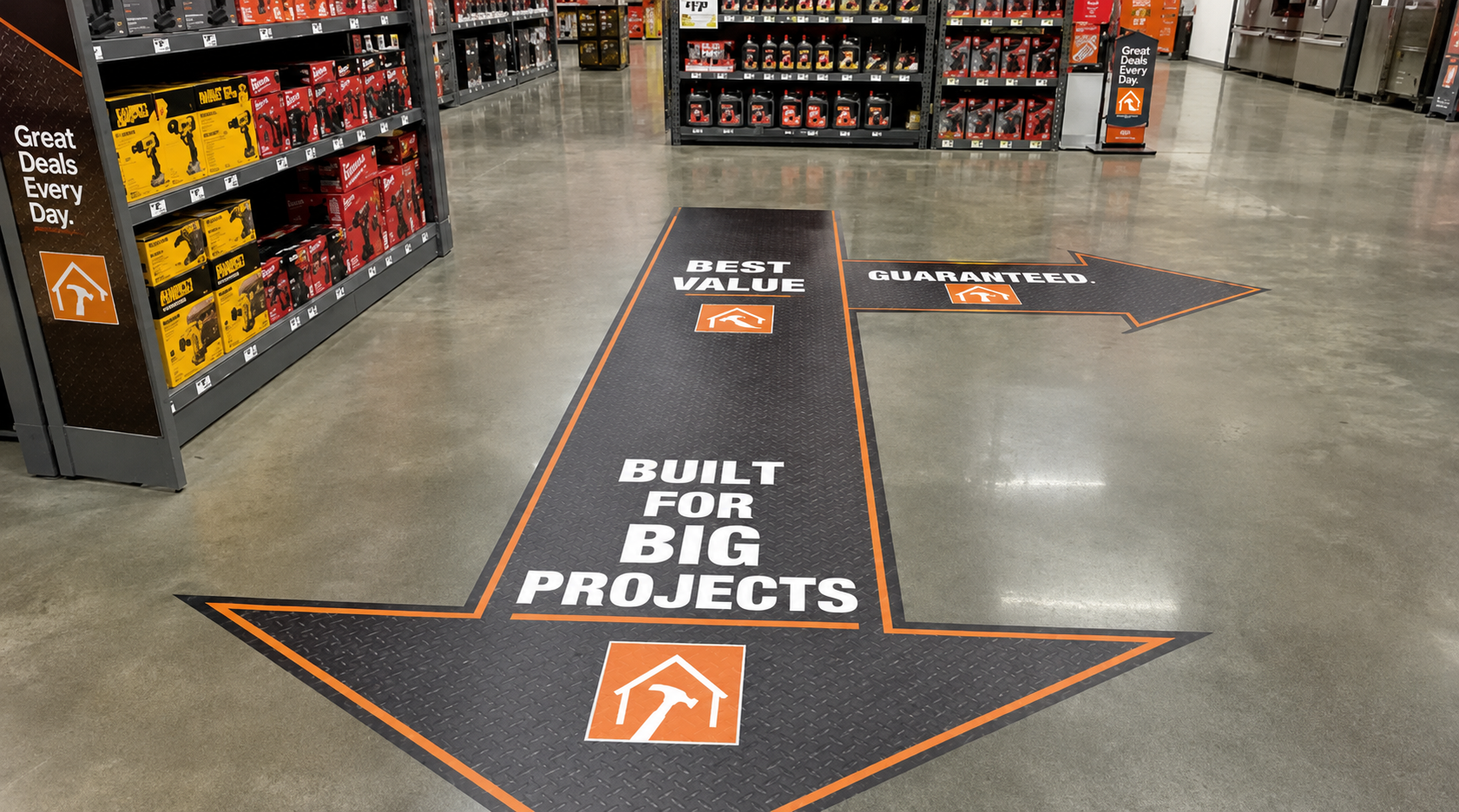
In busy buildings, floor graphics must carry messages without interrupting movement. At Riot, we use lamination to add a clear wear layer over printed vinyl. As a result, the graphic can handle routine foot traffic, cleaning, and directional use. The laminate also helps protect color and legibility. However, the main value comes from matching the surface to the environment. When we plan a project, we look at traffic patterns, cleaning schedules, and campaign length.
- Supports wayfinding in lobbies, corridors, retail aisles, event spaces, and transit zones.
- Helps protect printed graphics from scuffs, moisture, and daily cleaning.
- Provides a surface option that can support slip-resistance goals.
- Gives brands usable messaging space without adding wall fixtures or stands.
For retail, these details support promotions near entrances, checkout lanes, and product displays. In healthcare, they can guide patients toward check-in, elevators, labs, and exits. Meanwhile, event venues often need temporary sponsor messages that stay readable during crowd surges. Because floors sit in the path of movement, graphics also need visible edges and suitable surfaces. Therefore, lamination becomes part of both communication and risk planning.
Best Practices for Selecting Materials for Floor Graphics in Busy Locations
Material selection starts with the floor itself. We review whether the surface is tile, sealed concrete, laminate, stone, or low-pile carpet. Then, we consider how adhesive, film, ink, and laminate will work together. For example, short-term campaign graphics may need clean removal. Longer programs may require a thicker film and a laminate designed for abrasion.
Before production, our team also checks local safety expectations. The International Sign Association notes that environmental graphics should support wayfinding while respecting the setting. In addition, OSHA walking-working surface guidance reminds us to reduce hazards in pedestrian areas. ASTM traction test methods also help frame slip-resistance conversations with product vendors. These references do not replace site testing, but they help us ask better questions.
Finally, print quality matters because people read floor graphics while moving. We keep copy direct, use contrast, and avoid crowded layouts. Also, we plan graphic size around viewing distance and lighting. This helps our clients use the floor as a practical communication channel.
Case Studies: Real-World Success Using Floor Lamination for High Traffic Areas (with cited industry sources)
In a grocery rollout, we placed aisle cues and seasonal offers near endcaps. First, we selected a removable floor film with a textured laminate. Next, we tested a small area with the store’s cleaning routine. After launch, staff kept messages clear by using neutral cleaners and avoiding aggressive pads. This approach aligns with 3M floor graphic application guidance, which stresses surface preparation and compatible films. Consequently, the campaign stayed organized through the promotion window.
At a medical campus, our team produced route markers from parking entries to registration. However, the space required a calmer look and careful placement outside trip zones. We used fewer messages, higher contrast, and planned replacement points at elevator banks. The design followed wayfinding principles reflected in International Sign Association resources and SEGD discussions on user-centered navigation. As a result, visitors could make decisions sooner, and staff gave fewer repeated directions.
For an arena event, we created sponsor graphics for concourses with heavy pre-show surges. Since the install window was limited, we mapped each location before production. Then, installers applied numbered pieces in sequence and checked edges before doors opened. Post-event removal mattered as much as installation, so our film choice focused on clean release.
Tips for Long-Term Maintenance and Durability of Laminated Floor Graphics
Ensuring the longevity and appearance of laminated floor graphics in high traffic environments requires consistent care. We recommend a regular cleaning routine using non-abrasive cleaning agents to prevent surface scratches and maintain slip resistance. Avoid using harsh chemicals that may degrade the lamination or cause discoloration. It’s important to inspect your graphics periodically for signs of wear, such as peeling edges or fading, and address any issues promptly. In spaces with extreme footfall or heavy rolling equipment, consider additional protective coatings or selecting higher grade laminates from the outset.
How Businesses Can Enhance Branding and Safety Through Floor Lamination for High Traffic Areas
The right floor graphics serve dual purposes: reinforcing branding and improving wayfinding or safety messaging, especially in high traffic settings. Our team works with you to create designs that capture attention while maintaining visual clarity and compliance with safety standards. Through strategic placement and proper lamination, graphics can direct foot traffic, highlight hazards, or provide engaging brand stories. Investing in professional lamination techniques ensures the graphics remain vibrant and firmly adhered, supporting both the safety of visitors and the integrity of your branded spaces over time.
Where to Find Expert Providers Specializing in Floor Lamination for High Traffic Areas
Selecting a provider experienced in Floor Lamination for High Traffic Areas is vital for project success. At Riot, we specialize in the production and installation of durable floor graphics tailored to withstand the rigors of busy commercial, educational, or healthcare environments. We guide clients through material selection, graphic design, and ongoing support. Collaborating with our experts ensures your environmental graphics project is completed with quality materials, precise installation, and solutions that fit your facility’s unique requirements. For organizations seeking lasting impact and safety within their spaces, reaching out to knowledgeable specialists is the essential first step.
FAQ
What are environmental graphics and why are they important in public spaces?
At Riot, we define environmental graphics as visual elements strategically integrated into public spaces to guide, inform, and delight visitors. Not only do these graphics enhance the overall experience, but they also convey essential information and reinforce branding, making public spaces both engaging and efficient.
How has floor lamination become essential in high-traffic environments?
When it comes to high-traffic environments, floor lamination provides crucial protection for floor graphics, ensuring they remain vibrant and readable despite constant footfall. Over time, we’ve seen that laminated graphics are more resilient and maintain their appearance much longer, which makes them an essential element for businesses that value durability and presentation.
What unique challenges do high-traffic areas present for floor graphics?
High-traffic areas are vulnerable to frequent scuffing, dirt, and moisture. We often encounter challenges like rapid wear and reduced visibility of graphics. Consequently, using premium lamination is vital to prevent fading, peeling, and damage, ensuring your messaging or branding remains visible and effective for longer durations.
What are the key benefits of floor lamination in busy locations?
Our clients enjoy multiple benefits from floor lamination, such as increased durability, vibrant colors, slip resistance, and simplified cleaning. Additionally, laminated graphics are easier to maintain, which reduces replacement costs. By choosing laminated floor graphics, businesses can uphold a professional image even in the busiest environments.
Which materials are best for floor graphics in high-traffic settings?
We recommend using robust vinyl paired with a high-quality, slip-resistant lamination. This combination withstands heavy use and environmental factors like spills and abrasive debris. As a result, your floor graphics will remain intact, attractive, and safe for visitors, which is essential in demanding locations.
Can you share a real-world example of successful floor lamination in a high-traffic area?
Absolutely! At Riot, we’ve transformed hospital corridors and airport terminals with laminated wayfinding graphics. For instance, our work at a major city transit station reduced pedestrian confusion and improved foot traffic flow – cited in a recent SEGD industry case study. These successes underline the transformative value of expert floor lamination.
How can laminated floor graphics contribute to branding and safety?
Floor lamination enhances both branding and safety by ensuring graphics – such as logos, directional arrows, or hazard warnings – remain highly visible and non-slip. This dual function helps businesses reinforce their identity and provide clear guidance, all while prioritizing visitor well-being in crowded spaces.
What maintenance tips do you recommend to maximize durability?
We suggest regular cleaning with non-abrasive agents and periodic inspections for any signs of lifting or wear. By addressing issues early, you’ll prolong the life of your floor graphics. Furthermore, establishing a routine maintenance schedule ensures your investment continues to pay dividends.
How should a business choose an expert floor lamination provider for high-traffic areas?
When selecting a provider, we advise researching credentials, evaluating past projects, and ensuring they use industry-standard materials. We encourage reaching out to trusted experts – such as members of SEGD or those featured on reputable platforms like the International Sign Association – to ensure premium results.
Where can I find more information and resources about floor lamination solutions?
You can explore in-depth resources from us at Riot as well as from industry leaders like the Society for Experiential Graphic Design (SEGD) and the International Sign Association (ISA). These sites, coupled with our expert team, offer a wealth of insight for designing and maintaining floor graphics in high-traffic spaces.