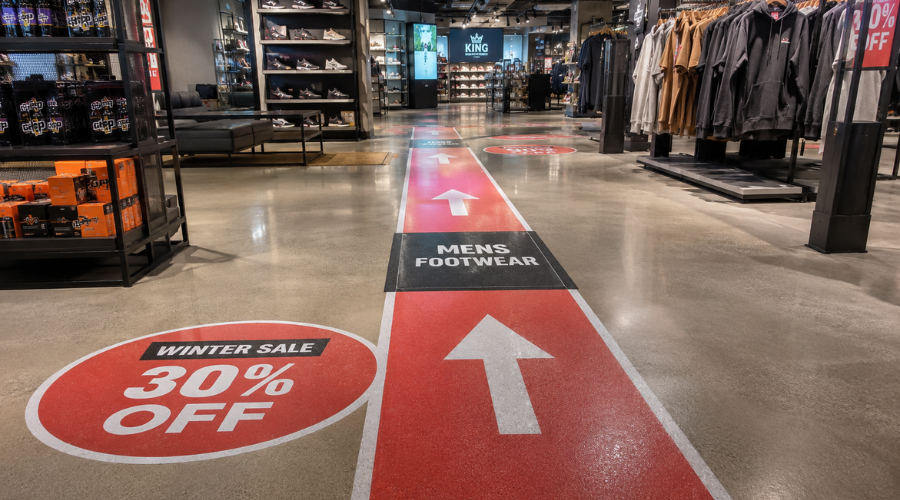
Non-Slip Floor Graphic Materials: Types, Features, and Industry Standards
At Riot, we help teams choose floor film systems that support space planning, traffic flow, and visual communication. Non-Slip Floor Graphic Materials usually combine printable film, durable inks, and a textured overlaminate. Together, these layers affect grip, cleanability, color, and service life.
Common options include vinyl floor films, aluminum-based films, textured laminate systems, and carpet-rated films. Each option fits different surface conditions. For example, vinyl films often suit smooth tile or sealed concrete. However, aluminum-based films can conform to uneven surfaces.
We also review the expected foot traffic before selecting a system. Short-term retail campaigns need different materials than airport corridors or hospital entries. Additionally, cleaning methods can influence the final recommendation. A floor graphic must hold up under routine maintenance.
Industry standards help guide safer choices. ASTM D2047 addresses static coefficient of friction for polish-coated flooring surfaces. OSHA 1910.22 requires walking-working surfaces to stay clean, orderly, and dry when possible. Meanwhile, the 2010 ADA Standards guide accessible routes, clear widths, and changes in level.
- Surface type, including tile, sealed concrete, wood, carpet, or low-pile textile
- Traffic level, from occasional use to heavy public circulation
- Slip resistance testing, including ASTM D2047 or other project-specific criteria
- Cleaning exposure, such as mopping, auto-scrubbing, or chemical contact
- Graphic duration, including temporary, seasonal, or long-term placement
Before production, we match the material to the floor and the use case. Then, we confirm installation conditions. Temperature, moisture, and surface preparation all affect adhesion.
How Non-Slip Floor Graphic Materials Enhance Safety and User Experience (ADA, ASTM D2047, OSHA compliance, etc.)
Floor graphics can support safer movement when we plan them with codes, standards, and human behavior in mind. They can mark routes, identify zones, or point people toward services. However, the surface must still support traction.
ASTM D2047 gives a recognized method for measuring slip resistance on certain flooring surfaces. OSHA’s walking-working surface rule also reinforces the need for maintained walking areas. In addition, ADA guidance helps us avoid creating barriers in accessible routes.
We consider contrast, size, placement, and lighting. These factors affect how quickly people understand a message. Also, clear graphics can reduce hesitation in busy spaces. That matters in lobbies, clinics, schools, venues, and other shared environments.
We avoid placing graphics where they may create confusion or crowding. Instead, we position them where users naturally look while moving. For accessible circulation, we keep graphics low-profile and compatible with the existing floor.
Material edges matter as well. Poor edge adhesion can create trip concerns. Therefore, we specify products, installation methods, and maintenance plans that help reduce lifting. We also recommend periodic inspections after installation.
Sources we consider include the 2010 ADA Standards for Accessible Design, OSHA 29 CFR 1910.22, and ASTM D2047. Project teams may also apply local building codes. Because requirements vary, we coordinate with facility managers and code consultants when needed.
Successful Case Studies and Real-World Impact of Non-Slip Floor Graphic Materials
Over the past decade, we have supported countless organizations in improving pedestrian safety and enhancing wayfinding strategies with non-slip floor graphic materials. When working with healthcare providers, educational institutions, airports, and large retailers, our customized solutions help guide visitors efficiently without compromising safety. For example, in busy healthcare facilities, non-slip floor graphics ease navigation for patients and reduce fall risks, especially in high-traffic or moisture-prone areas. Similarly, retailers benefit from branded graphics that maintain traction and longevity, withstanding constant foot traffic while reinforcing brand messaging. These real-world examples underline the tangible benefits that well-designed floor graphics can offer in public and commercial spaces.
How to Choose the Right Non-Slip Floor Graphic Provider: Factors to Consider
Selecting a partner for your non-slip floor graphic materials involves several important factors. First, evaluate the provider’s ability to meet necessary safety and regulatory standards, such as ADA and ASTM D2047 slip-resistance requirements. It’s also essential to consider the range of materials offered and whether the provider can tailor solutions to your space’s specific needs – taking into account durability, cleaning protocols, and aesthetic goals. Support throughout the design, production, and installation process ensures you achieve effective, cohesive environmental graphics that maintain their quality over time. Working with a provider that offers clear communication and post-installation support maximizes the impact and longevity of your investment.
Future Trends in Non-Slip Floor Graphic Materials and Sustainable Innovation
The development of non-slip floor graphic materials continues to evolve, with sustainability and innovation as central drivers. Emerging technologies are enabling more eco-conscious production methods, including recyclable adhesives and inks as well as materials that reduce waste. Additionally, advancements in digital printing are leading to richer color accuracy and increased customization opportunities, supporting complex branding initiatives or multi-lingual wayfinding. As safety standards adapt and user expectations grow, we anticipate that sustainable, high-performing floor graphics will play an even greater role in how organizations communicate, guide, and protect individuals in modern environments. If you want to learn more about our floor graphics solutions, reach out any time.
FAQ
What are environmental graphics and how do they impact modern spaces?
At Riot, we understand that environmental graphics are visual elements integrated into architectural spaces to create immersive, informative, and engaging environments. By combining art, branding, and wayfinding, these graphics help transform spaces – improving aesthetics and facilitating navigation – which enhances overall user experience.
How do floor graphics support wayfinding and branding?
Floor graphics serve as powerful tools for both wayfinding and branding in modern spaces. Because they are strategically placed, floor graphics guide people to their destinations and reinforce brand identity simultaneously. Consequently, your space becomes more intuitive and memorable for every visitor.
Why is the use of non-slip materials crucial for floor graphics?
Safety is our top priority, and that’s why non-slip materials are fundamental to our floor graphic solutions. Not only do they minimize slip-and-fall risks, but they also ensure that branded or instructional graphics remain compliant with safety regulations, protecting both visitors and business owners.
What types of non-slip floor graphic materials does Riot offer?
We provide a range of non-slip floor graphic materials, including textured laminates, high-traction vinyl, and polyester films. Each material is specifically designed to balance grip, durability, and visual clarity, so your graphics look great while ensuring optimal safety.
How do our non-slip materials meet industry safety standards?
All our non-slip floor graphic materials adhere to key safety standards such as ADA (Americans with Disabilities Act), ASTM D2047, and relevant OSHA regulations. Because these standards ensure appropriate slip resistance, our products offer peace of mind in both commercial and public environments.
What are the benefits of using non-slip floor graphics in commercial environments?
By incorporating non-slip floor graphics into your space, you reduce accident risks and create a safer, more accessible environment. In addition, these graphics can guide foot traffic efficiently and reinforce your brand message, making your facility both functional and visually cohesive.
Where are non-slip floor graphics best applied?
Non-slip floor graphics work exceptionally well in high-traffic areas such as retail stores, airports, hospitals, educational institutions, and offices. Because they withstand frequent use, these graphics offer long-lasting safety and guidance without sacrificing design or branding impact.
How do we ensure that our floor graphic designs are effective and compliant?
Our design team combines creativity with deep industry knowledge, guaranteeing that each project not only meets regulatory requirements but also aligns with your branding goals. Through detailed planning and rigorous material testing, we ensure every installation is both effective and compliant.
Can you share examples of successful installations and their impact?
We have delivered numerous successful projects, ranging from hospital corridors to event spaces. As a result, our clients report improved navigation, reduced accidents, and a stronger brand presence. These case studies demonstrate the tangible value that well-designed, non-slip floor graphics bring to any environment.
What factors should I consider when choosing a non-slip floor graphic provider?
When selecting a provider, consider their safety certifications, range of material options, design expertise, and track record of successful installations. At Riot, we combine all these strengths, ensuring you receive the highest-quality, innovative, and safe floor graphic solutions every time.