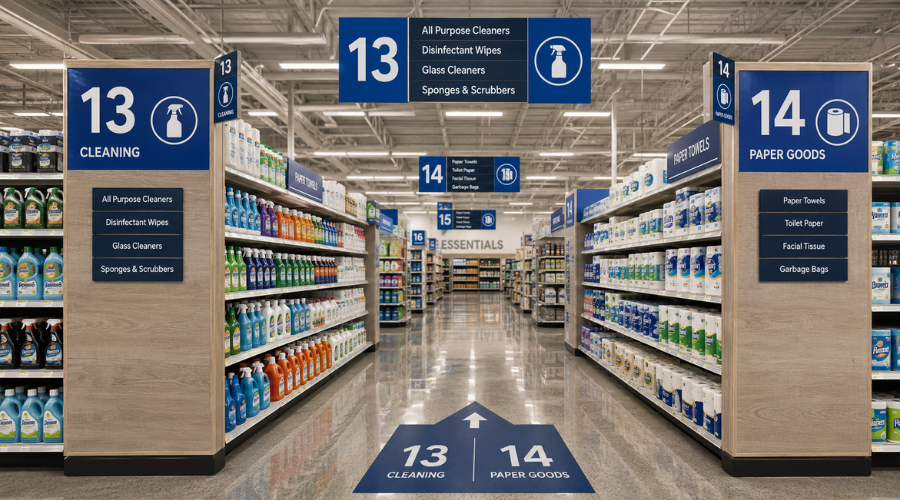
What Are Retail Aisle Wayfinding Markers and How Do They Work?
Retail Aisle Wayfinding Markers are visual cues that help shoppers locate departments, categories, and products inside a store. We use them as part of a larger environmental graphics system, not as isolated signs. Each marker gives shoppers a clear next step, especially when sightlines, fixtures, or promotions compete for attention.
In practice, aisle markers connect store layout with customer intent. A shopper enters with a goal, then scans for familiar category language, numbers, colors, or icons. Therefore, our job is to reduce hesitation at each decision point. Clear markers help people confirm location, choose an aisle, and continue the trip with less staff support.
These systems can include overhead signs, blade signs, endcap identifiers, shelf-level cues, and category panels. However, the best format depends on ceiling height, traffic flow, lighting, and product mix. We review how people move through the space before we recommend materials, sizes, or installation methods.
Design Strategies and Placement Considerations for Effective Aisle Markers
Good aisle marker design starts with hierarchy. Shoppers should see the broad category first, then supporting details as they move closer. For example, “Health” may appear overhead, while “Vitamins” and “First Aid” appear at aisle level.
Next, we align wording with how customers actually shop. Internal department names may not match customer language. So, we keep terms direct, consistent, and easy to scan from a natural walking pace.
Placement matters as much as design. Markers should appear before a shopper needs to turn, not after. In addition, they should remain visible from main paths, entrances, service counters, and high-traffic intersections.
- Use consistent category names across signs, maps, shelf tags, and digital tools.
- Keep contrast strong enough for quick reading under store lighting.
- Place key markers at decision points, not only above product runs.
- Account for carts, displays, seasonal stacks, and hanging promotions.
- Test views from multiple shopper heights and approach angles.
Material choices also affect performance. Rigid panels may suit permanent departments, while changeable inserts help stores with frequent resets. Meanwhile, durable finishes support cleaning, handling, and long-term brand consistency.
We also consider accessibility during planning. Type size, contrast, mounting height, and symbol use can affect many customers. As a result, inclusive design often improves navigation for everyone, not only people with specific needs.
Proven Benefits of Retail Aisle Wayfinding Markers with Data and Industry Sources
Clear aisle markers can improve speed, confidence, and basket building. They also reduce the number of simple directional questions handled by staff. That gives associates more time for service tasks that need human help.
Industry research supports the value of in-store visual communication. POPAI’s Shopper Engagement Study reported that many purchase decisions happen inside the store. Because of that, wayfinding and category graphics can influence both navigation and buying behavior.
FMI research has also shown that convenience remains a leading factor in grocery and retail satisfaction. When shoppers find items faster, the trip feels easier. Consequently, they may browse more sections instead of abandoning the search.
Retail operations teams often track benefits through practical metrics. We may review dwell time, staff questions, basket size, missed-sale patterns, and customer feedback. Then, we adjust the system based on what the store data shows.
Digital behavior adds another useful signal. If shoppers search store apps for basic category locations, physical cues may need improvement.
Key Takeaways for Your Retail Space
At Riot, our experience shows that thoughtful environmental graphics – particularly wayfinding solutions – can consistently improve the clarity and accessibility of any retail space. Integrating effective Retail Aisle Wayfinding Markers helps guide shoppers, supports navigational needs, and can influence dwell time by reducing confusion. From increasing customer satisfaction to creating a cohesive branded environment, deliberate wayfinding not only benefits those visiting your store, but also provides a measurable impact on your business outcomes.
Future Trends in Retail Wayfinding and Environmental Graphics
As the retail environment continues to change, advances in digital integration, sustainability, and personalization are shaping the next generation of wayfinding and environmental graphics. We are seeing increased demand for dynamic, updatable signage, integration of QR codes, and solutions that work seamlessly with smartphones and apps. Sustainable materials and modular component designs are also rapidly emerging as priorities. These advancements allow for more adaptable and environmentally conscious signage strategies that can evolve with our clients’ shifting brand and operational needs.
How To Get Started With Effective Retail Aisle Wayfinding Markers
If enhancing the customer journey is a priority for your location, starting with Retail Aisle Wayfinding Markers is a practical and highly impactful first step. Our team recommends beginning with an assessment of the current retail layout and identifying pain points where customers may hesitate or have questions. Clearly defined markers should be strategically placed and consistently branded to create a seamless experience.
We understand that every business has unique requirements, whether you’re updating signage or rolling out a new look as part of seasonal promotions or larger initiatives like retail pop displays. We work with you to consider flow, material, installation, and long-term maintenance in each solution. Together, we can develop a plan for implementation that keeps your environment current and your customers confident as they navigate your store.
Connect with us to review your needs, explore additional wayfinding opportunities, or discuss how we can bring clarity and efficiency to your retail space. Our experience with environmental graphics ensures your projects deliver results – from first impression to final sale.
FAQ
What are retail aisle wayfinding markers?
Retail aisle wayfinding markers are visual cues or signs that help customers navigate a retail store more efficiently. We use them to highlight sections, categories, or essential locations, making the overall shopping experience seamless and enjoyable for everyone.
How do environmental graphics benefit our retail space?
Environmental graphics guide customers through our space and create a cohesive brand experience. By connecting signage, floor graphics, and wall visuals, we engage shoppers cognitively and emotionally, ultimately increasing dwell time and customer satisfaction.
How do wayfinding markers enhance the customer experience?
Wayfinding markers minimize confusion and frustration by providing clear directions and visual cues within our store. As a result, customers spend less time searching for products and enjoy a smoother, more positive journey when shopping with us.
Where should we place retail aisle wayfinding markers?
Aisle wayfinding markers work best when strategically placed at decision points, intersections, or entry points within our retail space. We also recommend positioning them at eye level and in consistent locations to maximize visibility and effectiveness.
What design elements make our wayfinding markers effective?
We incorporate clear typography, bold colors, and intuitive icons to ensure our wayfinding markers stand out. In addition, we align designs with our brand identity so customers experience a seamless and memorable visit every time.
Is there data supporting the benefits of aisle wayfinding markers?
Yes, several industry sources show that clear wayfinding markers can increase customer satisfaction by up to 30%, and ultimately improve conversion rates. Furthermore, wayfinding solutions can reduce staff intervention for customer inquiries, saving valuable employee time.
How can we get started with implementing aisle wayfinding markers?
To begin, we assess our current store layout and identify pain points for navigation. Afterward, we design and test wayfinding markers in key locations, gathering feedback and making improvements to ensure an optimal customer experience.
What future trends should we watch in retail wayfinding?
As technology evolves, we see growth in digital wayfinding, dynamic signage, and integration with mobile apps. We stay ahead by blending digital and physical solutions, creating a seamless omnichannel experience for shoppers.
Can wayfinding markers be customized for our brand?
Absolutely. We tailor every aspect of our wayfinding markers to reflect our unique brand, from materials and colors to iconography and messaging, ensuring a cohesive look and feel throughout the store.
Why should retailers prioritize effective wayfinding solutions?
Effective wayfinding is essential because it enhances customer loyalty, increases basket size, and differentiates our retail space from competitors. Therefore, investing in clear and attractive wayfinding is crucial for sustainable long-term success.