Understanding the Importance of Emergency Exit Signage
Emergency Exit Signage Systems play a significant role in the safety and functionality of our built environment. At Riot, we recognize that during an emergency, clear and effective signage can make the difference between confusion and a safe evacuation. The purpose goes well beyond compliance – it’s about supporting the well-being and confidence of everyone in your facility, from employees to visitors. Our approach focuses on designing environmental graphics that are unambiguous, highly visible, and appropriate for each unique space. A thoughtfully integrated system contributes to order during high-stress situations, guiding occupants to safety with clarity.
Current Regulatory Standards for Exit Signage (OSHA, NFPA, ADA)
At Riot, adherence to current regulatory standards is foundational to our work in emergency exit signage. OSHA mandates that exits must be marked by a readily visible sign (29 CFR 1910.37), requiring illumination and explicit placement. The NFPA 101 Life Safety Code outlines further best practices for exit markings, including photoluminescent and pictogram requirements. In addition, the Americans with Disabilities Act (ADA) ensures that exit signs are accessible to individuals with disabilities by requiring tactile and Braille characters as well as compliant mounting heights. By staying current with these standards, we assist our clients in meeting or exceeding compliance, reducing liability, and enhancing occupant trust.
The Role of Environmental Graphics in Safety and Navigation
Environmental graphics, including Emergency Exit Signage Systems, do more than direct people to the nearest exit. Our team at Riot sees effective environmental graphics as an essential communication tool that informs, reassures, and guides. These graphics bridge the gap between regulation and real-world usability by considering sightlines, lighting conditions, and architectural features unique to each facility. By thoughtfully blending visibility, accessibility, and comprehensibility, we ensure that signage is intuitive under both everyday and emergency circumstances
Types of Emergency Exit Signage Systems and Their Key Features
Choosing the Right Exit Signage for Every Environment
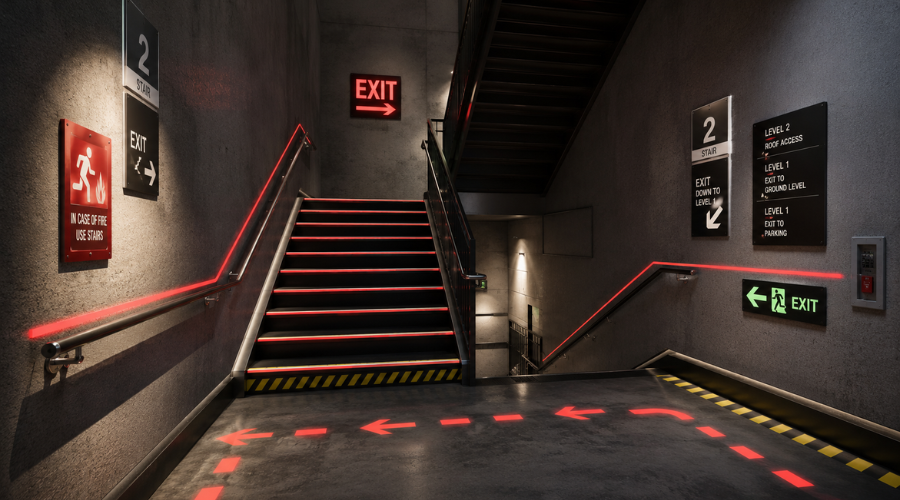
- Illuminated Exit Signs: We often use electric, battery-powered, or photoluminescent illuminated signs where continuous visibility is necessary, especially in low-light or smoke-filled conditions.
- Pictogram and Directional Graphics: Our pictogram-based signs help break language barriers and clarify pathways with universally recognizable icons.
- Braille and Tactile Signage: For compliance as well as inclusivity, we incorporate tactile elements and Braille on signs, supporting the needs of those with visual disabilities.
- Floor and Wall Graphics: To complement overhead signage, we may use floor markings or wall graphics, reinforcing direction and increasing redundancy to guide occupants under stress.
Key Features for Reliability
For every system, we emphasize legibility, contrast, and durability. Fonts must be easy to read at a glance. Contrasts are balanced to stand out in any lighting condition. We use durable materials that resist wear, chemicals, and fading, ensuring the system remains effective over time. It’s also important for us to specify emergency exit signage that includes arrows, consistent color coding, and placement where visibility won’t be blocked by doors or fixtures. When stakes are high, simplicity and redundancy provide the reassurance that people need during evacuation.
Best Practices for Implementing Emergency Exit Signage Systems
Integrated Planning and Customization
As we begin each project, we start with a thorough audit of the space. This step is vital for identifying existing gaps and determining unique architectural considerations. Whenever possible, we involve safety officers, facilities teams, and end-users early in planning to ensure our systems fit the context of daily operations and possible emergencies.
Consistent messaging and strategic placement are fundamental to our approach. We align our signage heights, colors, and formats to industry standards and to our client’s specific needs. It’s beneficial to conduct mock drills to test the signage under realistic conditions. By doing so, we gain valuable feedback and verify the effectiveness of our solutions in guiding people to safety even when visibility or clarity is compromised by stress or environmental factors.
Maintenance is another best practice we stress. We work with facilities teams to ensure regular inspections, cleaning, and functional testing of illuminated and photoluminescent signs. Staying compliant doesn’t end with installation – proper maintenance ensures reliability over time.
Case Studies: How Enhanced Environmental Graphics Improve Emergency Egress
Real-World Impact in Diverse Facilities
At Riot, we’ve seen firsthand the difference thoughtfully designed emergency exit signage makes. In a recent multi-tenant office building, outdated signage led to confusion during a routine fire drill. After we installed clear directional wall graphics and illuminated floor-level exit routes, evacuation times dropped by 40%, and occupants reported greater confidence in knowing where to go. In another example, a major healthcare facility required ADA-compliant solutions for a wide mix of abilities and literacy levels. Our system combined tactile signs, universally understood pictograms, and photoluminescent floor markers. As a result, staff could guide patients and visitors safely under emergency lighting conditions, and annual safety audits reflected a reduction in obstacles to evacuation.
We learn from each situation that engagement and feedback from those using the space are crucial for refining our approach. By focusing on real-world usability and going beyond surface-level compliance, we help our clients create safer, more navigable environments. These improvements are not only practical but build confidence and trust for everyone using the facility.
Common Mistakes to Avoid with Emergency Exit Signage Systems
When evaluating emergency exit signage systems for our facilities, it’s easy to miss key details that can impact compliance and effectiveness. One frequent error is inconsistent placement, leading to confusion during emergencies. We should be mindful to keep all exit routes unobstructed and ensure visibility from various vantage points. Regular maintenance is essential, as illuminated signs can fail due to bulbs or electrical issues. Over time, regulations change, so it’s necessary to periodically verify that our signage meets updated OSHA (29 CFR 1910.37), NFPA 101, and ADA guidelines. Another pitfall is overlooking the integration of supplemental signage, such as directional signage, which helps guide occupants to the nearest exits efficiently. Addressing these common mistakes means our emergency exit signage systems will serve their intended purpose and provide a safer environment for everyone.
Future Trends in Environmental Graphics and Exit Signage
As technology continues to advance, so do the solutions available for emergency exit signage systems. We’re seeing a shift toward digital and adaptive signage that responds dynamically to real-time events, offering clearer guidance during emergencies. Photoluminescent materials are becoming more popular due to their reliability during power outages. Integration with building automation systems can enable exit signage to adjust based on specific hazards, such as fire location or direction of egress. We’re also keeping an eye on increased accessibility – design features like braille, tactile elements, and higher contrast are being incorporated more consistently in accordance with ADA standards. Staying informed about these future trends will help us make informed decisions when considering upgrades or new installations.
Action Steps for Upgrading Your Facility’s Emergency Exit Signage
The process of upgrading our emergency exit signage systems begins with a comprehensive assessment. We should audit existing signage, identify compliance gaps, and note areas where visibility or clarity can be improved. Next, reviewing current regulations from OSHA, NFPA, and the ADA ensures we remain compliant and proactive. We suggest incorporating environmental graphics that harmonize with our building design while maintaining functionality for all occupants. Consulting with knowledgeable partners – especially those experienced in both code and creative implementation – will streamline planning and execution. Regular testing and maintenance, along with periodic staff training, will help ensure our signage continues to perform as expected. Taking measured, informed steps now can help us create safer, more navigable spaces for everyone who utilizes our facilities.
FAQ
What are emergency exit signage systems, and why are they important?
Emergency exit signage systems are strategically placed signs and graphics that clearly indicate exit routes during emergencies. Our signage ensures everyone can quickly and safely evacuate, which is especially crucial during power outages or high-stress situations. Because time is of the essence, compliant signage saves lives by reducing confusion and directing foot traffic efficiently.
What regulations govern emergency exit signage systems?
Our signage solutions meet all relevant regulatory standards such as OSHA 29 CFR 1910.37, NFPA 101 Life Safety Code, and the Americans with Disabilities Act (ADA) Standards. These regulations set the minimum requirements for visibility, illumination, placement, and accessibility of exit signage. Staying up-to-date with regulations helps us keep your facility safe and compliant.
How do environmental graphics enhance emergency exit signage?
Environmental graphics do more than just mark exits – they help guide occupants intuitively. By integrating environmental graphics, we create visual cues that improve wayfinding and support quick decision-making. In emergency scenarios, these graphics can make the difference between a smooth evacuation and dangerous delays.
What types of emergency exit signage systems do we offer?
We provide a comprehensive range of systems, including internally illuminated exit signs, photoluminescent (glow-in-the-dark) signs, tactile and braille signage, and floor-level directional graphics. Each option boasts unique features, ensuring suitability for specific facility layouts and environments. Choosing the right type greatly enhances both compliance and occupant safety.
What are some best practices for installing emergency exit signage?
Best practices include installing signs at regular intervals along exit routes, ensuring visibility from multiple angles, and maintaining adequate illumination at all times. Importantly, we recommend conducting periodic inspections and testing. By following these guidelines, we guarantee our signage remains effective when it’s needed most.
Can emergency exit signage be customized for our facility’s needs?
Absolutely. We specialize in customizing signage to fit specific layouts, branding, and regulatory requirements. Tailored solutions, including color coding, language options, and graphical enhancements, help occupants clearly understand exit routes. Customization also allows us to address special needs such as ADA compliance for visually impaired individuals.
What role does regular maintenance play in emergency exit signage effectiveness?
Ongoing maintenance is critical to signage performance. We routinely inspect, clean, and repair all exit signs, ensuring they remain visible and illuminated at all times. In addition, maintenance helps us catch problems early, guaranteeing our signage meets compliance standards and reliably serves its purpose during emergencies.
What are common mistakes to avoid with emergency exit signage systems?
Some pitfalls include placing exit signs too high or low, using improper colors or fonts, or neglecting maintenance. Over time, failing to update signage for renovations or new layouts also causes confusion. By addressing these factors proactively, we help you avoid hazards and achieve continuous compliance.
What trends are shaping the future of emergency exit signage?
Emerging trends include integration of digital wayfinding, smart signage that adapts during emergencies, and enhanced photoluminescent materials. Sustainability, accessibility, and connectivity are also top priorities for us moving forward. As technology evolves, we are dedicated to providing state-of-the-art solutions that lead the industry in safety and innovation.
How do we get started upgrading our facility’s emergency exit signage?
It’s easy to begin by scheduling a site assessment with our team. We evaluate your current signage, identify compliance gaps, and provide a detailed upgrade plan. With clear action steps and ongoing support, we make the transition seamless, ensuring your facility meets all current and future safety standards.