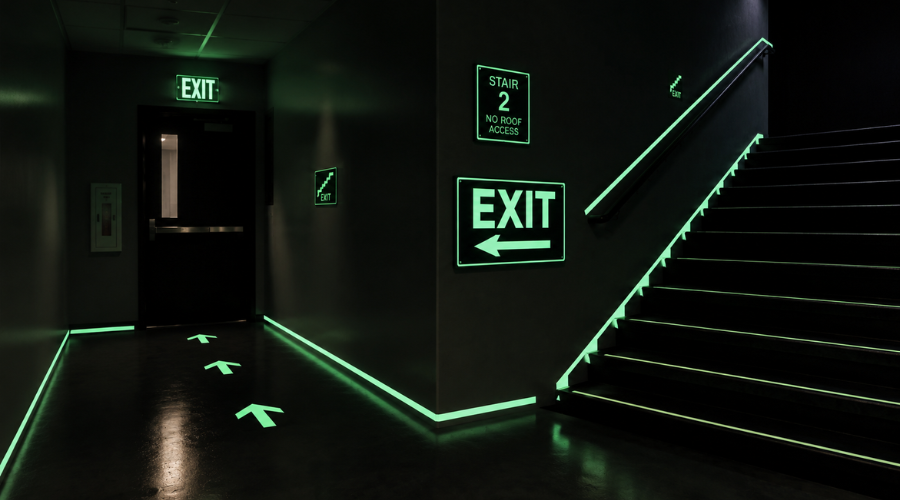
What Are Photoluminescent Egress Signs?
Photoluminescent Egress Signs have become an essential component of safe building environments, especially when clear and immediate communication is required during emergency situations. At Riot, we recognize that these signs play a crucial role in guiding occupants to safety by using materials that absorb and store ambient light, releasing it when traditional lighting systems may be impaired by power loss or smoke. With a growing emphasis on occupant safety and clear wayfinding, photoluminescent technology offers a practical, highly visible solution for exit routes, stairwells, and evacuation doors – places where direction must be unmistakable, regardless of conditions.
Why Photoluminescence Matters in Emergency Wayfinding
Wayfinding is about helping people make sense of and navigate spaces quickly, particularly in high-stress situations. During emergencies, environmental graphics shift from decorative to potentially life-saving. We have seen that with sudden darkness, standard electrical signage can become ineffective, leading to confusion. Photoluminescent technology steps in at this critical moment. It provides illumination by releasing stored energy without needing batteries or external power, making egress routes visible through smoke or darkness. For our clients, this means meeting the dual needs of compliance and user experience, ensuring intuitive movement throughout the space when it’s most vital.
Regulations and Code Compliance for Safe Egress Signage
Compliance in environmental graphics is not just best practice – it’s required. Various international, federal, and local codes specify the placement, visibility, size, and performance standards for egress markings, especially in commercial, public, and multifamily buildings. Building codes such as the International Building Code (IBC), National Fire Protection Association (NFPA) standards, and guidelines from authorities like OSHA define these requirements. For example, many codes require that photoluminescent egress signs maintain visibility for a
Photoluminescent Egress Signs: How They Work and Key Benefits
How Photoluminescent Egress Signs Operate
At Riot, we prioritize clarity in our environmental graphic solutions. Photoluminescent egress signs use specialized pigments that absorb ambient light, then emit that light when needed. This means that during power failures or smoke-filled emergencies, these signs remain visible. The absorbed light energy gets released slowly, providing crucial guidance in dim or dark conditions. By doing so, we help ensure smooth, visible routes to exits without relying on electricity or back-up power sources. Because the process is chemical, the signs require no wiring or batteries, which minimizes potential maintenance issues and reduces long-term operational costs for building owners.
Main Benefits of Photoluminescent Egress Solutions
Through our work, we have identified several significant benefits when using photoluminescent technology in egress signage. Some of these include:
- Reliability, since the signs maintain visibility during blackouts or electrical failures
- Minimal maintenance requirements compared to electrical or battery-dependent systems
- Compliance with most current building and fire codes
- Simplicity of integration with existing emergency planning systems
- Support for environmentally sustainable practices due to non-toxic materials and zero energy draw during usage
By choosing this technology, our clients can expect enhanced safety and a straightforward path out of hazardous situations, while satisfying key code requirements. Additionally, photoluminescent signs maintain high visibility through smoke, which can often obscure traditional signage during fires.
Integrating Photoluminescent Egress Signs into Environmental Graphics
Environmental graphics play a critical role in shaping how people navigate built spaces. When we incorporate photoluminescent egress markers, the process extends beyond compliance. We aim for legible, intuitive designs that fit the overall aesthetic and function of the environment. Our project teams assess both the physical and visual context in which these signs will appear, including wall color, material finishes, light exposure, and sightlines. By doing this, we ensure the signs are positioned for maximum effectiveness, without detracting from the experience or identity of the space.
Another essential aspect is collaboration. We work closely with architects, owners, and code consultants to address the specific egress and wayfinding needs for each project. By evaluating exit pathways, occupancy load, and lighting conditions, our team tailors both the placement and style of each luminescent sign. We believe this tight integration adds value to the overall safety and navigation of every property we work on.
Case Studies and Real-World Examples of Enhanced Egress Safety
Our experience has shown that the inclusion of photoluminescent signs makes a tangible difference in real emergencies. In one notable project – a large multifamily residential building – standard electrical exit signs failed when the power was lost due to a fire. Egress was chaotic until residents saw the glowing markers we had installed; these led hundreds safely down stairwells and out to assembly areas. In another example from a hospital, photoluminescent exit pathway markings helped guide both patients and staff to designated exits during a nighttime outage.
Observations from fire drills and post-incident reports reinforce these findings. Clear, consistently visible photoluminescent pathways and signs minimize hesitation during evacuations. Not only do building occupants report improved confidence navigating unfamiliar corridors, but local fire officials now include such signage as recommended enhancements in their safety audits. By sharing these results and learning from each project, we continuously refine our recommendations and design standards, making sure our solutions evolve to match the latest code updates and client needs.
Best Practices for Implementing Photoluminescent Egress Signs
At Riot, we know that proper implementation of Photoluminescent Egress Signs can have a significant impact on safety in emergencies. Start by conducting a comprehensive site assessment to determine the appropriate locations for this type of signage. Prioritize exits, stairwells, and corridors, ensuring clear visibility from various vantage points. Collaborate with architects, facility managers, and safety teams so the placement of egress and directional signage works cohesively throughout a site or building, including low-height installations for high-rise structures. Early integration with environmental graphics helps create a seamless visual system, making sure that emergency routes stand out without disrupting the design language of a space.
Maintaining and Inspecting Photoluminescent Egress Systems
Routine maintenance prolongs the effectiveness of all safety signage systems, including Photoluminescent Egress Signs. We encourage regular inspections to verify visibility and physical condition, especially after painting, renovations, or changes in lighting conditions. Dust or surface build-up can reduce the luminosity of these signs, so gentle cleaning and unobstructed placement are important. Establish a maintenance log and assign visual checks to facilities teams as part of your standard safety protocols. Annual reviews ensure the signs comply with evolving regulations and remain visible under low- and no-light conditions.
Resources for Further Reading on Photoluminescent Egress Technology
Staying informed about industry standards helps guide effective implementation. The National Fire Protection Association (NFPA) offers detailed code requirements on egress signage and markings. The International Building Code (IBC) and OSHA regulations outline minimum visibility, location, and performance standards for emergency signage. Underwriters Laboratories (UL) provides testing criteria for photoluminescent materials, focusing on brightness, longevity, and durability. Consulting these resources arms facilities with information to make informed decisions and uphold compliance.
In summary, prioritizing best practices, including consistent maintenance and referencing credible industry standards, supports a reliable wayfinding system. By integrating Photoluminescent Egress Signs strategically with environmental graphics and directional signage, we can help ensure safer navigation when it matters most.
FAQ
What are photoluminescent egress signs?
Photoluminescent egress signs are safety indicators that absorb ambient light and glow in low-visibility or blackout conditions. We design our signs to clearly mark stairwells, exits, and escape routes, ensuring occupants can find their way during emergencies. With advanced photoluminescent technology, our signage provides reliable visibility even when power is lost.
How do photoluminescent egress signs work?
Our photoluminescent egress signs work by absorbing and storing light energy from natural or artificial sources. When lights go out, the stored energy is released in the form of a visible glow, making the signs easy to see. Additionally, this process happens automatically and requires no batteries or wiring, which greatly simplifies installation and maintenance.
Why are photoluminescent signs important for emergency wayfinding?
Photoluminescent signs are crucial because they remain visible even during power outages, fire, or heavy smoke. As a result, they help guide people safely to exits and reduce panic. Furthermore, our signs contribute to faster and safer evacuations, giving peace of mind to building owners and occupants alike.
What regulations govern photoluminescent egress signs?
We ensure our products comply with strict building codes and safety regulations such as those set forth by NFPA, International Building Code (IBC), OSHA, and UL. These codes specify requirements for brightness, durability, and placement, guaranteeing that our photoluminescent egress signs meet or exceed industry standards.
What are the main benefits of using photoluminescent egress signs?
Key benefits of our photoluminescent egress signs include energy efficiency, low maintenance, and reliable performance during emergencies. Since they don’t rely on electricity, you’ll lower energy costs and avoid wiring hassles. Most importantly, our signs dramatically improve occupant safety when every second counts.
How can we integrate photoluminescent egress signs with environmental graphics?
We offer solutions that blend safety with aesthetics by integrating photoluminescent egress signs into environmental graphics. By thoughtfully designing placements and color schemes, we ensure signage complements the overall wayfinding system and enhances both look and function throughout your space.
Can you provide examples of photoluminescent egress sign installations?
Absolutely! We have installed photoluminescent egress signs in hospitals, universities, office towers, and transit facilities. For instance, our signs improved evacuation times in a major city high-rise and helped a healthcare campus achieve full code compliance with minimal disruption. Real-world results consistently show increased safety and occupant confidence.
What are best practices for implementing photoluminescent egress signs?
We recommend conducting a thorough assessment of egress routes, consulting all applicable codes, and choosing proper sign sizes and locations. Regular team training and periodic reviews ensure signs remain effective. Additionally, integrating signs into new projects early in the design phase yields the best results.
How should we maintain and inspect photoluminescent egress systems?
Ongoing maintenance is simple. We suggest regular cleaning to prevent dirt or debris from obscuring the signs. Additionally, periodic inspections should confirm visibility, placement, and code compliance. With minimal moving parts, our systems remain effective for years with just routine checks.
Where can we find more information about code requirements and photoluminescent technology?
You can review resources provided by organizations such as the NFPA, IBC, OSHA, and UL for authoritative information. We also offer expert consultations and can direct you to technical documents, case studies, and industry best practices to stay informed and fully compliant.